Ports pressure valves amid tariff typhoon









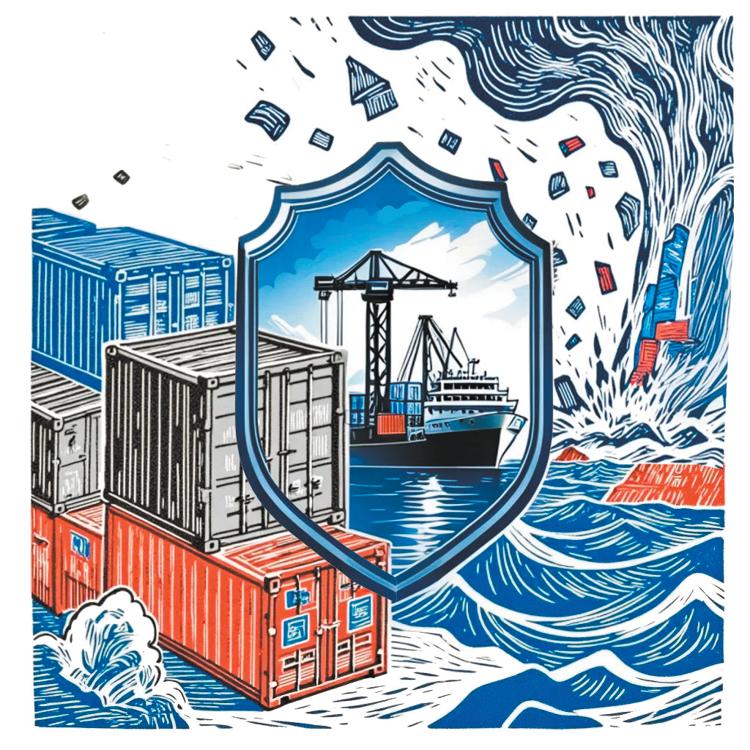
Ports are the backbone of global trade and commerce, ensuring goods flow smoothly in and out of countries. Yet this fluidity has been shattered again this year, not by a new pandemic, but by waves of tariff-induced uncertainty stemming from the United States. The costs and delays triggered by sudden trade policy shifts are shaping every aspect of supply chains, having far-reaching impacts on manufacturers, retailers and households.
The Maritime Executive reported in January that in November 2024, container imports by the US increased by 14.7 percent year-on-year. The pattern shows retailers moving swiftly to secure inventory ahead of possible disruptions. This surge, seen in Global Port Tracker data, was driven by concerns over a potential East Coast port strike and the threat of new tariffs under the then incoming Donald Trump administration.
In spring and the ongoing summer this year, a sharp escalation in US tariffs on Chinese imports, peaking at 145 percent, before a temporary 90-day reduction to a tariff of 30 percent on Chinese goods, upended supply chain planning.
West Coast ports experienced a significant drop in volumes in May. Then, data for the week of June 22 showed that container ship arrivals were up 73 percent year-on-year. US importers rushed to clear customs before rates jumped again.
After peaking at over $6,000 per forty-foot equivalent unit (FEU) in mid-June, ocean freight rates for the Asia-US West Coast route fell to about $2,300-$2,600 per FEU by mid-to-late July. This is indicative of cooling demand. A similar boom-bust scenario played out in China. In early May, cargo was relocated to Ningbo, Zhejiang province, due to prolonged waiting times and congestion in Shanghai, followed shortly after by idle capacity as orders dried up.
Exporters and importers are being forced to sprint to outpace tariffs, front-loading shipments to shield inventories. Transportation companies and freight handlers are struggling with the wild fluctuations in volume and rates, often experiencing periods of overload and idle capacity. And ports are enduring relentless pressure. This turbulence is driving up costs across networks, squeezing margins and pushing prices higher for end consumers.
Global ports now stand on the front line of global trade volatility, acting as shock absorbers and pressure valves that regulate the ebb and flow of international trade and commerce under high volatility and uncertainty. This new reality requires ports to reinvent themselves, embedding digital intelligence and operational fluidity at their core.
The future port is a digitally native organism. Real-time data stream from sensors of the internet of things, automated equipment, and integrated software solutions provide real-time visibility for goods and operations, providing valuable support for decision-making. This enables ports to swiftly respond to volatile workloads or unexpected shocks. Predictive analytics, powered by artificial intelligence, shift ports from reactive to proactive actors, allowing them to model scenarios to act before crises strike and wrap everything in the new architecture of AI.
Yet technology alone remains just a tool, with flexibility being the strategic imperative. Port infrastructure and operations must be modular and reconfigurable, capable of handling diverse cargo flows and sudden swings in demand. And effective linkages to inland terminals, railways, and multimodal networks are key to redistributing cargo and clearing coastal bottlenecks.
Ports are high-risk choke points. They need contingency plans, which outline what to do in a crisis, and the capacity to absorb shocks, adapt quickly and recover swiftly. Sustainability is integral, not a nice-to-have, and preparedness to respond to natural and other disasters is paramount, along with zero-emission operations, renewable energy integration, and green logistics, which are prerequisites for competitiveness.
The transformation of ports demands a collaborative ecosystem mindset. Seamless data-sharing among cargo owners, transport and terminal operators, and logistics providers fosters the agility required to navigate complexities, while cybersecurity underpins trust in increasingly digital operations. The new situation requires ports to collaborate globally as innovation partners within the same ecosystem, which is the community of actors that ensures orders arrive on time.
Industry leaders, researchers and institutional bodies advocate for coordinated and transparent tariff policies. If major economies commit to advance notice of trade actions and harmonize tariff calendars, capacity can be managed more effectively, and damaging “cliff edge” surges avoided.
Volatility will stay, with shifting bottlenecks, blank sailings, operational losses, and smaller ports and players remaining highly vulnerable. But, relentless disruption has always spurred innovation. Lessons from the COVID-19 pandemic and recent tariff chaos are driving investment in predictive analytics, automation and cross-company partnerships. The logistics community’s ability to adapt and transform each shock into opportunity remains its strongest asset, even as some countries wield tariffs as weapons while others pursue new connections and markets.
The author is former director at the World Economic Forum in Geneva and New York, CEO Emeritus of GeoPost Intercontinental, Paris and Hong Kong, and an advisory board member of the Logistics and Supply Chain Management Society in Singapore. The views don’t necessarily reflect those of China Daily.
If you have a specific expertise, or would like to share your thought about our stories, then send us your writings at opinion@chinadaily.com.cn, and comment@chinadaily.com.cn.