Digital transformation boosts growth in Yangtze River Delta










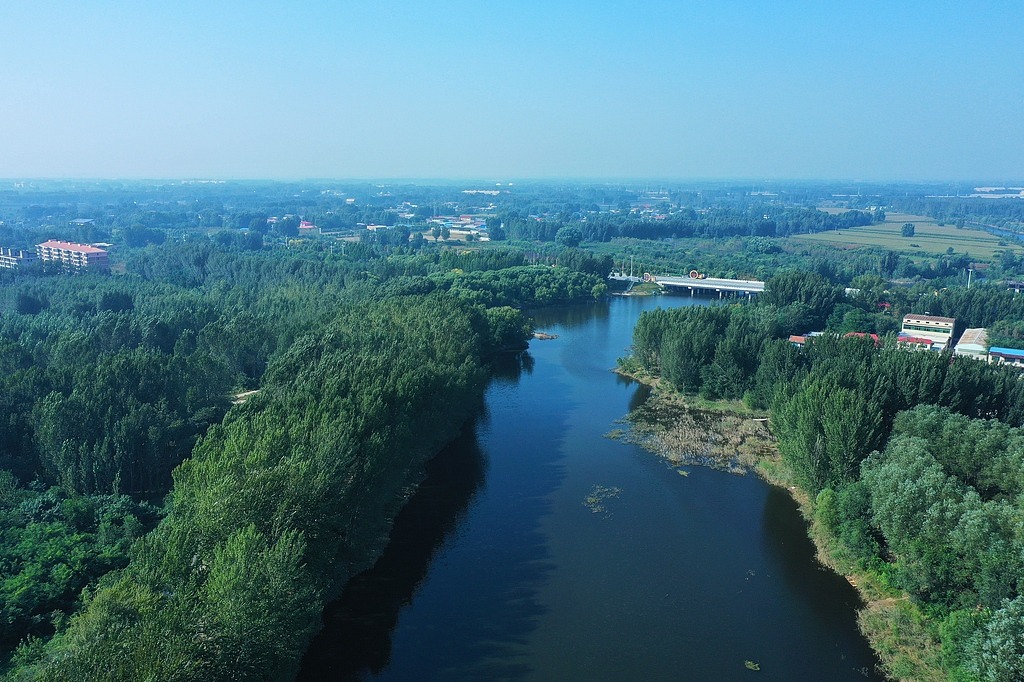
Boats float on the lake at the Xixi National Wetland Park in Hangzhou city, Zhejiang province, February 18, 2024. [Photo/CGTN]
China's national development plan for the Yangtze River Delta region in 2019 called for making substantial progress in regional integration by 2025. With five months still to go for the deadline, the region has not only met that goal; it is also helping define what high-quality, future-oriented integration looks like in the era of digital transformation.
As one of China's most dynamic and innovative regions, the YRD region is now leading the national plan to build globally competitive digital industry clusters. This goal was reaffirmed at the third plenary session of the 20th Central Committee of the Communist Party of China and echoed in the 2025 Government Work Report, which emphasized the strategic importance of creating world-class digital ecosystems.
Backed by a strong manufacturing capability and an increasingly rich digital infrastructure, the YRD region is becoming a powerhouse of next-generation industries, from quantum information science and artificial intelligence to autonomous vehicles and low-altitude economy applications.
In 2024, the region's total economic output exceeded 33 trillion yuan ($4.6 trillion), making it the second-largest urban economic zone globally. The region's per capita GDP reached 139,400 yuan, up 46.6 percent from 2018 and just shy of the benchmark of a high-income economy.
This economic leap is driven by robust industrial clustering. The region is now home to more than 136,000 high-tech enterprises — comprising over 35 percent of China's total — and hosts 26 national-level advanced manufacturing clusters. Specialized hubs are thriving in the region. For instance, Hefei, Anhui province, leads in voice AI, Nanjing, Jiangsu province, in software services, Suzhou, Jiangsu province, in precision instruments, Xuzhou, Jiangsu, in heavy machinery, Wuxi, Jiangsu, in the internet of things, Shanghai in shipbuilding and electric vehicles (EVs), and Hangzhou, Zhejiang province, in digital security.
The YRD region has also launched a cross-provincial AI+ innovation consortium, and is building an internationally competitive digital economy cluster through joint efforts.
One of the most transformative efforts is the creation of a "computing power corridor" as part of the "G60 science and technology innovation corridor". A network of cities, including Shanghai, Hangzhou, Jiaxing, Hefei and Suzhou, is working together to integrate digital resources. The corridor's aim is to support large-scale applications like AI training and digital twin simulations, by improving cross-regional data flows and computing capacity.
In Suzhou Industrial Park, for instance, AI start-ups are collaborating with universities and research institutions on frontier technologies. Their results are being applied to key sectors like smart manufacturing, EVs, and next-gen electronics, helping translate lab breakthroughs into real-world productivity.
As digital technologies evolve, so should governance. The region is intensifying efforts to standardize data property rights and cross-border data-sharing, with a new framework of the G60 corridor aiming to streamline data flows and safeguard privacy and security.
The goal is to unlock the multiplier potential of data across supply chains, encourage data interoperability among upstream and downstream enterprises, and lay a solid institutional foundation for digital cooperation. Only by building mutual trust and making clear the legal aspects can the region unleash the full potential of the digital economy.
Behind every strong industrial cluster is a strong "chain leader", an enterprise that anchors the value chain and drives collaboration. In the YRD region, globally competitive enterprises are playing this role, bringing smaller "specialized and innovative" small and medium-sized enterprises into their orbits and gradually reshaping regional industrial ecosystems.
Take Suzhou's "nanopolis" for example. It has fostered a group of rising "little giants" in microelectronics, including Suzhou MEMSensing Microelectronics Technology Co and AcelaMicro. These enterprises are rapidly scaling up thanks to their coordination with larger industry players. The result is a mature innovation-driven supply chain where upstream R&D and downstream applications evolve in sync.
The same pattern is visible in Hefei's AI-powered China Speech Valley, Suzhou's "one zone, two national innovation centers" model, Shanghai's AIsland in Zhangjiang Science City, and Hangzhou's "vision valley". These are not isolated islands of innovation; instead, they are linked nodes in a regional innovation network, tightly woven through industry and technological chains.
What really sets the YRD region apart is its ability to integrate. Since technology without coordination leads to fragmentation — industrial growth without shared standards breeds inefficiency — the YRD region's policy is to blend innovation and industry, talent and capital, policy and infrastructure across city and provincial borders.
With science and technology as the driver and collaborative industries as the backbone, the YRD region is building a world-class digital economy ecosystem. This model of integrated development may offer a road map not just for China, but for any region navigating the challenges of digital transformation in a fractured world. As the YRD becomes one of the most developed regions in China, one thing has become clear: integration isn't just a goal; it's the engine powering the next leap forward.
The author is director of the Yangtze River Delta cultural industry research institute at Nanjing University.
The views don't necessarily represent those of China Daily.