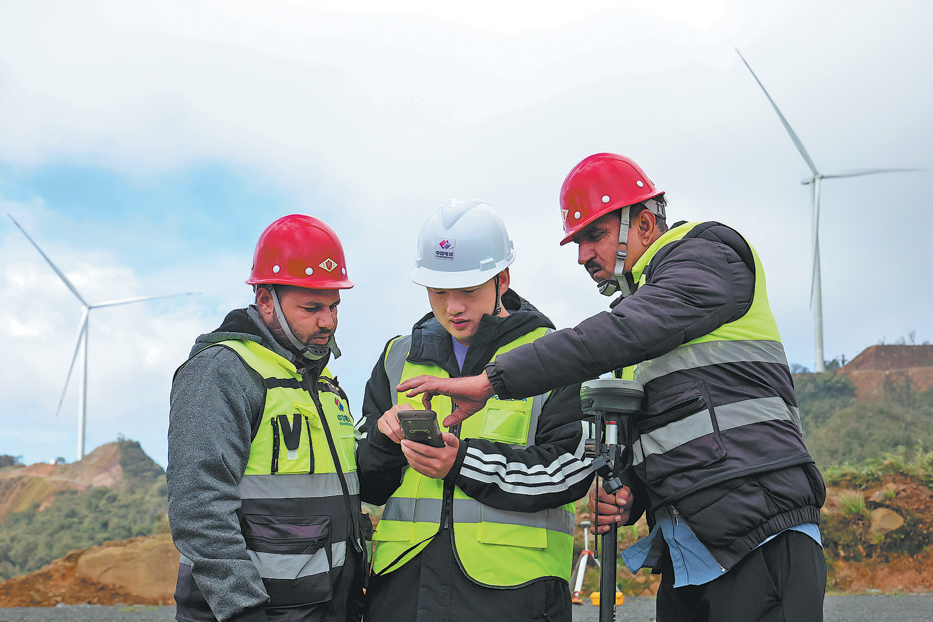
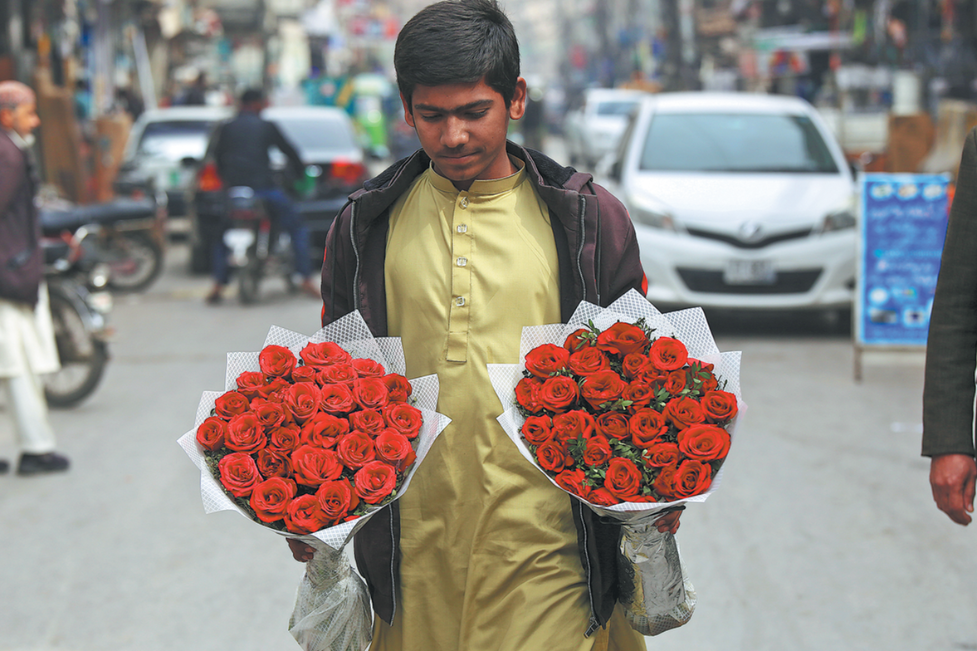
Seeing is believing to truly understand China









My neighbor, Claire, is a friendly lady, likely in her late 70s, and a polyglot who can speak Dutch, English, French and German. We chatted from time to time and I was happy to offer her a helping hand, such as carrying her groceries up and garbage down the stairway when the building elevator was under repair for three months, and driving her to her relative to get the spare key when she locked the key inside one rainy evening.
Yet the daunting task was to explain China to her and her friends when she invited me for afternoon tea at her home. Claire asked if China is still like what it was in Herge's comic books The Adventures of Tintin.
Of course not. I have visited the Herge Museum in Louvain-la-Neuve, and I have his book The Blue Lotus on my bookshelf. It was about old China, a totally different China in the 1930s.
China is such a fast-changing country that I myself have found it hard to keep updated after 16 years as a foreign correspondent from the United States to Belgium. The last time I went back to China in November 2023 after three years of COVID-19 lockdown, I was surprised to see that buses and cars in my home city Shanghai were becoming electric. Yinchuan, a once "remote and backward" northwestern city in the Ningxia Hui autonomous region, where I went to visit my cousin, looked so modern compared to many European cities.
China's transformation in the past five decades is so phenomenal that if you have not visited the country in the last 10 or 15 years, you have no idea what it is like today, both in terms of cityscapes and people's mindsets.
I don't blame Claire and most other Europeans who have never set foot on China. The Western media and politicians have done a terrible job in informing their audience about a real China. The public often gets a heavy dose of disinformation, misinformation and fearmongering of China. The prevailing rhetoric: Everything in China is bad.
Francois Serneels, who first got to know China by reading the comic series Tintin in his childhood years, is an exception. A Belgian agronomist and potato expert, whom I have interviewed, has visited China dozens of times in the past three decades and has a nuanced understanding of the country.
He has taken many of his students to China, some of whom have said the trips completely changed their perception of the Asian nation, unlike what they heard in the Western media.
Same was true with Dorien Emmers, an assistant professor of Chinese economy at KU Leuven, Belgium's oldest university, who once studied in Chengdu and has been visiting China regularly and encouraging her students to study in China.
The ignorance and misperception about China is staggering despite the fact that the people I have been dealing with are often regarded as well-educated and well-informed, including officials, members of the European Parliament, think-tank folks and fellow journalists.
Former German chancellor Angela Merkel was able to develop a relatively good understanding of China because she had visited China 12 times, each time including cities other than the capital Beijing. Her background as a quantum chemistry scientist must have helped her understand the issues better.
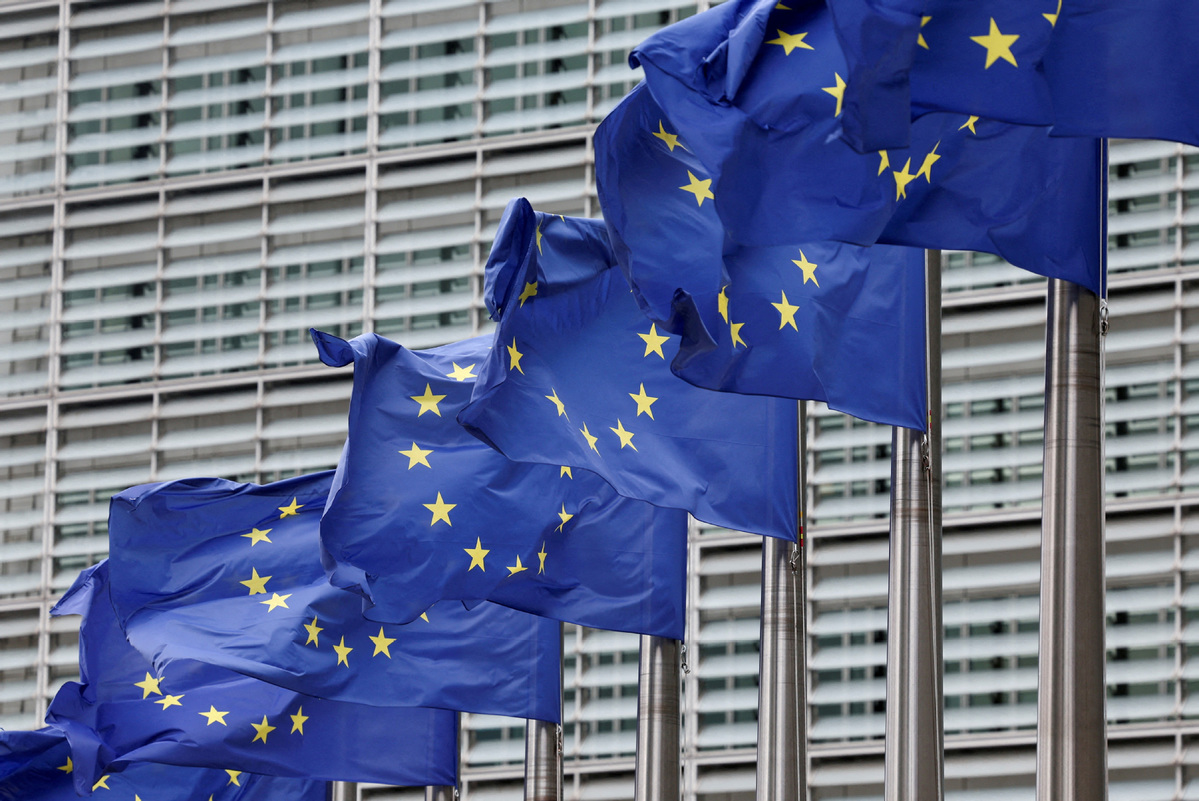
Not everything in China is great. But it would be dead wrong to assume you understand China by reading a few newspaper articles. China has a long history and a landmass more than twice the size of 27 EU member states combined and it is home to a fifth of humanity, more than thrice the EU's total population.
The Chinese friends visiting me in Europe complain about delayed trains, low efficiency, poor road conditions and shops that close at 6 pm. I understand because China isn't what it was 40 years ago. It has leapfrogged in terms of high-speed rail, government and business efficiency as well as the juan culture, which implies intense competition within society.
Most Chinese are hardworking people. In my school years, it was the poor students who took private tutoring to catch up. However, top students are now opting for such tutoring to leave everyone else behind.
Overall, Europeans have a better work-life balance. The better public healthcare and education systems mean Europeans don't have to worry as much and save as much as many Chinese do.
Some Europeans realize they have to work harder to survive the tough competition at home and abroad. The Carrefour market near my apartment now opens on Sundays, including on Belgium's National Day on July 21. The Belgian federal government decided last week that stores will soon be allowed to remain open until 9 pm, as well as seven days a week.
China has learned a great deal from Europe in the past decades of its modernization and still has a lot to learn from Europe, such as in preserving historical cities. Some Europeans feel they have much to learn from today's China, a developing nation whose economic and technological advancements are nothing short of a miracle.
The past years have allowed me to travel to various European destinations to discover their unique culture, tradition and people, an experience that has transformed my perception of Europe.
More Europeans could take advantage of China's visa-free policy to discover the country and to see for themselves both the good and bad things there. The good news is that bookings for travel to China are on the rise lately in several European countries.
It would be great if Europe reciprocates by easing its visa approvals, such as working on a 10-year Schengen visa scheme for Chinese tourists, like the one reached between China and the US in 2016.
Seeing is believing. That's true for anyone who wants to truly understand another country.

Contact the writer at chenweihua@chinadaily.com.cn.
The author is chief of China Daily EU Bureau based in Brussels.