China set to clean up online health content
New rules mandate verification, ban ads and crack down on misinformation









China's cyberspace and health regulators have announced heightened supervision of online health science content as more medical professionals turn to social media to share educational materials — a trend that has also spurred profit-driven abuse and misinformation risks.
Efforts will focus on verifying the medical credentials of content creators, requiring source attribution and banning advertisements for medical or healthcare products, according to a notice jointly released on Friday by the Cyberspace Administration of China, the National Health Commission, the State Administration for Market Regulation and the National Administration of Traditional Chinese Medicine.
The notice highlighted how measures aim to "promote the production and dissemination of scientifically accurate health knowledge while curbing the spread of false and misleading information".
Under the new rules, internet platforms must verify medical licenses or employment certificates of content creators, who are required to be affiliated with medical institutions, schools or pharmaceutical research institutes.
Existing social media accounts must verify their credentials within two months of notification, while newly registered accounts will be barred from posting health-related content until certified.
Creators are also required to cite sources related to health education content and disclose whether AI-generated material or dramatizations of historical medical cases are included.
Platforms must inform influencers that they are responsible for ensuring the scientific accuracy and authenticity of their content.
In addition, all forms of advertisements — including contact information or purchase links — for medical services, pharmaceuticals, medical devices or health foods will be prohibited.
The notice also calls for a crackdown on misconduct such as illegal online consultations, sexually suggestive content disguised as health education, fabricated narratives promoting products and the impersonation of licensed physicians.
Local authorities have been instructed to guide platforms in improving oversight and to direct hospitals to monitor the conduct of medical workers while online, with penalties for violations. Market regulators will investigate illegal advertising activities.
At a recent news conference, Hu Qiangqiang, a spokesman for the National Health Commission, said common violations by doctors who are also influencers include directing followers to offline services, offering illegal online consultations, selling products via livestreams and prescribing overpriced medications.
"Patients must first undergo offline diagnosis and receive a clear medical assessment before pursuing follow-ups through qualified online hospitals," Hu said, urging the public to remain cautious.
Among China's 1.07 billion internet audio and video users, 92 percent have viewed health education content on short-video platforms, and 63 percent consume it regularly, according to a report analyzing 150,000 health science videos posted by 14,700 social media accounts between 2023 and 2024.
Produced by researchers from Fudan University and Tianjin Normal University, the report found that surgery is the most frequently featured medical specialty online. Respiratory diseases — particularly lung nodules and lung cancer — as well as thyroid and breast nodules, tend to draw high traffic.
While some doctors have employed entertaining approaches to engage audiences, the report warns of rising homogeneity and content that stokes fear about certain diseases. It also highlights growing concerns about AI-generated medical content, citing risks to patient privacy and public trust.
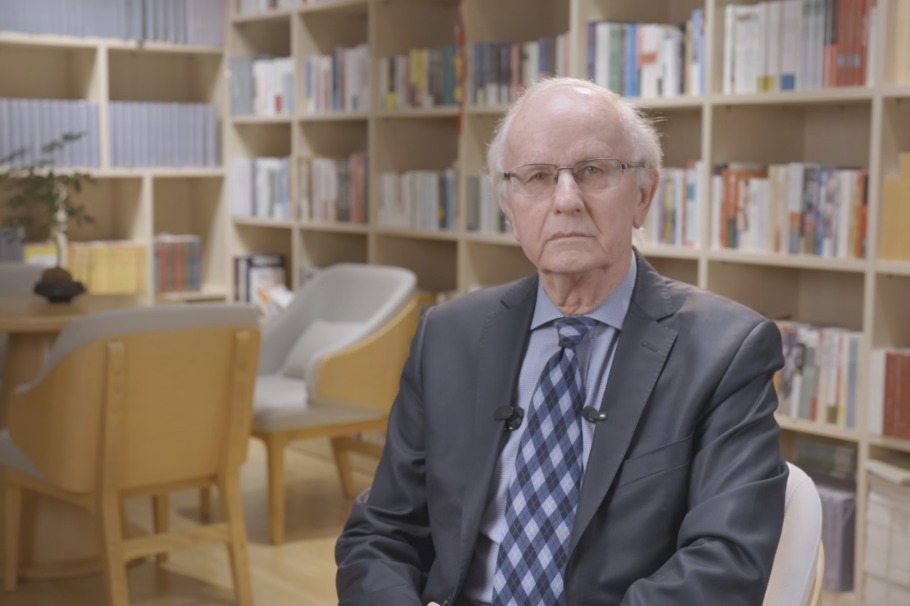
Wang Fan, a professor at the Fudan Development Institute and a co-author of the report, said online health science communication has reached a stage where regulatory intervention is needed to curb malpractice and ensure sustainable development.
wangxiaoyu@chinadaily.com.cn




- Intl students showcasing global business acumen in Shanghai
- CPC expels former senior official of Guangxi
- Shanghai university unveils sustainable, efficient water treatment system
- Fire at auto business park in Jiangsu claims one life
- Magnitude 6.0 earthquake strikes Akqi county in Xinjiang
- Shenzhou XXI team to carry out first spacewalk