Stable China-US relations underpin world prosperity









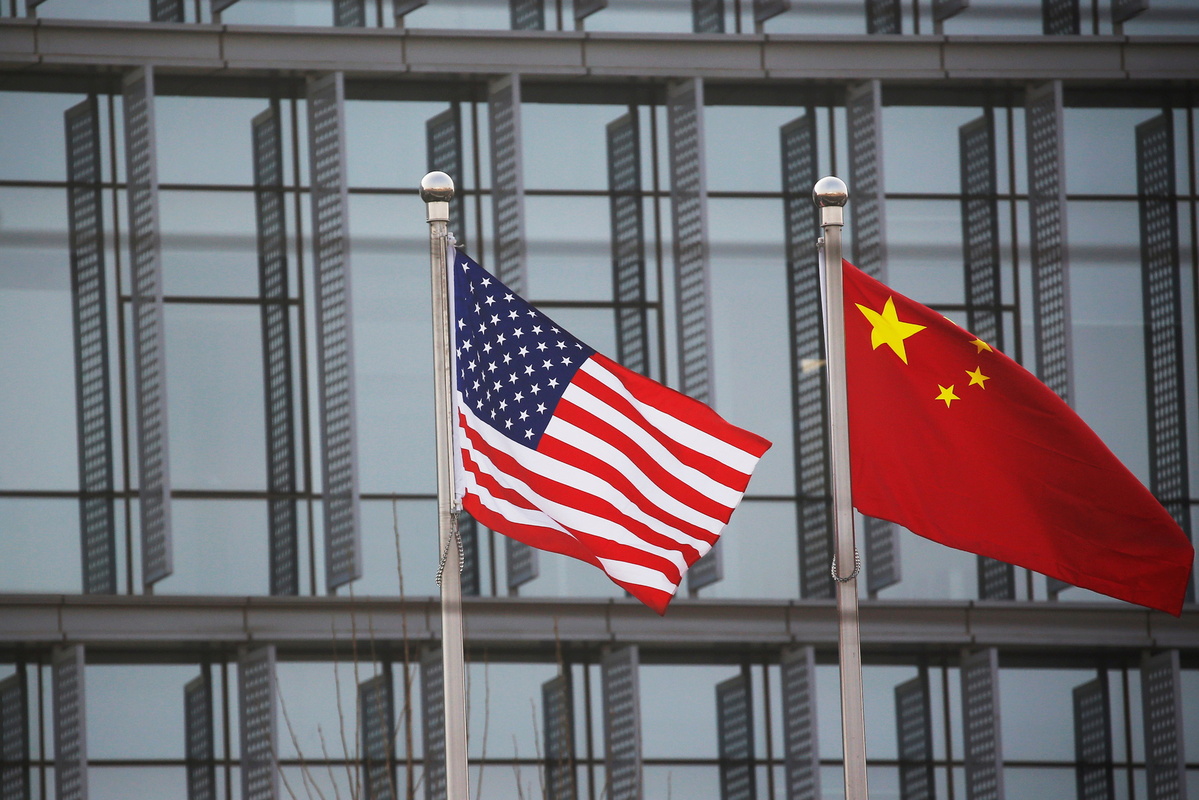
The recent talks between Chinese Vice-Premier He Lifeng and United States Treasury Secretary Scott Bessent in Stockholm, Sweden, were more than a diplomatic ritual. Bessent described the meeting as "constructive" despite persistent geopolitical tensions — a reassuring and welcome sign in a world increasingly shaped by economic uncertainty.
With new tariffs looming and bilateral trade shrinking 9.3 percent year-on-year in the first half of 2025 — plummeting 20.8 percent year-on-year in the second quarter — the message is clear: A stable US-China economic relationship is no longer just a bilateral concern. It is now the keystone of global prosperity and peace.
Throughout history, the rise of great powers was often tragically propelled by military force — be it Britain's colonial empire or the US' global footprint. China, however, has amazingly rewritten this narrative through commerce, internal development and long-term strategic investment.
In just a few decades, China has become a global economic powerhouse without waging war or occupying foreign lands.
The Belt and Road Initiative, proposed by China, is focused on infrastructure over influence, and highlights this unique path. It is a modern rise rooted in millennia-old traditions of Confucian principle of harmony and commercial ingenuity — from Silk Road caravans to today's tech entrepreneurs.
Reducing China's rise to a one-dimensional narrative of "strategic threat" is a dangerous oversimplification and distortion of objective reality. As the world's second-largest consumer market and a manufacturing powerhouse, it is also home to a vast, fast-growing middle-income group with a strong appetite for global goods — solidifying its role as an anchor of global stability.
For US exporters — whether they grow soybeans in the country's Midwest or code software in Silicon Valley — this market is vital. Trade is not a trap; it is an economic lifeline. As Massachusetts Institute of Technology economist David Autor notes, the economic interdependence between China and the US cannot be untangled without significant global damage.
This is not a relationship defined by conflict, but by commerce. Chinese companies continue to adapt and innovate despite headwinds, showing how mutual benefit emerges because of engagement — not in spite of it.
Real diplomacy requires realism. US businesses consistently recognize China's role in sustaining growth and supporting US jobs. From electronics to agriculture, both countries' supply chains are so deeply entwined that disruption in one sends tremors across the globe.
Economist Chad Bown of the Peterson Institute for International Economics aptly argues that managing this interdependence demands "clear rules and sustained dialogue" — precisely what the Stockholm talks aimed to achieve. The cost of failure? It is estimated that global trade worth trillions of dollars will be affected by the "reciprocal tariffs", and the ripple effects now slowing global momentum are likely to significantly reduce US and global economic growth and increase inflation in many economies.
Tariffs and trade friction between the world's two largest economies have consequences that extend far beyond Washington and Beijing.
The World Economic Forum emphasizes that US tariff measures against China disrupt global supply chains and investment flows, becoming a drag on prosperity from Asia to Africa to the Americas. The second quarter plunge in trade is not just a number — it is a flashing red light for policymakers everywhere.
The proposed 90-day tariff pause is a window of opportunity. But temporary relief is not enough. What the world needs is long-term stability in US-China trade: durable agreements, institutionalized dialogue and rules-based cooperation.
As the former US secretary of state Henry Kissinger wisely observed, US-China cooperation is essential to avoid outcomes "detrimental to global stability and progress". That insight rings truer than ever today.
China's economic vitality, deep entrepreneurial roots and vast market present real opportunities alongside real challenges. Managing this complexity through engagement — not confrontation — is the only viable path.
This is a test not just of policy, but of statesmanship. Pragmatic engagement anchored in mutual interest is not a sign of weakness, but wisdom. It is a recognition of shared destiny in an interconnected world.
The Stockholm talks lit a small light of hope. Now, US and Chinese leaders must turn that flicker into lasting light. The global economy depends on it. More importantly, the future of global peace and prosperity for billions of people rests on whether these two economic giants choose partnership over provocation.
The keystone must hold — or the whole arch will tremble.
The author is an economics and politics analyst, an award-winning columnist of the Philippine Star and Abante newspapers, and a book author, college teacher, realty entrepreneur, and moderator of the Pandesal Forum. The views do not necessarily reflect those of China Daily.