250% US tariffs pose threat to Canada's pharma industry
Economists warn against soaring prices for customers, supply chain disruptions









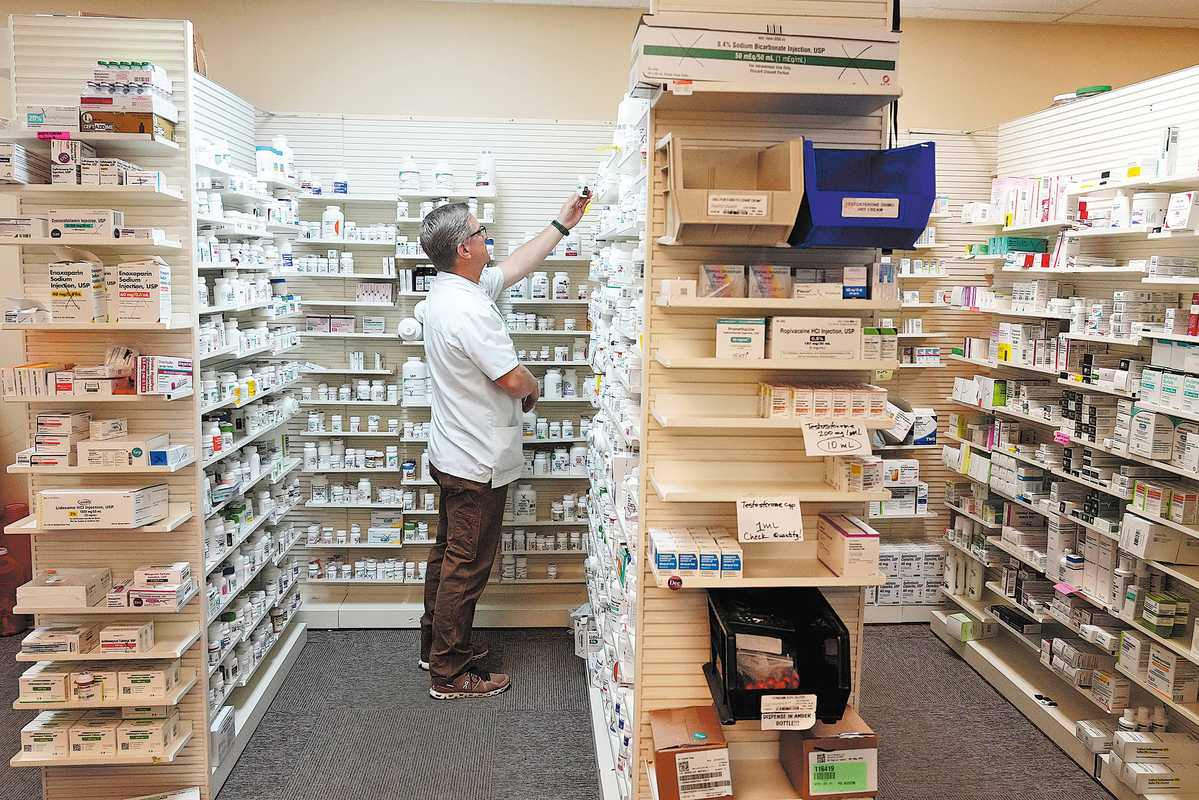
The proposed US tariffs of up to 250 percent on pharmaceuticals could trigger shortages, inflate costs and disrupt the tightly integrated drug trade with Canada, health economists say.
"A sudden, steep tariff would raise procurement costs for manufacturers and distributors, as the US sources most of its active pharmaceutical ingredients and many finished medicines from abroad," said Boshen Jiao, an assistant professor of pharmaceutical and health economics at the University of Southern California.
United States President Donald Trump said on Aug 5 that the planned tariffs on imported pharmaceuticals could eventually reach 250 percent, in a bid to bring drug manufacturing back to the country.
He said he will initially impose a "small tariff" on pharmaceuticals, but within a year to 18 months at the latest, he will raise the rate to 150 percent and then 250 percent.
"This could prompt adjustments in sourcing, order delays or scaling back of certain product lines — straining the already fragile supply chains, especially for generic drugs with limited suppliers, and increasing the risk of shortages," Jiao said.
With higher import costs and few short-term substitutes, "some of the added costs would likely be passed along to payers, pharmacies and ultimately patients", he said.
The size of price increases would depend on competition and existing contracts, and "many products without domestic alternatives could see costs rise noticeably in the near term", he added.
Some large US pharmaceutical companies have already announced plans for new domestic facilities, Jiao said.
Over the longer term, he said there would be "higher sustained production costs" because manufacturing in the US generally involves greater expenses due to wages, regulatory compliance and infrastructure requirements.
Jiao also pointed to "capacity constraints", noting that building and certifying new pharmaceutical facilities "is a multiyear undertaking that requires substantial capital and FDA(Food and Drug Administration) approval, creating a gap between tariff implementation and any significant increase in domestic output".
"Higher operating costs and market volatility could lead manufacturers to divert resources away from research and development to meet short-term financial demands," he said.
For Canada, he said the two countries "share integrated supply chains for finished medicines, as well as for materials, manufacturing processes and technical expertise".
Trade flows
Significant US tariff increases could "change cross-border trade flows, raise costs for Canadian buyers of US-sourced products, and influence manufacturing location decisions by multinational firms", Jiao said.
While tariffs can encourage domestic manufacturing, they are "unlikely to deliver a robust or diversified manufacturing base" on their own, he added.
"Many experts recommend pairing them with targeted subsidies, tax incentives, streamlined regulatory processes and long-term procurement contracts to make domestic production economically viable and sustainable, particularly for essential generic drugs.
"A balanced strategy that combines these measures with broader supply chain diversification is generally viewed as more effective for improving resilience," he said.
Paul Grootendorst, a professor of health services research at the University of Toronto, said the US plan to sharply raise tariffs on pharmaceuticals could drive up drug prices in both the US and Canada, while threatening Canadian exports and jobs.
The Canadian pharmaceutical industry exported $5.34 billion of drugs to the US during 2024, he said.
Grootendorst said he believes the short-term increase in costs from the tariffs would be passed on to consumers, meaning there would be no effect on Canada.
"In the longer term, the US may increase domestic production of pharmaceuticals, especially if tariffs increase to 250 percent. This will result in less Canada production and likely some job losses," he said.
Many of the drugs Canadians use are imported from the US, he said.
"Tariffs will make US-produced drugs more expensive if they rely on imported ingredients that will be subject to tariffs. Thus, the price of US drug imports will likely increase."
Canada might be able to find non-US suppliers for some generic drugs, he added, "but there might be no alternatives for other patented drugs".
On the Canadian side, Grootendorst said the effect on patients would depend on their coverage.
"Some plans require beneficiaries to pay 20 percent or some other percent of drug costs — beneficiaries of these plans will pay more," he said.
"Most other plans have co-pays, but the co-pays don't depend on the drug cost, so no impact on patients — the plan will absorb the cost.
"Of course, private plans are mostly provided by employers to employees. Ultimately, higher prices are paid for by employees," he said.
Given the high level of pharmaceutical trade between the countries, he said "there would be some fallout from the tariffs".
Grootendorst suggested that Canada should "help producers look for other export markets" and "encourage prescribers to switch from US-made to European or Japanese-made drugs if these drugs are reasonable substitutes".
gaoyang@chinadailyusa.com