


Traditional Chinese herbal culture finds global appeal in skincare industry










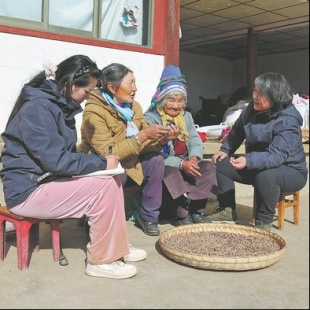
Zhuaru village, Lijiang, Yunnan province. Provided to China Daily
In the bustling district of Shinsaibashi, Osaka, Nakano was casually browsing the shops when she unexpectedly came across a Chinese herbal skincare product containing elements of dendrobium. She was intrigued — after all, Japan, a traditional powerhouse in beauty exports, has long had a mature skincare market, and products from China are not commonly seen.
Nakano is not alone. In the past, Chinese herbs were often boiled in clay pots, carrying a distinct bitter medicinal scent. Today, the herbs are undergoing a quiet transformation overseas, gradually shifting from herbal ingredients to sought-after beauty solutions.
From "organic" to "clean beauty," plant-based labels have become synonymous with a healthy lifestyle. Chinese herbs are no longer merely exported as raw materials but are now integrated into global consumer routines through skincare products, bath bombs, essential oils, and herbal teas, according to e-commerce website Chwang.
This trend is translating into tangible market growth. In 2024, EasternBotanics, a handmade soap brand featuring Chinese herbal formulas, saw its annual overseas sales surpass $1 million. Dr Plant's dendrobium mask earned top marks on Japan's beauty list, Cosme, propelling the brand to open 11 stores across Japan. As of last year, its overseas revenue accounted for 18 percent of its total business.
"The Japanese beauty market has reached a saturation point," said Xie Yong, founder of Dr Plant. "As a country's economy grows, its people tend to favor pure, natural, and traditional formulations when selecting skincare." He said this shift in consumer preferences presents an opportunity for brands like Dr Plant to enter new markets.
Xie said that the first overseas store was strategically placed in Shinsaibashi, a district popular with international tourists, and 80 percent of the customers were actually local Japanese consumers.
Botanical trove
This trend is underpinned by China's rich history of ethnobotanical knowledge. Pei Shengji, research professor at the Kunming Institute of Botany, Chinese Academy of Sciences, also known as a pioneer of ethnobotanical studies in China, has collaborated with many international skincare companies.
"China's diverse ethnic groups have a long history of using plants. The accumulated botanical knowledge is a treasure trove," Pei said. Many plants, widely used in the traditional medicine of some ethnic groups, carry immense practical value, developed and refined over centuries.
"China has abundant plant resources and traditional Chinese medicine knowledge," Pei said. He added that some international brands have exploited indigenous knowledge and resources worldwide to patent products, a practice he viewed as unfair.
"China should have its own indigenous brands, combining traditional knowledge with modern science to develop products with distinct ethnic characteristics," he said.
This vision is being realized by researchers like Yang Lixin, a senior engineer at the Kunming Institute of Botany, Chinese Academy of Sciences.
Yang grew up in a multiethnic region of Yunnan. From an early age, she observed locals using wild fruits to make oil for skincare, preventing insect bites and cracking skin.
Yang and her team spent over ten years researching ancient texts and traveling through mountains, consulting local experts. They eventually identified a plant called qingciguo, a kind of Rosaceae plant, among over 180 medicinal plants used by local ethnic groups.
In 2022, the active ingredients from this plant were successfully incorporated into skincare products. This innovation not only protects wild qingciguo resources but also supports local farmers, creating a $4.3 million industry and contributing to rural revitalization.
Cao Jianfei, a villager in Ninglang Yi autonomous county in Lijiang, Yunnan province, has seen the benefits firsthand.
"The cost of planting qingciguo is low, and it grows easily," he said. "The yield per mu is not high, but the price is rising. I now earn more than 130,000 yuan ($18,100) annually from just 23 mu (1.58 hectare)." He said he is happy to see the plant, once used by only local people, now goes out of the mountains.
Yang said: "There are no doctors in the mountains and plants are the best doctors. Our ancestors have a wealth of traditional wisdom. I spend more time conducting field research than in the lab. The whole plant is valuable — so far, we have only developed the fruit of qingciguo. We still have much more to explore.
"How we can better apply the qingciguo series to meet consumer needs and better serve a wider audience remains a challenge. I hope that through ethnic plants, we cannot only help more people but also improve local livelihoods and drive industry development."
Zhu Jilin contributed to this story.
Contact the writers at houchenchen@chinadaily.com.cn