


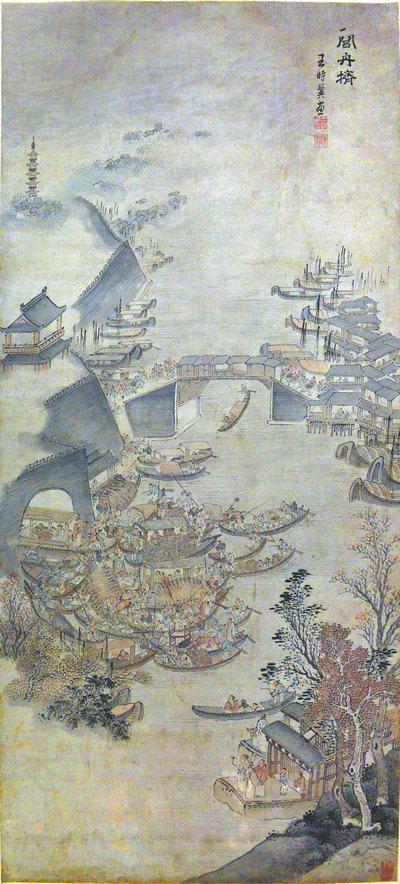
For over 5,000 years, China has anchored its existence in a profound and enduring cultural foundation — an intricate tapestry woven from the threads of ancient wisdom, philosophical insight and historical continuity.
This cultural bedrock has not merely preserved the nation through dynastic rises and falls; it has actively shaped its identity, its governance and its resilience. From the timeless teachings of Confucius and Laozi to the strategic brilliance of Sun Tzu and the bureaucratic models of imperial administration, China's civilization has drawn strength from a legacy where culture and statecraft are inseparable.
It is this deep-rooted fusion of intellectual heritage and political order that has enabled China not only to endure, but to flourish across millennia — adapting through time while remaining steadfast to the guiding principles of its civilization, chief among them, harmony and unity.
Today, as China takes a more active role on the global stage — participating in international politics, cultural exchange and collaborative efforts to address pressing challenges like climate change and regional instability — it becomes increasingly important to bridge the cultural divide that can fuel misunderstanding and doubt.For China's contributions to be fully recognized and respected, the international community must not only acknowledge its rising influence but also develop a deeper understanding of the cultural values and historical wisdom that shape its global outlook.
This prompts a central question: How do we foster mutual understanding and trust in the face of lingering skepticism? One key path lies in uncovering the rich historical traces of mutual learning that have long existed between civilizations, and in establishing meaningful comparative dimensions that reveal striking parallels in values, governance and philosophical thought.
Consider the transmission of imagery from the Shijing (Book of Songs), the most revered Confucian classic and a foundational anthology of 305 poems dating from the 11th to 6th centuries BC. Among them, the long poem July — also known as The Life of Peasants — rose to prominence through successive imperial pictorial interpretations, beginning in the Song Dynasty (960-1279). In a society where peasants made up the vast majority and agriculture underpinned the state, appreciation for the poem became more than literary: It evolved into a subtle political statement, a reflection of leadership grounded in attentiveness to the lives of the people.
This same imagery, once a cultural and political emblem within imperial China, eventually crossed continents.Visual interpretations of the cyclical rhythms of tilling and weaving made their way to France where they sparked lively debate at the court of Louis XIV over whether agriculture should serve as the foundation of the nation.
According to Clarissa von Spee, curator at the Cleveland Museum of Art, it was essential for European rulers to know that these images originated from China — not from artistic fancy — as this authenticity gave their discussions real weight. Von Spee curated the 2023 exhibition China's Southern Paradise: Treasures from the Lower Yangzi (Yangtze) Delta, which examined the historical foundations of southern China's economic and cultural ascendancy. The episode stands as a striking example of cross-cultural learning, done consciously in history.
When it comes to building comparative frameworks and using analogies to bridge gaps in cross-cultural communication, one can look to the narratives crafted by Western museums hosting exhibitions on Chinese culture and history — narratives carefully shaped to help their audiences understand a worldview that may at first seem distant.
In 2021, the Metropolitan Museum of Art in New York drew from its own Chinese art collection to present the exhibition Companions in Solitude: Reclusion and Communion in Chinese Art. Inspired by curator Joseph Scheier-Dolberg's experience of working from home during the pandemic — a period of limited social interaction but renewed connections with old friends — the exhibition explored the theme of reclusion in Chinese literati painting. It examined how scholars and hermits pursued spiritual cultivation through solitude while still valuing bonds shared with kindred spirits.
Maxwell Hearn, head of the Metropolitan Museum of Art's Asian Art Department, once drew a compelling comparison between Chinese cursive script and Jackson Pollock's action painting, highlighting the expressive, almost spiritual kinship between the two. He likened the fluidity of brushwork to a tennis player's muscle memory — an instinctive, embodied rhythm. As a left-hander, Hearn discovered a personal resonance with Chinese art.
"Ancient Chinese painting celebrated the concept of zhuo — studied clumsiness — as a beguiling form of sophistication. I'm naturally zhuo since I'm left-handed," he says.
It is precisely these kinds of personal insights that make cultural communication resonate, by providing a humanizing lens through which distant or unfamiliar traditions become both relatable and meaningful. For those tasked with conveying China's cultural image internationally, there's a page to borrow here.
Hearn also identified two defining features of Chinese literati painting. First, political elites often cultivated the image of a refined scholar rather than a triumphant ruler, which explains the notable absence of military glorification in traditional Chinese ink painting.Second, while many Western artists historically served kings and popes as commissioned hands, Chinese literati painters were themselves cultural and intellectual leaders, often directly engaged in governance.Consequently, their works reflect more personal spirit than patronage. These comparisons offer a nuanced, global perspective on the peacefulness and continuity central to Chinese civilization.
At last November's World Conference of Classics in Beijing, Yale University professor Mary Evelyn Tucker emphasized the central role of the Socratic method — learning through dialectical questioning — in Western education, contrasting it with the Confucian tradition of metaphorical teaching. She cited Mencius' parable of the "Ox Mountain Trees" to illustrate the Confucian belief in the innate potential for human goodness.Tucker observed that Confucianism offers a different pedagogical approach — not debate, but metaphor — which is rooted in the agrarian tradition of learning from nature.
With that being said, it's worth noting that the "Golden Mean" concept in Aristotle's Nicomachean Ethics parallels the Confucian notion of zhongyong, as both emphasize the pursuit of balance and moderation as essential virtues in the cultivation of moral character and the attainment of a harmonious life.
For China to contribute to global governance solutions, its cultural and philosophical ideas must be examined and presented to the world through a truly global lens — one that integrates insights from both Chinese and Western scholars. Such an approach enables a deeper appreciation of the uniqueness of Chinese wisdom, highlights its compatibility with Western intellectual traditions, and underscores its potential for broad, cross-cultural applicability in addressing shared global challenges.
Meaningful cultural exchange is not a modern invention, but a longstanding tradition. When such parallels are brought to the fore, the case for mutual learning no longer needs to be argued. It becomes clear, compelling, and self-evident. In embracing these shared legacies, the global community can move forward not with division or distrust, but with respect, reciprocity and a renewed dedication to collaborative progress.








