Strategic options









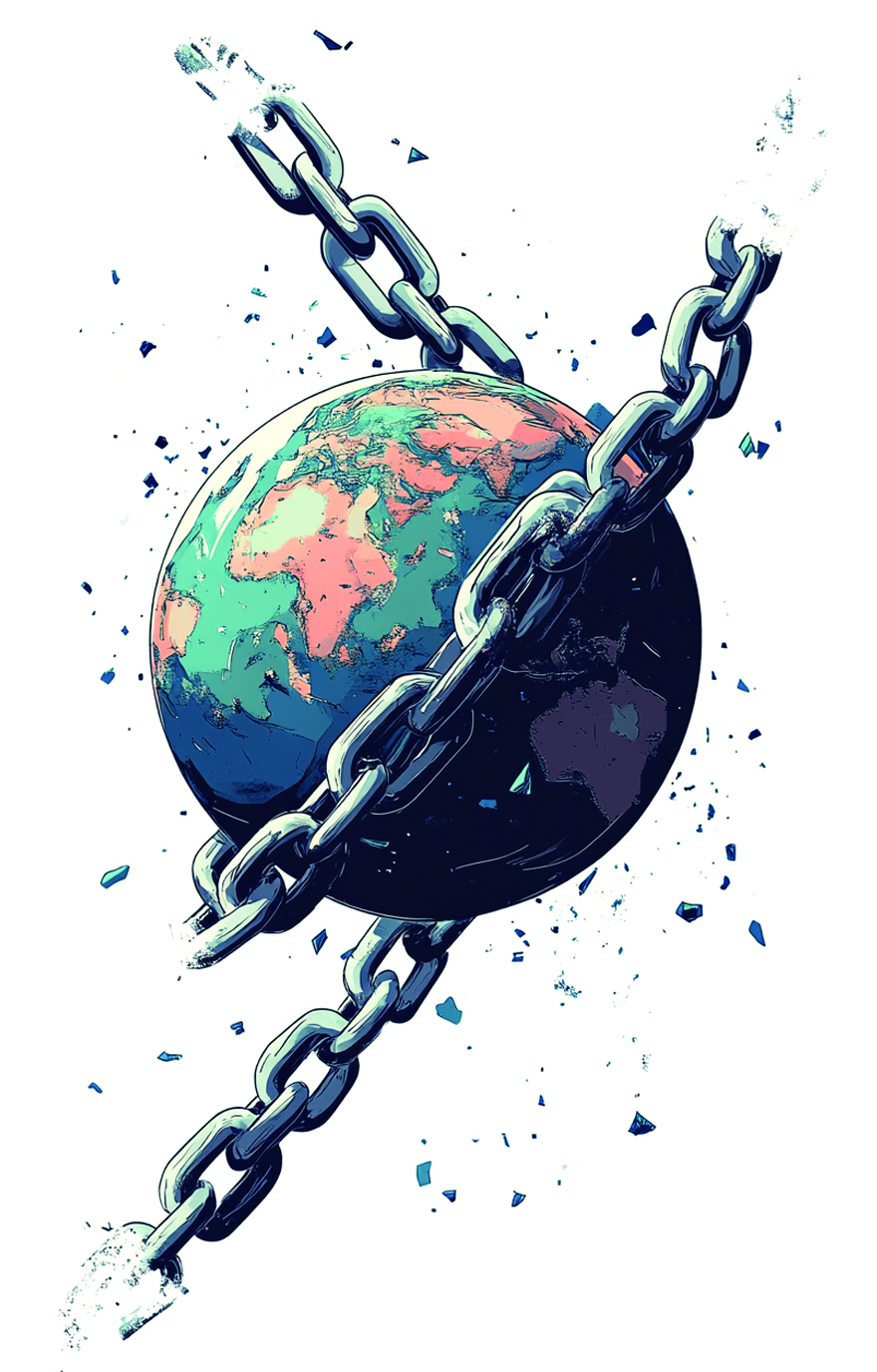
Global South countries are adapting to the changing global economic landscape as a result of overextended national security concerns through greater engagement among themselves
With national security being increasingly stretched by some countries to cover almost everything, hyper-globalization is drawing to a close.
Since China's reform and opening-up, its ties with the world have largely been built on development and cooperation. The international order that China came to know was oriented toward development and peace, with cooperation and mutual benefit seen as the ultimate goal of global exchanges.
However, the growing trend of overstretching the concept of national security has eroded cooperation and fueled competition and even hostility. Many developed nations now blame globalization for their domestic political and economic dilemmas. With waning motivation for cooperation, these major powers are retreating from openness and engagement, which has had complicated impacts on the Global South.
In the late 20th century, the United States was the driving force behind the open international system. It reaped enormous benefits from that system while also shouldering the costs of keeping it running. That seemed to be a world filled with optimism: even if setbacks came or opportunities were missed, most people still believed that tomorrow would offer a new chance to begin again.
However, the US has changed from a responsible power to an unpredictable one. Since the early 2000s, it has been struggling to keep markets open. It accelerated its withdrawal from global markets during the second term for President Donald Trump. Today, the US is plagued by a pessimistic and cynical mindset, including increasingly hostility toward China.
This shift of the US has been a major factor leading to the abuse of national security by some countries. The US has adopted a negative-sum approach toward China and other developing countries, convinced it can outlast them in a long war of attrition. Unlike the positive-sum logic of the development-oriented era, this negative-sum game is rooted in the logic of harming others even if it is also at one's own expense. Even though the US is aware of the damage it is doing to itself, it still pursues this strategy in an attempt to weaken others.
The declining cooperation is widespread, a situation that mainly occurs between the US and developing countries. The US and some other developed economies believe that developing countries such as China benefited the most from hyper-globalization, while they were ripped off. As a result, they have little intention to continue such cooperation.
Instead, the US is increasingly focusing on working with "like-minded" partners, leading to fragmentation and bloc politics. With the waning culture for cooperation, the US has lost patience for long-term gains and now prioritizes short-term, narrowly defined interests.
Is a world driven by overstretched security a challenge or an opportunity for the Global South? For most Global South countries, it brings a tougher and more difficult international environment. Yet that does not mean all opportunities are lost.
The relative decline of developed nations in global political and economic systems also signals a rise for the Global South. Measured by purchasing power parity, according to the International Monetary Fund statistics, the Global South accounted for over 60 percent of the world's total output in 2024 and contributed more than 80 percent of the global economic growth, a fundamental shift in the balance of power.
To navigate this new landscape, the Global South must adopt a more proactive approach: seizing the opportunities created by shifting security dynamics while minimizing negative impacts. Broadly speaking, for the Global South countries, there are four strategic options.
First, seizing opportunities in a shifting center-periphery order. For decades, Western countries were at the "center" of the global system, while the Global South countries were on the "periphery". As the US declines, the center-periphery hierarchy is being reshaped, especially with the emergence of multiple regional centers. The Global South will no longer be dealing with a single dominant center, but with several.
Regional powers tend to shape an environment that better serves their own interests. With strategic geography and flexible diplomatic strategies, many Global South countries are well-positioned to link with more than one regional center. Therefore, in some cases, they may enjoy an even better position in a security-oriented world than before.
Second, adopting new models of modernization. For much of the past century, modernization was essentially defined by the West. Many Global South countries attempted to adapt to Western models, but most struggled to make them work.
Today, there are successful alternatives. China's trajectory shares some features with East Asia's rise, but the Chinese modernization is distinctive in its scale, effects and innovation, and it is fundamentally different from that of the capitalist world.
More importantly, Chinese modernization is actively unfolding across a vast landscape that the Global South can see and engage with directly. This stands in sharp contrast to Western modernization, already reduced to textbook theories from decades ago and difficult to replicate in practice. With China's success, the countries of the Global South now have new leverage and greater autonomy to chart their own development paths.
Third, embracing the deep restructuring of global value chains. Since the 1980s, shifts in multinational corporations' global strategies have given rise to global value chains, where production is divided into stages, creating opportunities for small and medium-sized businesses and the small economies. In this system, companies from developed economies occupied the core, high-profit segments of the value chains, while Global South countries earned limited returns from supplying raw materials and performing manufacturing.
That balance is shifting in a security-oriented world. Every link in the chain has become indispensable to ensure the smooth running of the whole system, raising the importance of countries that supply raw materials or provide manufacturing. In recent years, resource-rich nations have stepped up efforts to strengthen supply-chain security, pressing multinationals to build factories locally and generate more profits and jobs at home.
Finally, leveraging the expanding space for South-South cooperation. In the past, Global South countries looked mainly to the Global North for cooperation. Today, they are moving toward a more balanced approach. With the rise of the Global South, cooperation within the group is expanding, even when developed countries are less willing to engage.
Most importantly, the diversity of the Global South allows for diverse forms of collaboration. Global South countries need to strengthen their commitment to unity and joint self-reliance, securing long-term common interests even at the cost of short-term sacrifices. A prime example is how East Asian countries collaborated to respond to the crisis from shrinking external markets. Their success has proved that collective self-empowerment works and offers valuable lessons for the broader cooperation among Global South countries.
The author is a researcher at the National Institute of International Strategy at the Chinese Academy of Social Sciences. The author contributed this article to China Watch, a think tank powered by China Daily. The views do not necessarily reflect those of China Daily.
Contact the editor at editor@chinawatch.cn.