Trials of surgical glue show promise









A simple dab that can stop bleeding, seal lung punctures and mend broken bones — that is how researchers describe a new high-strength, degradable surgical adhesive developed at the South China University of Technology.
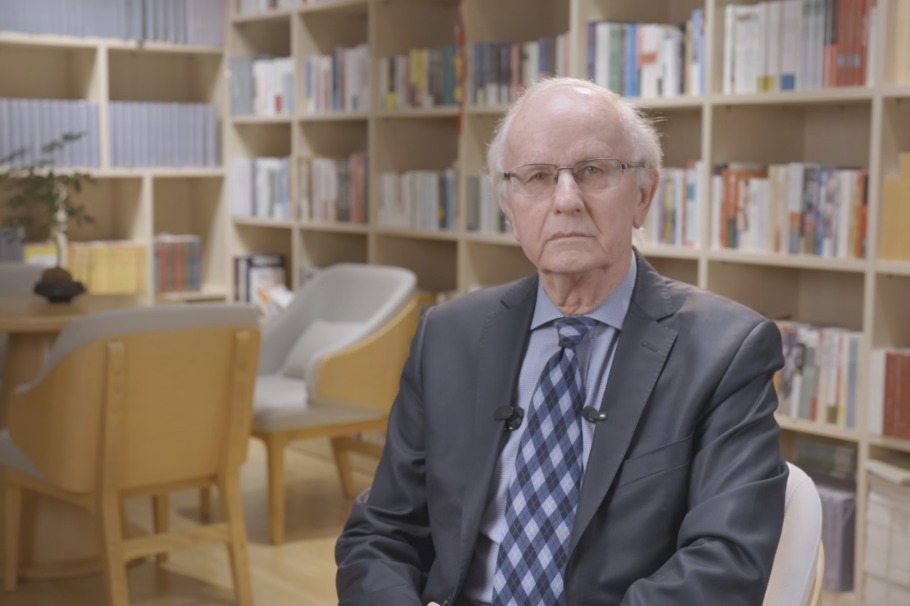
The product was created by Professor Shi Xuetao and his team at the university's National Engineering Research Center for Tissue Restoration and Reconstruction.
"The polyurethane-based glue can react with collagen in body tissues, exhibiting strong adhesive strength to seal both blood and gas within organs, and its mechanical properties are superior to all other medical adhesives available on the market for internal use," Shi said.
Trials of the glue performed on animals have shown promising results. The sealing effect of sutures combined with ordinary medical adhesives on a pneumothorax, or collapsed lung, was about 65 percent to 75 percent, while the new polyurethane adhesive achieved a 100 percent seal, he said.
No suturing or stapling is needed because the glue can simply be applied to a lung wound to fully repair collapsed lungs in animals, he added.
The adhesive has entered the technology transfer stage and is being prepared for clinical use. Industrial production has already been scaled up to a potential annual capacity of 1 million units, and it is expected to play an important role in improving the effectiveness of surgical procedures, Shi said.
"We are now applying for a registration certificate for clinical application," Shi told China Daily.
Shi's team has been working on the technology for more than a decade in collaboration with hospitals, and it is the first polyurethane surgical adhesive of its kind developed in China.
A doctor involved in the research described the adhesive as a "transformative" approach to managing air leaks after lung surgery.
Shi said human lungs are like two air bags that expand and contract, and leaks can cause a collapse, creating a potentially life-threatening condition. Current treatments such as suturing or stapling often fail to fully seal the wound, leaving the lungs at risk of further leakage.
"Although clinicians apply biological glue to the sutured or stapled area for reinforcement, the glue used for internal organs has low strength, and its sealing effect is less than ideal," he said.
Gas molecules are much smaller than liquids, he added, meaning that while traditional methods can stop bleeding, they cannot reliably prevent air leaks.
"Traditional medical adhesives, mainly made from hydrogels or fibrin, become jelly-like and viscous after curing," Shi said. "They have poor mechanical strength and degrade too quickly in the body, making them unable to seal wounds for long."
Lungs are constantly moving organs, he added, placing high stress on sealants and making traditional glues "inadequate".
"Medically, there has never been a method to treat pneumothorax with a 100 percent success rate," he said.
Official statistics show that lung cancer is the most common tumor in China, and many patients require surgery. After tumor removal, sutures or staples are typically used, but even the most secure techniques cannot always prevent air leakage.
A report in the New England Journal of Medicine notes that some lung cancer patients die shortly after discharge following surgery, often not from surgical complications but from sudden collapsed lungs, which leave little time for rescue.
Shi said the glue's formula can be adapted for other applications, such as bone fractures or damage to internal organs, to achieve a "suturing" effect without traditional stitching. His team's first product is designed for lung surgery.
Typically, bone tissue takes about 18 months to fully heal. The adhesive can be formulated to degrade over the same period, allowing new bone to grow in its place.
"In fracture repair experiments on sheep, the animals were able to walk shortly after surgery," Shi said.