


Low-carbon tech key to addressing energy demand
China looks to speed up cooperation with developing nations for green transition










Editor's note: China Daily is publishing a series illustrating the efforts being made to achieve the country's carbon peak and carbon neutrality goals.
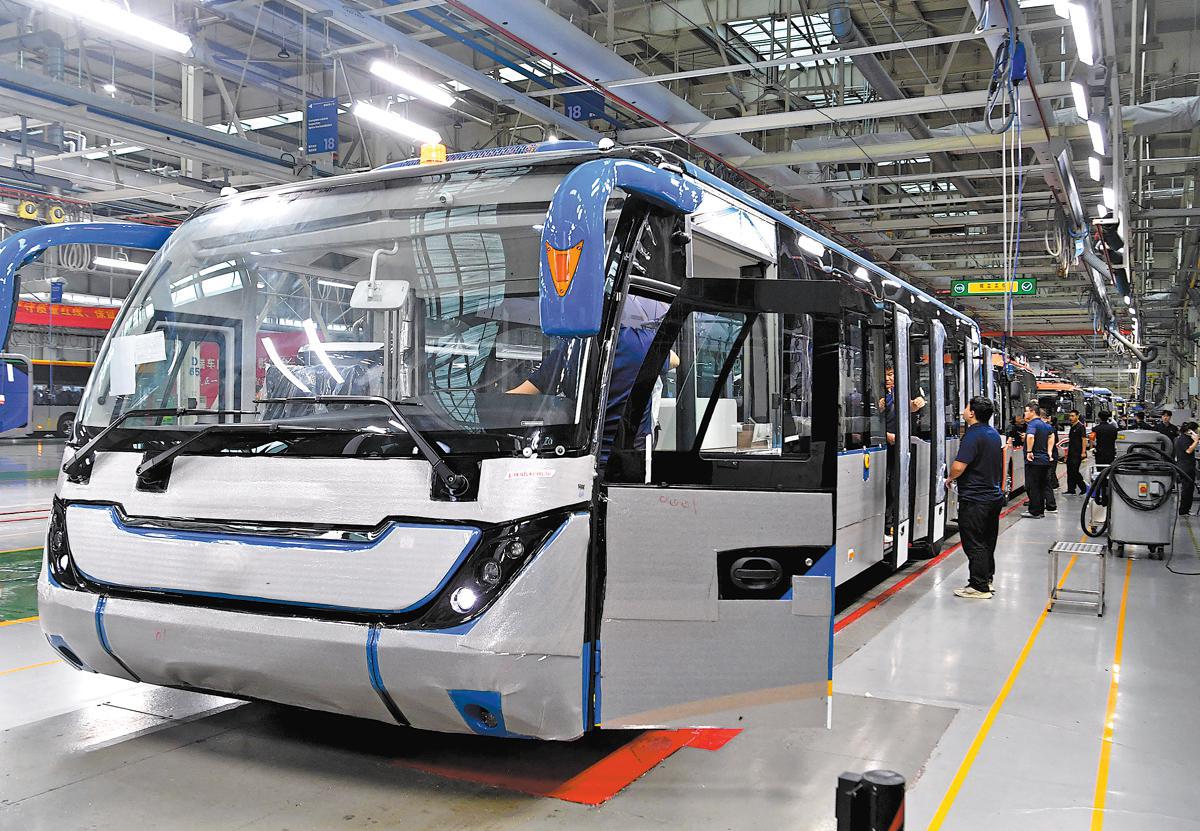
The conflicting trajectories of a global climate crisis and the world's ever-growing need for energy could be addressed by the transition and use of green and low-carbon technologies, and China, with its leading position in these fields, could capitalize if it can overcome some obstacles, experts said.
More than half of the population in sub-Saharan Africa lacks access to electricity, and over 2 billion people worldwide struggle to find affordable clean cooking methods, according to the International Energy Agency's World Energy Outlook 2024.
The growing consensus has been to meet this rising demand with green, low-carbon solutions. China is expected to play a crucial role in addressing this challenge, making full use of its rapidly advancing and affordable green, low-carbon technologies.
The potential for cooperation is significant, especially through China's green Belt and Road Initiative, yet the path forward is fraught with challenges, experts said during a roundtable forum in Beijing last week on the challenges and prospects of investing in and applying national green and low-carbon technology. The forum was part of the launch ceremony for the Green and Low-Carbon Technology Application Committee.
Obstacles exist both within developing nations and in the broader international landscape, where trade barriers that target China's products for solar and wind power generation pose additional difficulties.
Experts suggest that while government-led cooperation platforms should enhance their effectiveness by incorporating market mechanisms, companies must also explore innovative partnership models with local stakeholders to meet the dual demands of clean energy and job creation in developing nations.
Wang Can, a professor and chairman of the school council of Tsinghua University's School of Environment, in an interview with China Daily, highlighted the significant potential in low-carbon cooperation between China and countries involved in the Belt and Road Initiative.
"Countries participating in the Belt and Road Initiative have reached a consensus on the development of renewable energy, with most setting clear development goals," he said.
In their efforts to promote overseas deployment of green technology, Chinese companies have not only exported equipment, but also implemented capacity building programs, providing training to local engineers to ensure sustainable project operations, Wang said.
Through the transfer of green technologies, he said China has helped many developing nations improve infrastructure, reduce fossil fuel reliance, promote industrial transformation and upgrading, and create new industrial chains.
He warned, however, of a series of challenging factors such as uneven regional development, insufficient policy enforcement, inadequate infrastructure and limited green financing.
Wang said that many developing nations still lack strong legal and market mechanisms to support a stable investment environment, which is crucial for advancing energy transition and achieving carbon neutrality.
Currently, some 34 countries, predominantly Western developed nations, have enshrined in law their carbon neutrality or net-zero goals, he said.
He added that no more than 8 percent of developing nations' annual demand for climate finance, which stands at around $470 billion, is met.





