Indian doctor's eternal bond with China immortalized









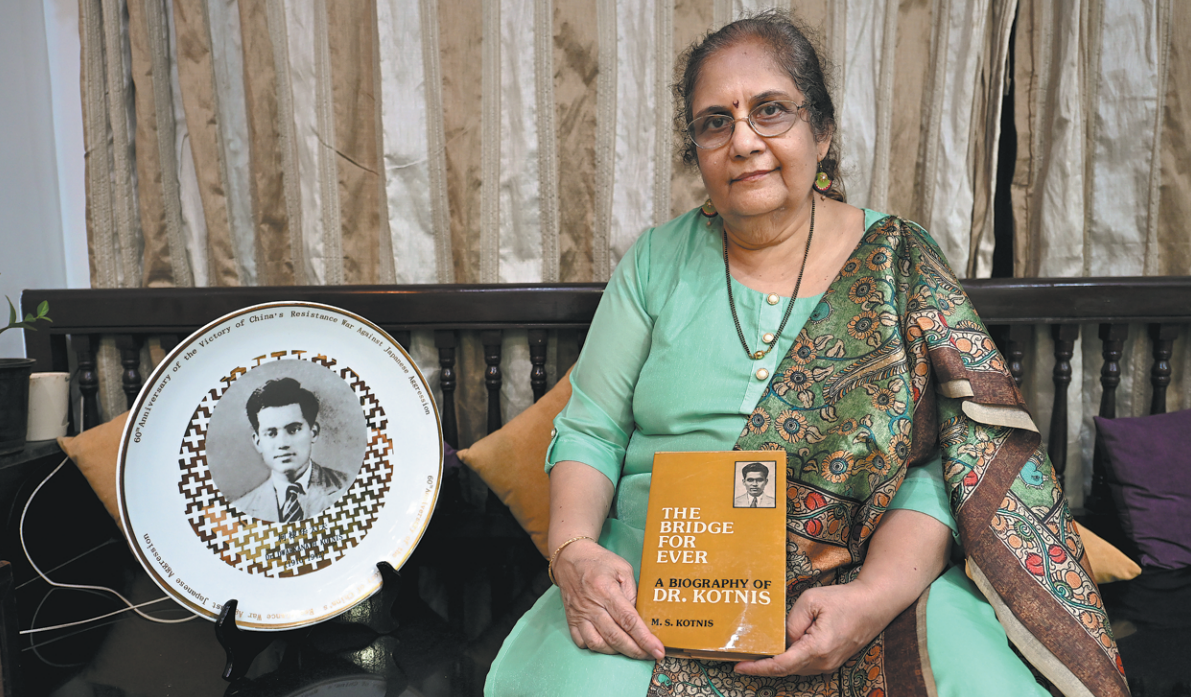
India and China continue to honor the legacy of Indian physician Dwarkanath Kotnis, who selflessly served in mobile clinics treating wounded Chinese soldiers during the Chinese People's War of Resistance Against Japanese Aggression (1931-45).
Kotnis, who worked in China for five years until his death in 1942 at the age of 32, was part of a five-member Indian Medical Mission sent by the Indian National Congress. The mission followed a personal request from Chinese revolutionary leader General Zhu De of the Communist Party of China to Congress leader Jawaharlal Nehru, who would later become independent India's first prime minister.
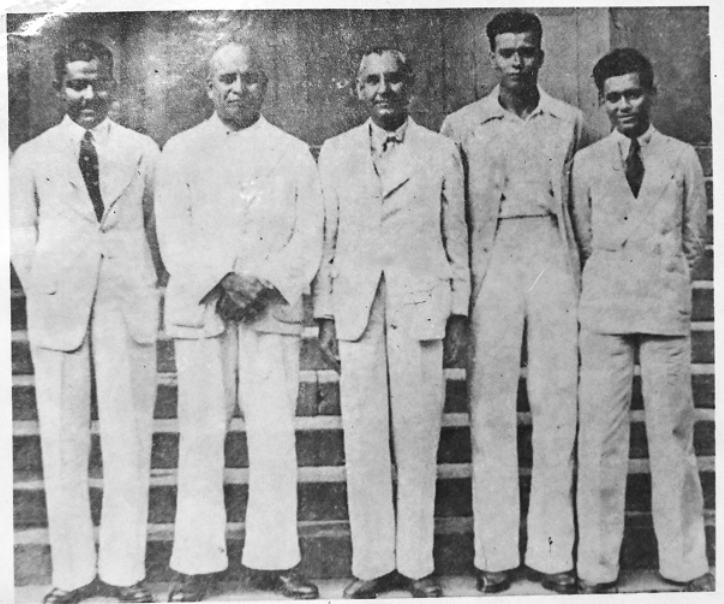
The mission was led by Madan Mohan Lal Atal, a medical doctor whose wartime contributions to the Chinese people deserve equal recognition alongside Kotnis.
Attracted to left-wing ideology during his medical studies in Edinburgh, Scotland, Atal became an anti-colonialist and staunch believer in peoples' right to self-determination. His activism soon extended beyond the borders of British India.
In 1938, when the Indian National Congress decided to send a medical mission to China — then locked in a brutal war against Imperial Japan's aggression — Atal was called back from Spain to lead it. While returning to Bombay (now Mumbai), he specifically brought medical equipment and supplies for China.
The mission comprised five doctors, along with equipment and medicines. An ambulance and a truck were also ordered from the United States.
Traveling by ship, the team first arrived in Hong Kong before moving on to Guangzhou and continuing overland. Their movement through the war-ravaged country was facilitated by China's Red Cross Society.
Once in Hankow (now part of Wuhan in Hubei province), they were incorporated into Curative Unit No 15 of the Chinese Red Cross.
Atal, who was 50 years old at that time, was well aware of the personal risk involved in the mission.
"How long we stay in China depends on the accuracy of Japanese aviators," he told international correspondents in October 1938. "I interviewed (Mahatma) Gandhi before I left India. I told him we would stay until the end of the war, and if we were slaughtered by the Japanese, another unit would take our place."
An article published in the Malaya Tribune described Atal as "grey-haired and bitter" as he described the horrors of the Japanese attacks.
"I saw a horrible sight in the village of Yoyang (Yueyang), between Changsha and Hankow, which was bombed two hours before our arrival," Atal was quoted as saying. "The funds for the unit here were raised by all classes in sympathy with China's just cause; this is apparent on all sides."
More than 700 people applied to join the mission to China after a special committee called for volunteers. Among them were more than 100 doctors, including two women, with applications arriving not only from across the Indian subcontinent but also from Mauritius, East Africa, Syria and England.
In the end, four doctors were selected to accompany Atal, chosen, as the United Press International reported, for "the experience they had, their preparedness to meet death and capacity to carry on work under adverse circumstances".
The committee raised 35,000 Indian rupees for the mission — equivalent to about $230,000 today.
As head of the mission, Atal worked in China for 21 months under the most challenging conditions before returning to India in 1940. By then, his affection for the Chinese people and his respect for their determined resistance to Japanese aggression had deepened.
Speaking to reporters on his arrival in Hong Kong in August 1940, Atal said: "From all accounts the Chinese soldiers are fighting well. If China continues to resist, I think she will emerge victorious, provided, of course, Chinese leaders remain united."
Strong unity
He noted that unity was strong at the time, and stressed that his remark was meant as a reminder to leaders who had put aside their ideological differences.
At a hospital in Yan'an, Shaanxi province, Atal met leaders of the Eighth Route Army (later renamed the People's Liberation Army together with other forces).
"What impressed me most in north Shensi (Shaanxi) was the stress laid on educational and cultural pursuits," he told reporters in Hong Kong. "The people were encouraged to study and lectures were frequently given. The morale of the people was high."
Atal also spoke of international solidarity in China. "I received able support from my Chinese colleagues, many of whom are able surgeons trained in China," he said. "I also met a Czech doctor named Kisch from Prague and a German named Doctor Hans Muller, who did splendid work among the war wounded."
On his return to India, Atal took part in the country's independence movement. He was even imprisoned by the British along with other freedom fighters.
On Aug 15, 1947, India attained independence from the British Empire. Two years later, the People's Republic of China was established.
On April 1, 1950, India became the first nonsocialist bloc country to establish diplomatic relations with the New China. A year later, Atal would return to China to attend a meeting of the Standing Committee of the World Peace Council.
The Indian doctor would make one last visit to his beloved China in 1957. In September that year, the surviving members of the Indian Medical Mission were invited to take part in China's National Day celebrations. Almost immediately after his arrival, Atal started feeling unwell and was hospitalized.
He was diagnosed with advanced-stage cirrhosis. While he was in hospital in Beijing, many of his friends and former colleagues visited him, including then Chinese premier Zhou Enlai. On Dec 1, after battling illness for two months, Atal passed away in the Chinese capital.
Such was his love for China that Atal, in his dying days, wrote in his will that he wanted half his ashes immersed in China's Yellow River, according to the Study Times, the newspaper of the Central Party School of the Communist Party of China.
Atal was cremated in Beijing, and half his ashes were transported to India, where they were immersed at Triveni Sangam, the confluence of the Ganges, Yamuna and mythical Saraswati rivers in Allahabad, or today's Prayagraj. The other half was immersed in the Yellow River.
"We will never forget the noble and precious support shown to the Chinese people by the great Indian people and their outstanding son, Dr Atal," premier Zhou said at the memorial service in Beijing.
A monument was erected in Atal's honor at the North China Military Martyrs Cemetery in Shijiazhuang, Hebei province.
The writer is a freelance journalist for China Daily.