Youth seek sports rehab services
Young adults increasingly turn to sports rehabilitation, combining exercise and therapy to address chronic pain, injuries, and posture problems, Gui Qian reports.










During a weekday evening at 8 pm, the waiting area of the pain management department at Peking University Third Hospital is crowded with people in their 20s and 30s. As they wait for treatment, they exchange fitness tips, creating an atmosphere more like a health salon than a hospital clinic.
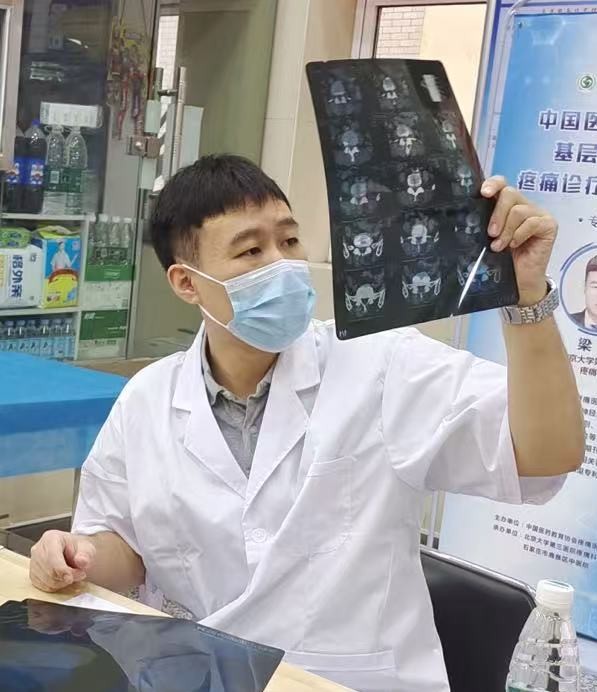
"In recent years, we've seen a noticeable rise in young people seeking treatment for pain and sports-related injuries," said Liang Chen, an attending physician in the department.
He noted that evening and weekend clinics attract more young patients than regular hours. "On weekdays, they typically make up about 20 percent of those we see. But during evening and weekend sessions, they account for more than half," he said.
Liang's observations reflect a growing trend: more young people are turning to sports rehabilitation services.
Public hospitals like his offer these services through departments of rehabilitation medicine, sports medicine, and pain management. Meanwhile, private hospitals and sports rehabilitation clinics in shopping malls and commercial centers are also seeing rapid growth.
"It has become common for young people to visit sports rehabilitation clinics right after work," said Jin Bin, founder of Healing Sports Rehabilitation Clinic.
A graduate of Beijing Sport University (BSU) and a lifelong martial artist specializing in tai chi, Jin opened his clinic in 2015.
Sports rehabilitation services generally fall into four categories: sports injury rehabilitation, chronic pain management, posture correction, and post-surgical rehabilitation.
According to Jin, while post-surgical rehabilitation patients come from a wide age range, posture correction mainly attracts students, including many young women who are conscious of their appearance.
"A lot of people are familiar with terms like leg misalignment, forward head posture, and anterior pelvic tilt — common posture issues," Jin explained. He noted that the first two problems are especially prevalent among younger patients.
Liang divides young patients seeking sports rehabilitation into two main groups.
The first group consists of office workers who suffer from chronic neck and back pain caused by lifestyle and work habits, such as prolonged sitting. They also often develop conditions like tendinitis and repetitive strain injuries — known in China as "mouse hand" — from excessive phone and computer use.
The second group includes overactive sports enthusiasts who may lack proper training knowledge. They often engage in workouts that are too intense or performed incorrectly.
Tailored therapy
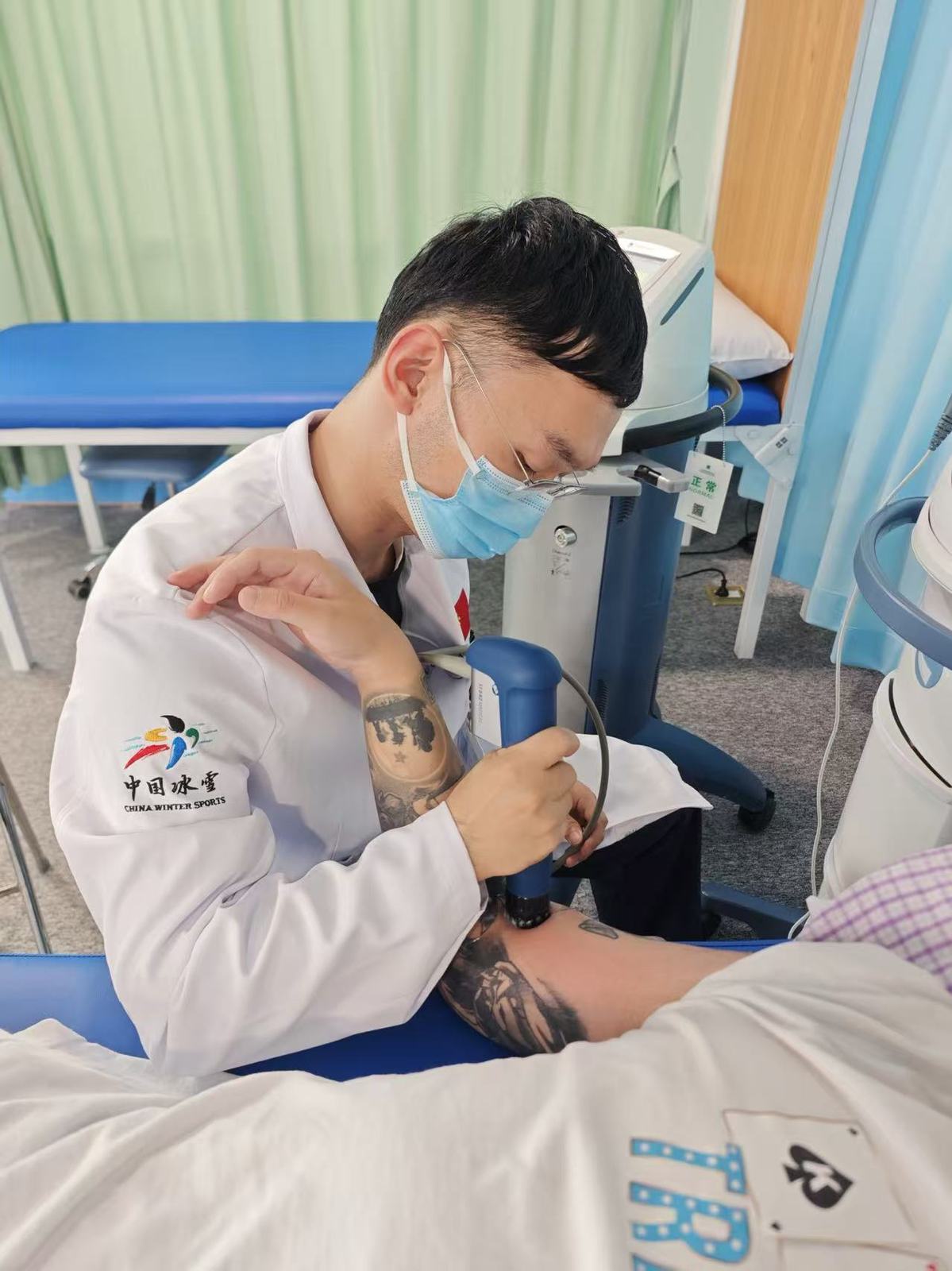
According to Shen Li, a rehabilitation therapist at a private hospital in Beijing, sports rehabilitation therapy generally includes three modules: instrument-based pain relief, manual techniques to release muscles and fascia, and exercise training to strengthen specific muscle groups.
Shen was among the first students enrolled in the sports rehabilitation department at BSU in 2008.
The department was established to support the Beijing Olympics, with the goal of systematically training professionals with expertise in both sports science and clinical rehabilitation. Around that time, universities across China began creating similar programs to cultivate talent in this field.
However, many people remain unclear about the field, often asking how manual techniques to release muscles differ from traditional massage therapy.
"Massage institutes and spas often follow a set routine, using the same techniques for everyone without personalization," Shen explained. "By contrast, sports rehabilitation starts with an assessment before treatment, making the process more precise."
More importantly, sports rehabilitation combines both active and passive approaches. "Relying solely on manual therapy may relieve pain temporarily, but the risk of recurrence is higher," Shen said. "Adding exercise training strengthens the relevant muscles and prolongs the effect."
This is also why some patients jokingly call rehabilitation therapists "fitness coaches" and hospitals "gyms", Shen added.
Jin sees this as part of a broader trend of integrating sports and medicine.
Although the concept has been around for nearly a decade, it has only gained wider recognition and practice in recent years.
"Sports are good medicine, and exercise is a remedy," he said. "Through active training, many health issues can be healed. Sports rehabilitation not only restores physical function but also helps relieve anxiety and stress in modern life."
According to Jin, the surge in demand for sports rehabilitation is largely driven by young people's desire for "physical and mental balance", which in turn has fueled the development of the industry.
While sports rehabilitation centers are now popular in megacities like Beijing and Shanghai, residents of smaller towns still have "limited awareness and spending power" in this area, Jin noted.
Youth appeal
The rise of sports rehabilitation among young people is closely tied to the influence of social media. "Rehabilitation check-ins" on platforms like Douyin, Kuaishou, and Xiaohongshu have become a trend.
On Xiaohongshu, for example, the hashtag "sports rehabilitation "has garnered more than 1.25 billion views and 3.45 million discussions, creating a vast online community where young people share tips, treatment methods, and progress updates.
This trend has also made certain rehabilitation techniques go viral. Fascia scraping, in particular, has become a must-try among fitness enthusiasts.
"Online sharing sparks curiosity and a sense of novelty, attracting people to try these treatments even if they don't necessarily need them," Shen said.
Young patients often come well-prepared for their appointments. They follow posts and vlogs and use AI to gather extensive information.
"Many of these patients already have a rough understanding of their condition when they arrive. Some even request a specific treatment or ask to see a particular doctor," Shen explained.
Sports injuries account for a significant portion of the cases Shen treats, especially as trendy sports draw more young people into the fitness wave.
Different seasons also bring different "mainstream" injuries: knee and ankle injuries from soccer in spring and summer; waist damage from cycling and frisbee in summer and autumn; and orthopedic and ligament issues from skiing in winter.
Shen advises sports enthusiasts to diversify their exercise routines. "Try to avoid focusing on just one type of sport. You may emphasize a favorite, but don't do only that," he said.
He explained that single-sport training often causes muscle imbalances. Long-distance running, for example, overworks the lower limbs while underusing the upper body, and sports like ping-pong or tennis can lead to left-right asymmetry.
Liang has also observed that, compared to middle-aged and elderly patients, young people are more likely to seek medical help.
"Many older patients tend to endure pain and delay treatment, while young people often book medical appointments quickly — sometimes after just a few hours or a day of discomfort," he said.
According to Liang, this proactive approach reflects a shift in health attitudes — from passive treatment to active prevention.
"The younger generation is becoming increasingly health-conscious," he said.
Contact the writer at guiqian@i21st.cn






Today's Top News
- China's grain output hits new high in 2025
- Trump drops EU tariff threat after deal framework over Greenland in Davos
- China's message in Davos draws praise
- Consensus, not coercion, key to Ukraine crisis
- Wide view seen as key to full grasp of China
- Trump seeks immediate talks on buying Greenland