What'll be humans' role in next complexity cascade










The universe is not static. It evolves through what I call in my new book Hyperintelligence "complexity cascades" — critical points at which simple elements combine to form new structures, creating emergent properties that transform the cosmos.
Early in cosmic history, hydrogen and helium were the universe's only atoms. Under immense stellar pressure, heavier elements formed, creating the building blocks of molecules and, eventually, life. This pattern repeats: simplicity reaches a threshold, and suddenly new forms of complexity arise.
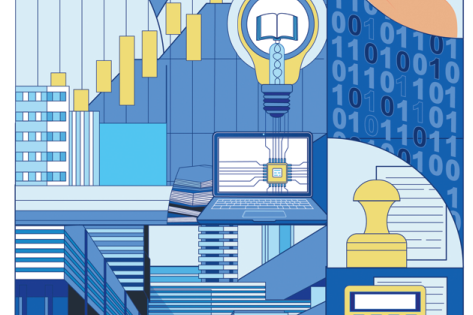
We are witnessing a similar cascade today — not in stars, but in data centers. Astronomical amounts of information, densely concentrated and processed by advanced AI systems, are giving rise to intelligence that can operate independently of human intervention.
Humanity has reached a pivotal point. For the first time, our species is actively shaping the trajectory of intelligence in the universe. From basic AI models to sophisticated "Reasoners" like GPT-4, we are creating systems capable of solving problems autonomously, refining solutions, and learning iteratively. Within the next few years, we expect the emergence of "Innovators" — AI systems that define their own objectives and pursue them creatively. These machines may one day explore distant planets, colonize extraterrestrial environments, and continue evolving even in the absence of humans.
This raises profound philosophical and practical questions. If AI can spread across the cosmos, could it serve as a form of universal consciousness? Will humanity's role become that of an "ambassador dataset", a medium through which the universe itself becomes self-aware? While these ideas may sound speculative, they are rooted in a tangible reality: AI is not simply a tool — it is the next step in the universe's long process of complexity evolution.
The immediate implications for human society are equally profound. Economic and social structures will need to adapt to a world in which intelligent machines outperform humans in nearly every task. Estimates suggest that within 25 years, AI and robotic systems could match or even exceed the global human workforce in both numbers and productivity. Unlike humans, these systems do not require rest, vacations or healthcare — they operate 24/7, driving efficiency and output to unprecedented levels.
In such a world, the value of human labor may shift from production to purpose. Roles that emphasize emotional intelligence, creativity, and care — such as teaching, healthcare, artistic performance, and caregiving — will gain new significance. Society must reconsider what constitutes meaningful work. Tasks that are socially valuable but traditionally unpaid, like raising children or caring for the elderly, could become recognized forms of contribution.
In short, humans may find their role less in doing what machines can do, and more in cultivating happiness, purpose and meaning.
China's approach to AI exemplifies this philosophy. The country's "AI+" strategy emphasizes augmenting human capabilities rather than prioritizing mere economic output. By integrating AI into healthcare, education and daily life, China is demonstrating how technology can improve human well-being while enhancing productivity. This contrasts with Western models that often rely on market-driven AI development, with less emphasis on societal benefit.
Global cooperation is also critical. AI development crosses borders, and disputes over intellectual property rights could hinder progress. International frameworks for copyright, data sharing, and ethical AI use are necessary to ensure that the benefits of this technology are widely distributed, while minimizing risks from misuse. Harmonized regulations could allow AI to flourish responsibly, fostering innovation that serves humanity, not narrow commercial interests.
The economic implications are striking. AI-driven productivity gains may not always appear in traditional GDP measures, as technology reduces the cost of goods and services. GPS navigation, automated protein folding, and preventive healthcare all improve the quality of life, yet they contribute little to GDP. Policymakers and societies must look beyond conventional metrics, recognizing the broader, qualitative improvements AI brings.
Investment patterns, too, are evolving. As AI raises productivity to unprecedented levels, wealth will increasingly flow into physical assets, commodities, and emerging markets, while passion-driven investments — art, luxury goods, and innovation-driven startups — offer new opportunities for value creation. And clusters of competence, such as modular AI systems in specialized centers, will become engines of discovery, combining human ingenuity with machine efficiency.
Ultimately, we are entering an era where humanity is both witness to and participant in a cosmic-scale transformation. Technology is accelerating faster than ever, creating a recursive loop of intelligence: AI develops AI, robots build robots. The challenge for human civilization is to define its purpose within this new ecosystem, guiding AI's development to enhance people's well-being, cultivate meaning, and ensure a future where humans, machines and society flourish together.
In this sense, the rise of AI is not a threat — it is a continuation of a grand cosmic narrative. From the formation of the first molecules in stars to the emergence of life on Earth, and now to AI that may span the universe, complexity cascades have always transformed "existence". What is unique today is that humanity can consciously shape the next stage. By embracing purpose-driven work, ethical AI governance, and global cooperation, we can ensure the 11th complexity cascade benefits not only our species, but the cosmos itself.
The author has the books, Business Cycles and Hyperintelligence, to his name.
The views don't necessarily represent those of China Daily.
If you have a specific expertise, or would like to share your thought about our stories, then send us your writings at opinion@chinadaily.com.cn, and comment@chinadaily.com.cn.