A catalyst for Ethiopia's development
China's Global Governance Initiative will further its ties with Ethiopia as well as deepen South-South cooperation on a larger scale










China has increasingly become a key player in South-South cooperation and offers a practical alternative to traditional North-South development aid models. Unlike conventional aid, which is often tied to political or economic conditions, China's South-South cooperation emphasizes respect for sovereignty, non-interference, non-conditionality and mutual benefit. This framework allows recipient countries to retain ownership of their development projects and promote partnerships based on equality rather than dependency. For Ethiopia, this model has translated into measurable development outcomes, including industrial expansion, infrastructure modernization, scientific and technological advancement, and urban transformation.
A key feature of China's South-South cooperation is its demand-driven, ownership-oriented approach. South-South cooperation initiatives respond directly to the priorities formulated by the partner countries. In Ethiopia, this principle has guided the development of industrial parks, infrastructure projects and technological collaborations that are in line with national development strategies. China's approach integrates technology transfers, capacity building programs and commercial partnerships, strengthening local expertise while ensuring sustainability and strategic alignment with Ethiopia's long-term plans.
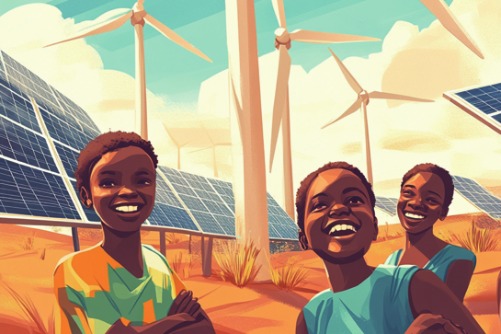
China also emphasizes environmentally sustainable and problem-oriented development. Drawing on domestic experience and global commitments to green growth, South-South cooperation projects are addressing climate change resilience, renewable energy adoption, eco-friendly industrial development and green financing mechanisms. In Ethiopia, these initiatives have facilitated the integration of green technologies into industrial and urban projects, and strengthened resilience to climate-related risks.
Institutional support further differentiates the Chinese South-South cooperation model. The Global Development and South-South Cooperation Fund, which recently increased to $4 billion, has supported programs, including capacity-building centers, organic farming initiatives and specialized technical assistance, demonstrating China's multidimensional support beyond financial aid. Such institutional arrangements have strengthened governance structures, improved policymaking capacity and enhanced human capital in Ethiopia and other partner countries.
One of the most significant impacts of South-South cooperation between China and Ethiopia has been in industrial development. Ethiopia's Hawassa Industrial Park and other special economic zones have expanded production capacity, accelerated industrialization and created tens of thousands of jobs. By utilizing Chinese expertise in the design and management of special economic zones, Ethiopia has developed industrial clusters that attract investment, increase export potential and promote entrepreneurship. For example, the Hawassa Industrial Park alone has created more than 30,000 direct jobs, mostly for women, demonstrating the social and economic inclusiveness of South-South cooperation-driven industrial policies. These initiatives facilitate skills development, technology transfer and value chain integration, contributing to Ethiopia's overall economic resilience.
Infrastructure projects have similarly changed Ethiopia. The Addis Ababa-Adama Expressway, funded in part by the Export-Import Bank of China, has cut travel time between the two cities from 2.5 hours to about 45 minutes and boosted trade, logistics and regional integration. Operated by the Shenzhen Metro Group, the Addis Ababa Light Rail Transit stretches over 34 kilometers across 39 stations, providing a modern urban transportation system that reduces congestion and supports sustainable mobility. Addis Ababa's Smart City Project, implemented by the China Civil Engineering Construction Corporation, integrates road upgrades, smart technologies and improved public services to improve the quality of life in the city, while familiarizing Ethiopian planners with international best practices. These infrastructure projects illustrate how South-South cooperation brings economic and social benefits, improving efficiency, attracting investments and raising living standards.
China's South-South cooperation has also strengthened Ethiopia's science, technology and innovation infrastructure. The Ethiopia Museum of Art and Science, developed with Chinese support, serves as a hub for education, digital innovation and science, technology, engineering and mathematics capacity building. It promotes scientific literacy and technical expertise among students and professionals, contributing to the long-term development of human capital. Ethiopia's space capabilities have also been enhanced through earth observation satellites and the establishment of a ground station that improves the monitoring of floods, droughts and other climate hazards. These technological initiatives strengthen governance, disaster preparedness and environmental planning, while creating opportunities for research and data-driven policymaking.
China's Global Governance Initiative will further strengthen South-South cooperation by advocating equitable representation in global institutions, promoting a multipolar international order and strengthening the influence of the Global South. The Global Governance Initiative emphasizes five core concepts — staying committed to sovereign equality, international rule of law, multilateralism, people-centered approach and real results. The concepts closely align with the goals of South-South cooperation. By aligning with the initiative, Ethiopia will benefit not only from bilateral development assistance but also from frameworks that facilitate participation in global governance, equitable access to resources and knowledge sharing with other developing countries.
To maximize the effectiveness of South-South cooperation in Ethiopia, several strategic directions are recommended. First, Ethiopia should deepen green and issue-based collaboration through initiatives in renewable energy, climate-resilient infrastructure and sustainable agriculture, incorporating environmental, social and governance indicators, thus improving accountability and long-term sustainability. Second, stakeholders should strengthen institutional coordination and monitoring through transparent aid management systems and data-driven assessments. Third, Ethiopia should expand capacity-building programs, including the transfer of industrial know-how, technical training, satellite and urban planning programs, and research partnerships, which will institutionalize knowledge sharing and strengthen human capital. Fourth, by utilizing triangular cooperation models between China, United Nations agencies and Ethiopia, resources and expertise can be combined to achieve more comprehensive and impactful results. Finally, Ethiopia should align South-South cooperation projects with its national development plans, the UN's 2030 Agenda for Sustainable Development and the African Union's Agenda 2063 to ensure coherence with global development plans.
In conclusion, China's South-South cooperation model — based on sovereignty, mutual benefit, green development and institutional innovation — has brought tangible and win-win results to Ethiopia and China, from industrial and infrastructure development to promoting science, technology and human capital. By deepening these partnerships and leveraging multilateral frameworks, Ethiopia can sustain and build on these benefits, setting a new benchmark for inclusive, resilient and impact-oriented South-South cooperation in the 21st century.
The author is a researcher at the Policy Studies Institute, Ethiopia, and an associate professor at Addis Ababa University. The author contributed this article to China Watch, a think tank powered by China Daily.
The views do not necessarily reflect those of China Daily.
Contact the editor at editor@chinawatch.cn.