Music festival unites East and West
China Daily cohosts forum exploring Sino-US relations through the arts









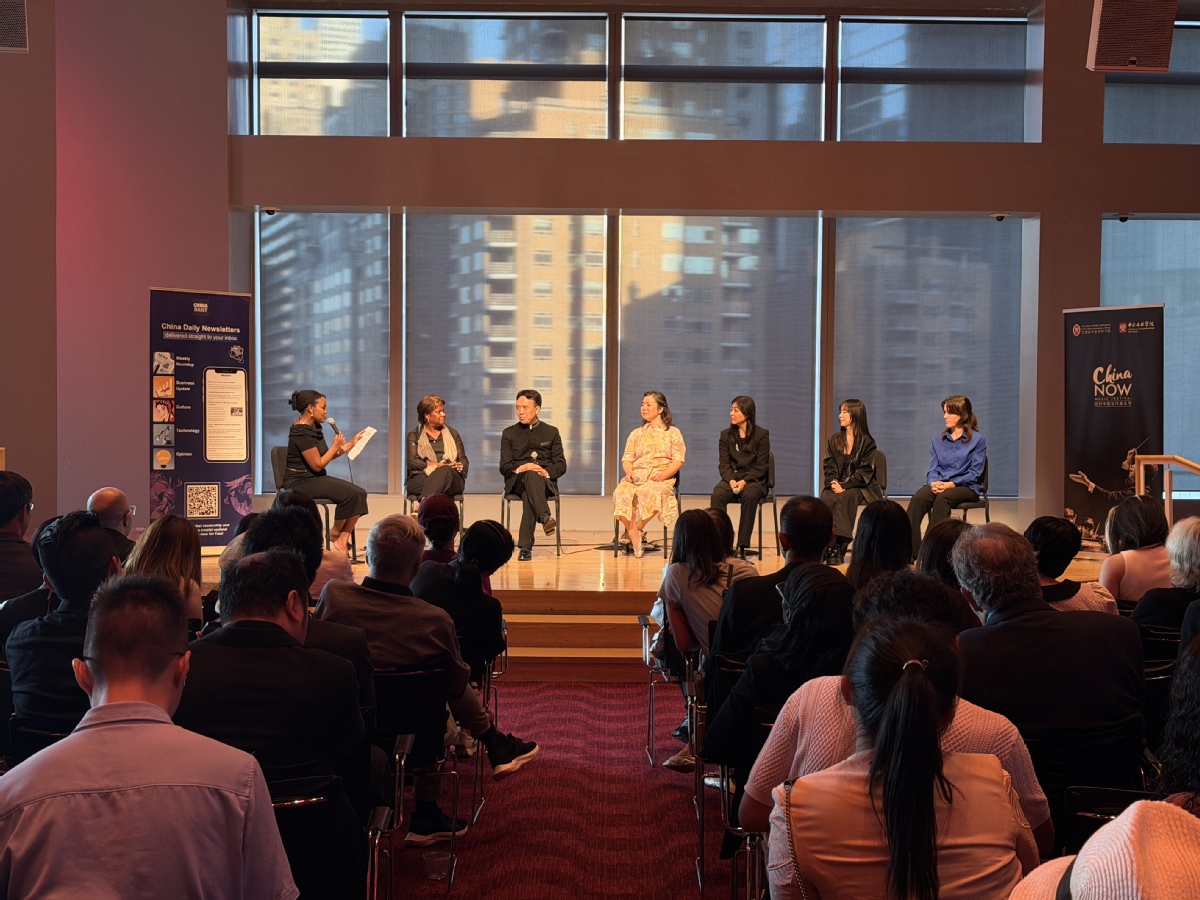
New York city's iconic Lincoln Center played host to the second day of programming for the eighth annual China Now Music Festival, which featured a concert and a US-China Music forum on Sunday, hosted by the US-China Music Institute at Bard College and China Daily.
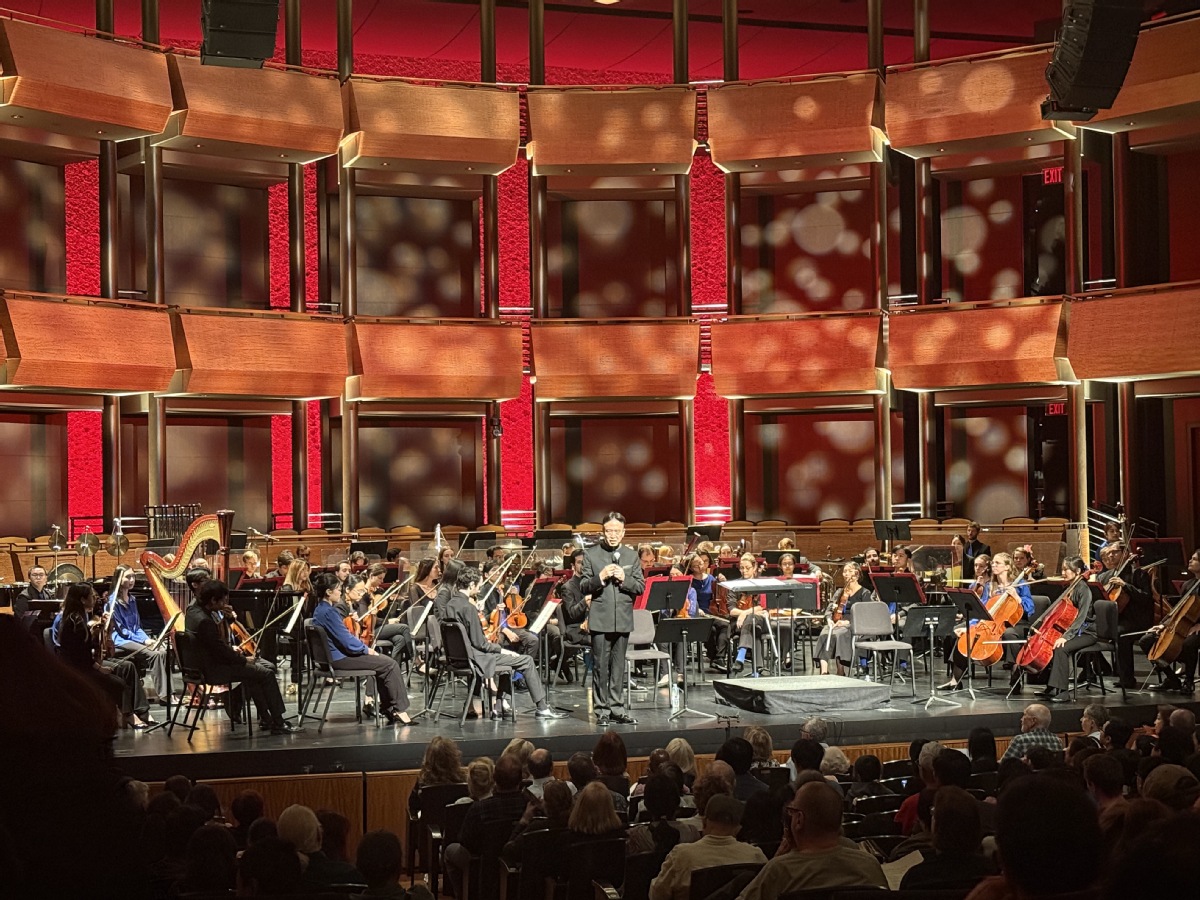
The groundbreaking concert in the Rose Theater at Jazz at Lincoln Center's Frederick P. Rose Hall with The Orchestra Now was conducted by maestro Jindong Cai. It showcased the legacy of three generations of Chinese composers and their seminal work at the intersection of music, dance and opera.
Works by composers Ye Xiaogang, Zou Hang, Dai Bo and Yu Mengshi spanned the 1950s to 1980s. Soprano Manli Deng and baritone Yue Wu showed remarkable range. All demonstrated how music ebbs and flows through history, creating music in motion.
An exploration of the US-China relationship through art was also woven into the programming.
Hai-Ye Ni, principal cellist of the Philadelphia Orchestra, performed the US premiere of Chinese-Mongolian composer Yu Mengshi's The Lonely Camel Calf.
Later, she pointed out how pivotal the Philadelphia Orchestra had been in building relations between the US and China dating back 50 years.
"The Philadelphia Orchestra was the first American orchestra to visit China in 1973. It was (conductor) Eugene Ormandy and the whole orchestra. We still have a couple of musicians in the orchestra now who were on that tour.
"It was with the Central Philharmonic in Beijing and they performed two concerts in Beijing and I think they went to Shanghai also … my colleagues really enjoy going back to China almost every year now. We do a lot of cultural exchange programs."
The China Now festival had three major concerts in the series: the first on Sept 27 at the Fisher Center for the Performing Arts at Bard, the second on Sept 28 at the Lincoln Center, and the last concert will be on Oct 5 at the same venue.
A forum was held after the concert, with guest panelists including Cai, who is director of the US-China Music Institute, professor of music and arts at Bard College in New York, and artistic director of the Bard East/West Ensemble; Alicia Adams, former vice-president of international programming and dance at the John F. Kennedy Center for the Performing Arts; the cellist Ni; and members of the Bard East/West Ensemble Beitong Liu, Xiaoyan Luo and Katherine Chernyak.
The panelists delved into the value of continuing cross-cultural musical exchange between the US and China through the arts and the impact of the Bard East/West Ensemble's first tour to China from June 7 to 21.
Formed in 2022, the ensemble includes musicians from diverse backgrounds that use 14 Chinese and Western musical instruments.
It is the brainchild of Cai, an accomplished musician, scholar of Western classical music in China and advocate for music from across Asia. He has lived in the US for nearly 40 years.
"In the past 10 to 20 years, I started to think about how we can introduce music from China to the West. So that's how we initially started the US-China Music Institute at Bard college," he told China Daily.
"Three years ago, I came up with the idea because of an event at the Kennedy Center … we thought what if we combine Chinese instruments and Western music together. That's how we created the ensemble. After that performance, I thought, 'I want this to continue.'"
He added that the tour to China visited universities and schools to help people "come back together."
Adams, meanwhile, reflected on the progress she'd made in US-China cultural exchange while at the venerable Kennedy Center. She said its core mission was to disseminate work, not just at the center, but to audiences across the country.
"We made a lot of progress," she told China Daily. "I did a China festival at the Kennedy Center in 2005, and this was when we brought over nearly 1,000 artists from China ranging from the Beijing Opera to the Beijing People's Art Theater, The National Dance Company of China.
"This was before China became China as we know it now. It was before the Beijing Olympics in 2008 and before many of these artists had performed in the US before, so there was huge interest in China at the time and huge interest in these artists."
She added that almost all of those companies — around 900 artists — went on tour across the US due to overwhelming demand from people who wanted to witness their "extraordinary" work.
Liu and Luo of the Bard East/West Ensemble talked of their passion for playing, respectively, the erhu (a two-string bowed instrument) and pipa (a four-string lute).
Liu explained that she fell in love with the erhu because of her father, who introduced it to her.
"It has quite a human voice, its deep and emotional. I decided to learn it and it's been 16 years. I still discover new things with it … and I keep learning."
Chernyak added that the tour was her first time in China and she wasn't sure what to expect. But she described her trip as "special", adding she felt "very lucky to visit and go there. I'd love to go back, yes, one for the food, two, just because it's a beautiful country".
All the panelists agreed that continuing to foster relations between the US and China through the arts was important.
"Musicians like me and musicians like us, love both countries," Cai added. "If you ask all the musicians in China and all the musicians in America, I think we don't want to depart. We want to continue to work together."
Adams agreed: "I think that it's so important that the kind of cultural exchange that we have begun continues even more."