Half a century of friendship: China's role in shaping Bangladesh's talents









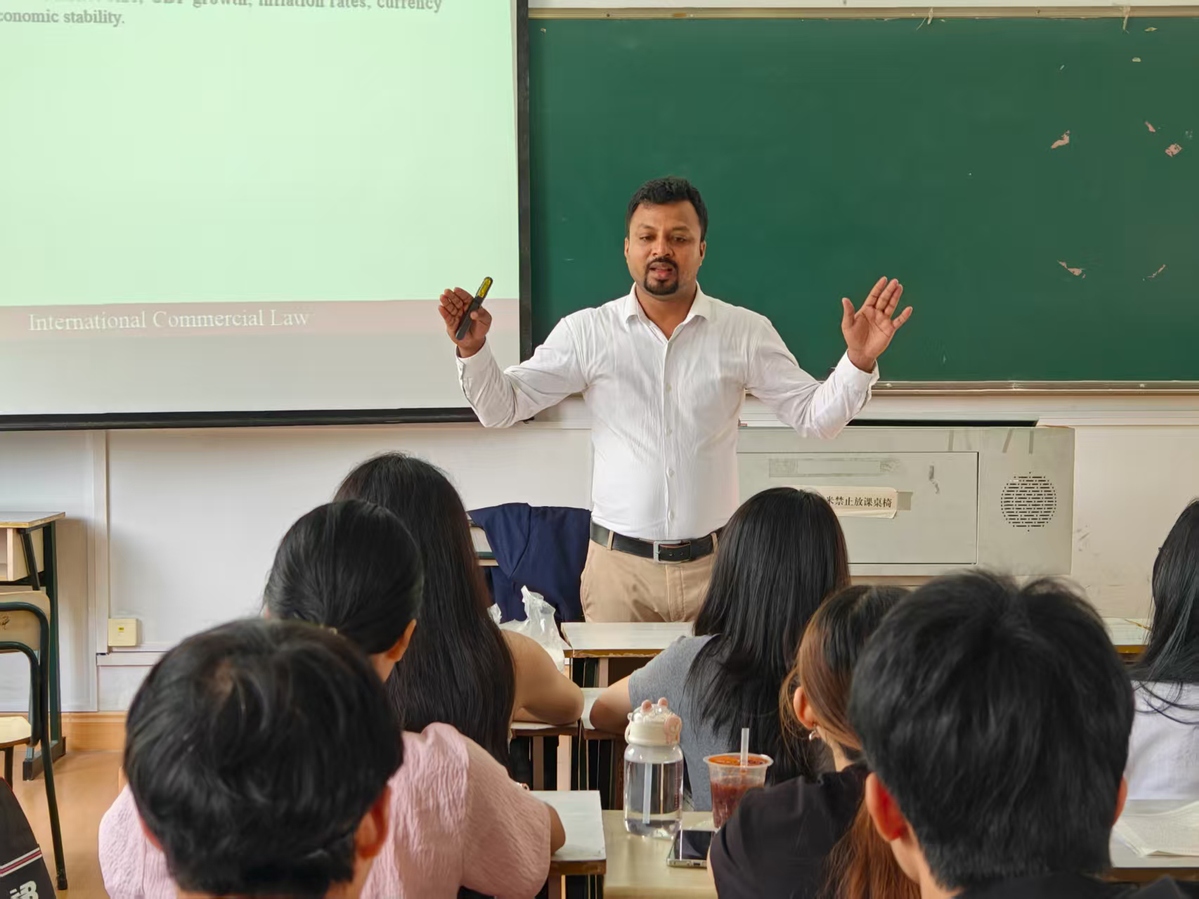
The establishment of diplomatic relations between Bangladesh and China on Oct 4, 1975, planted a seed of partnership that has grown into a multifaceted and robust relationship, opening a new chapter of cooperation that has spanned half a century.
Both nations have fostered a partnership founded on mutual respect, shared development goals, and expanding people-to-people connections. The branches of this relationship encompass various areas, including trade and investment, infrastructure, defence, and culture.
Among these areas, education has emerged as one of the most impactful and sustainable pillars of cooperation, laying the foundation for the long-term development of human resources in Bangladesh while strengthening bilateral ties.
Over the past five decades, China has not only opened its doors to Bangladeshi students but also provided world-class education and research facilities, tailored programs, exposure to China's modernization journey, and a supportive environment – all of which have empowered these students to grow, contribute to their homeland, and become bridges between nations.
A large number of Bangladeshi students are enrolled in undergraduate programs, particularly in medicine, engineering, information technology, business, and emerging fields like artificial intelligence and renewable energy, where the curriculum is increasingly aligned with international standards, ensuring their global competitiveness.
Others pursue postgraduate studies, including PhD research, where they work closely with Chinese professors on advanced topics like climate change, poverty alleviation, sustainable development, robotics, and biotechnology.
Such engagements provide them with the opportunity to contribute not only to their personal career growth but also to Bangladesh's socio-economic development upon their return.
China offers significant opportunities for international students from Bangladesh. According to the Chinese Embassy in Bangladesh, since 1981, approximately 4,500 Bangladeshi students have benefited from this partnership, contributing to research and education both locally and globally.
The ultimate question concerns the career trajectory of Chinese-educated Bangladeshi graduates.
What does the future hold for them? The answer reveals a variety of promising and diverse pathways. The impact of this educational cooperation extends far beyond graduation, as Bangladeshi students often become catalysts for development, both in their homeland and globally.
A significant number of them return to Bangladesh, bringing back valuable expertise that drives progress in key sectors.
Academic scholars who graduate join public universities as faculty members, introducing cutting-edge knowledge and research methodologies to the local academic community.
In the health sector, doctors who have graduated from Chinese medical universities are now serving in hospitals, clinics, and rural healthcare centers, effectively addressing a crucial gap in the country's medical workforce.
Engineers and IT graduates play a vital role in contributing to infrastructure projects, industrial growth, and the expanding digital economy of Bangladesh.
Additionally, scholars with expertise in business, trade, and the Chinese language facilitate smooth communication between Bangladeshi and Chinese enterprises, directly supporting bilateral trade and investment.
By returning home with advanced knowledge and global exposure, these graduates are a crucial resource for Bangladesh's journey toward becoming an advanced nation.
Equally important is the cohort that chooses to remain in China. Far from being "brain drain", this represents a strategic extension of Bangladesh's global influence.
Not all students return home immediately, though; many choose to work in China, adding value to its economy while strengthening people-to-people connections.
With China's Z-visa facilitating post-study work, Bangladeshi alums work in universities, research institutes, hospitals, multinational corporations, foreign trading companies, and tech hubs like Shenzhen in Guangdong province.
Others venture into entrepreneurship, starting businesses in sectors like import-export firms. By doing so, they become cultural ambassadors, fostering mutual understanding and strengthening economic linkages between the two nations.
Their success stories inspire new generations of Bangladeshi students to consider China not just as a study destination but as a land of opportunity.
Furthermore, the value of a Chinese degree is increasingly recognized globally, opening doors in other countries and serving as global ambassadors of the China-Bangladesh friendship.
Bangladeshi graduates from Chinese universities are pursuing doctoral studies and research fellowships in Europe, North America, and other parts of Asia. Bangladeshi students who graduated in China often find employment opportunities in other countries.
Their Chinese degrees, combined with their bilingual or multilingual skills, give them a competitive edge in the global job market. In this way, the impact of China's educational cooperation with Bangladesh extends far beyond the bilateral sphere, contributing to global mobility and talent exchange.
Over the past half-century of friendship, education has been the quiet engine of transformation. Its most significant legacy is the talents it has helped raise. This academic presence is not only about degree attainment but also about shaping long-term career trajectories, knowledge transfer, and people-to-people bonds between Bangladesh and China.
The seeds planted in 1975 have blossomed, and the harvest is a generation of talents poised to shape a brighter future for both nations.
The author is a senior lecturer and researcher at the School of Overseas Education (School of Foreign Languages) at Sanming University, Fujian province.




- A new lease of life: Providing dialysis access in rural China
- China's grain output hits new high in 2025
- Xinjiang ensures vegetable, fruit supply amid cold wave
- Chinese scientists develop self-powered device to speed up muscle repair
- Taiwan's leader Lai absent from first legislative review meeting of his impeachment
- New plant species with lemon fragrance discovered in China's Guizhou