Reclaiming China's narrative and fostering wisdom across cultures









In 1764, the French Enlightenment thinker Voltaire wrote admiringly of Confucius, describing him as "a wise man... who taught men to live happily six hundred years before our vulgar era". For Voltaire, Confucian China — rational, meritocratic, and secular — stood as a mirror to expose the corruption of Europe's feudal society, governed by the church and aristocracy.
But from the Jesuit missionaries of the 17th century who translated and compiled Confucius, the Chinese Philosopher (Confucius Sinarum Philosophus) under Louis XIV, to the 19th-century European Sinologists and the China Studies of the 20th century, much of what the world "knows "about China is filtered through foreign assumptions.
This pattern persists today. The Harvard scholar John King Fairbank, for example, helped institutionalize "China Studies" in the United States through his famous "Impact-Response" framework: the idea that modern China developed mainly in reaction to Western influence. Fairbank's model placed China in a reactive role — defined by what the West did to it, rather than by what China did itself.
This view is deeply misleading. As Li Bozhong, one of China's foremost economic historians, argues, late imperial China was far from stagnant. After decades of research on the Yangtze River Delta economy during the late Ming and Qing dynasties — from the 17th to the mid-19th century — he has shown that the region's flourishing domestic and international markets laid the groundwork for industrial transformation once Western technology began arriving after the First Opium War. In other words, while the "impact" of the West was real, China's "response" was not a passive reaction.
The long-standing Eurocentric framework must be reexamined if China is to be truly understood. In contrast to the Western model of the nation-state, which emerged from revolution and nationalism and tied political sovereignty to ethnic or linguistic identity, China's unity has historically rested on a civilizational foundation. Since the Qin Dynasty unification in 221 BC, China has conceived of itself not as a nation defined by a single ethnicity but as a moral and cultural order centered on shared values, institutions and a written language.
Whereas Europe's modernity fragmented empires into nations, China's capacity to absorb and transform differences within a common cultural framework has ensured continuity. This distinction remains vital for understanding China. The country should not be viewed through the prism of Western nationhood and identity, but through its own civilizational prism — that sees unity as cultural before it is political, and diversity as integral rather than divisive.
Today, when China is a global actor helping shape the world's intellectual, economic, and moral landscape, to study China through the Western prism is to repeat the mistakes of the past.
Voltaire's admiration for Confucius, Matteo Ricci's mastery of Chinese classics, and Joseph Needham's monumental Science and Civilization in China all remind us that true understanding thrives through dialogue, not monologue. When international scholars engage with Chinese peers — not as teacher and pupil, but as partners — the field of China Studies becomes richer and more profound. This is not an argument for isolation or intellectual nationalism.
To study China today is not merely to recover its past, but to continue the conversation between the East and West, ancient and modern. For Chinese scholars, the mission is clear: to speak with confidence from their own cultural understanding, yet with the openness to also listen and learn. For their international counterparts, it is to engage with China on equal terms, free from preconceived frameworks. Only then can China Studies become a meeting of minds rather than a mirror of misunderstanding.




Today's Top News
- US?arms sale only a?'bomb' to Taiwan
- China-Cambodia-Thailand foreign ministers' meeting reaches three-point consensus
- Drills demonstrate China's resolve to defend sovereignty against external interference
- Trump says 'a lot closer' to Ukraine peace deal
- China pilots L3 vehicles on roads
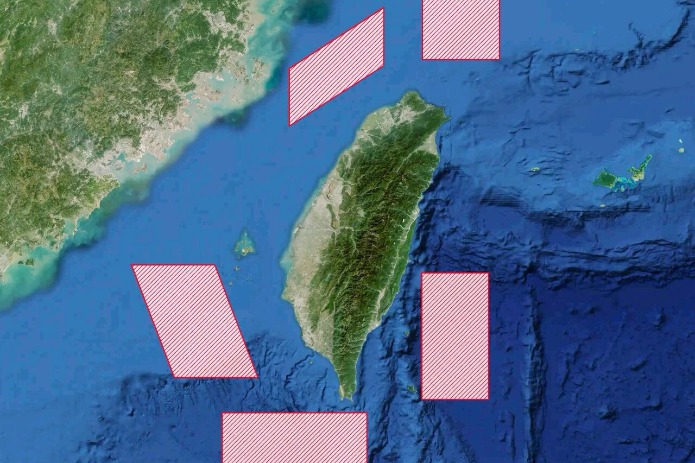
- PLA conducts 'Justice Mission 2025' drills around Taiwan