Hanfu captivates global audience
Featuring artifact-based designs and historical references, an illustrated English-language book offers international readers an immersive journey through 2,000 years of hanfu.









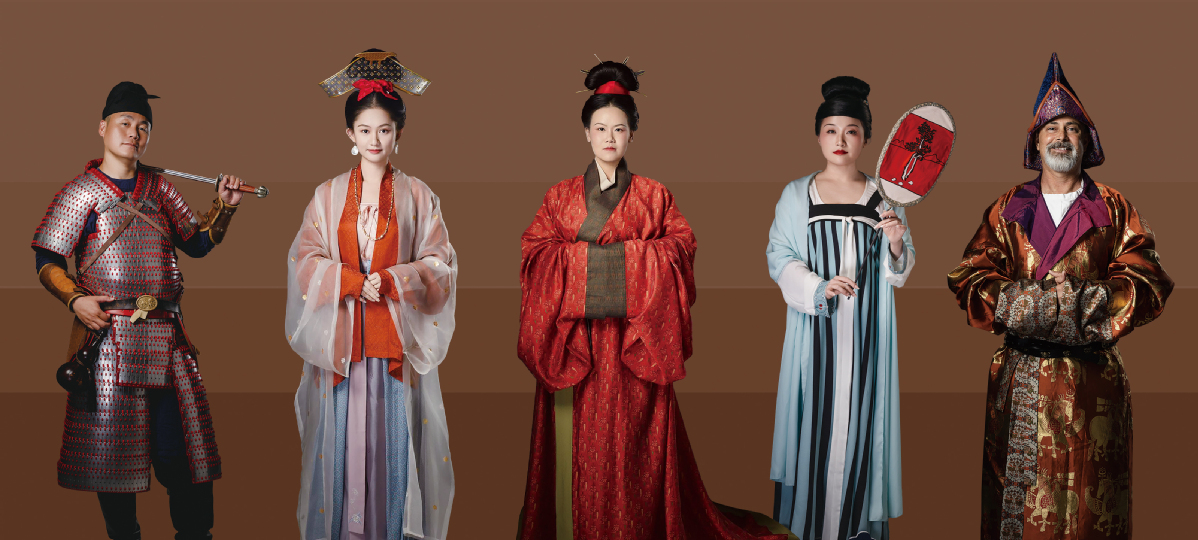
In the soft amber glow, a young woman stands draped in an emerald robe and crimson blouse, reminiscent of a vision from an ancient scroll. Over her arms hangs the peibo — a long silk scarf and traditional Chinese accessory — that infuses her silhouette with a graceful, timeless fluidity.
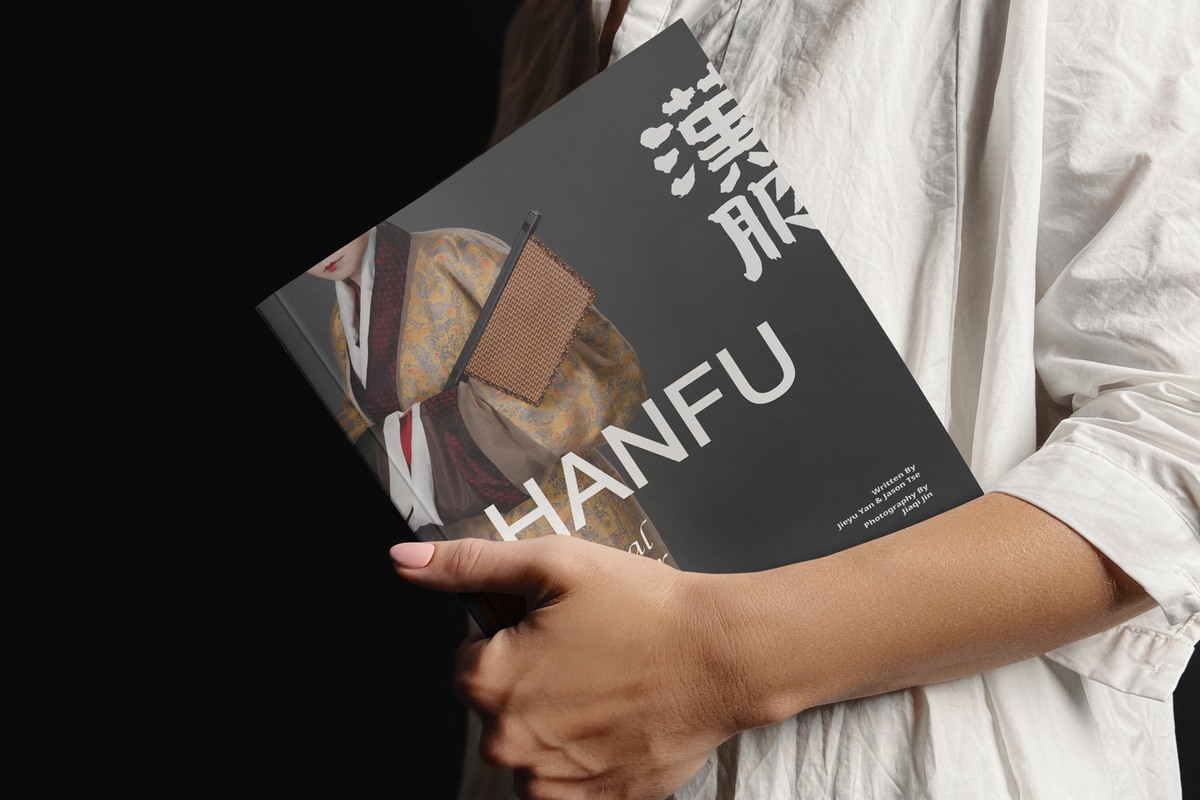
This scene is not from a museum exhibit, but one of 46 meticulously reconstructed ensembles featured in Hanfu: A Visual Primer of Historical Han Chinese Attire, an illustrated English-language book dedicated to hanfu, the traditional clothing of the Han ethnic group.
Authored by Yan Jieyu, founder of the Northern California Hanfu Association, and Xie Chengwen (Jason Tse), a Chinese-American lawyer, the book spans over 2,000 years of attire, from the Western Zhou Dynasty (c. 11th century-771 BC) to the Ming Dynasty (1368-1644).
The book arrives amid a growing international fascination with hanfu.
"I've noticed a significant surge of interest among international audiences on social media platforms like Reddit, X (formerly Twitter), and Pinterest," Xie said. "Many overseas friends are captivated by the motifs and visual elements of hanfu. Compared with 10 years ago, there's greater curiosity about traditional Chinese culture."
"Hanfu is part of who we are," Yan added. "When people think of Chinese history, they often picture the famous Terracotta Warriors. But few realize those figures were originally painted in vibrant colors — 'wearing' costumes just like the ones we bring to life in our book."
The project took over a year to complete, involving extensive research, costume design, hairstyling, photography, and editing.
"Our designs are not fictional," Yan emphasized. "Every piece has historical references, including a 19th-century Chinese raincoat preserved at the British Museum."
Costume design required meticulous attention to detail. "Every dynasty had its own hairstyle traditions," Yan explained. For example, noblewomen of the southern state of Chu during the Warring States Period (475-221 BC) often wore side buns, a signature style of Chu nobility.
"Some items are incredibly complex to source and craft — from accessories to fabrics — but we constantly strive for museum-level accuracy," she added. "Each outfit in the book is paired with artifact references, detailed notes, and professional photography. Our goal is to give international readers an accessible yet precise introduction to China's clothing heritage."
The photography, directed by Jin Jiaqi, a Chinese artist based in the San Francisco Bay Area, adopts a dark, museum-like aesthetic. "Through lighting and composition, I wanted to highlight the texture of silk, embroidery, and bamboo, so readers feel as if they are viewing artifacts in an exhibition," Jin said.
During editing, Xie emphasized clarity and accessibility. "There aren't many books on historical Chinese clothing in Western languages," he said. "We aimed to be direct and concise, adapting to the style of Western writing while introducing hanfu to both newcomers and those seeking deeper insights."
To balance academic precision with readability, the book presents pinyin first, followed by Chinese characters and English explanations for specialized terms.
"This approach preserves authenticity while keeping the content accessible to new readers," Xie added.
The authors also highlight how hanfu reflects cultural exchange. The yuanlingpao (round-collar robe) of the Tang Dynasty (618-907), for example, shows Central Asian influence, while the Ming Dynasty's yesa (robe) carries Mongolian elements. "These pieces show how cultures borrow from and inspire one another," Yan said.
To ensure accuracy, the team also consulted established hanfu scholars in China, who reviewed drafts and corrected errors. "Their feedback gave us great confidence in the book's reliability," Yan said.
A common passion
The book was released on Amazon and Google Books in September across 15 countries, marking a major milestone for the team. But for them, the project is about more than just publication.
Although authored by Yan and Xie, the project involved more than 30 volunteers from across China and the United States.
"We are not professional historians. We are enthusiasts with day jobs, united by our love of hanfu," Yan said. "Through this book, we hope people will see not only the beauty of the clothing, but also the depth of the civilization behind it."
Qian Yuhui, a Chinese actuary from Los Angeles, served as one of the models. She traveled repeatedly at her own expense to participate in photo shoots. "I was deeply touched by the generosity we received," she said. "Artisans and bloggers lent us rare garments, and one even made a bamboo raincoat especially for us."
Recreating rare items required extraordinary effort. For example, to replicate an Eastern Han Dynasty (25-220) hairpin with the correct flattened center and tapered ends, a craftswoman tried multiple tools before achieving the perfect result. "It may be the only replica of its kind today," Qian said.
Xie shared that the book also reflects his personal journey. "Growing up in Texas, I had little exposure to Chinese culture beyond my family," he recalled. "Seeing how other Asian groups proudly showcased their traditional clothing made me want to rediscover my own roots."
For Yan, the motivation came from a desire to present a fuller image of Chinese civilization overseas. "Too often, people in the US associate Chinese communities only with Chinatown or 19th-century immigrant stories," she said. "But our heritage spans thousands of years, and that richness deserves recognition."







Today's Top News
- China's grain output hits new high in 2025
- Trump drops EU tariff threat after deal framework over Greenland in Davos
- China's message in Davos draws praise
- Consensus, not coercion, key to Ukraine crisis
- Wide view seen as key to full grasp of China
- Trump seeks immediate talks on buying Greenland