From blueprint to impact










China's achievements in the 14th Five-Year Plan show that development, when anchored in a long-term vision, can be a force for collective progress
With the 14th Five-Year Plan (2021-25) nearing its completion, China has recorded a series of landmark achievements that have cemented its position as one of the most stable, reliable and dynamic forces in global development. For a developing country, these achievements not only signal opportunities for expanded trade and investment, but also illustrate pathways toward prosperity and stability against the turbulence of the global economy.
Over the first four years of the plan period, China's economy expanded at an average annual growth rate of 5.5 percent. This steady pace, achieved despite trade bullying and the impact of the COVID-19 pandemic and its lingering aftershocks, represents an economic increment projected to exceed 35 trillion yuan ($4.89 trillion) over the full five-year cycle, contributing around 30 percent annually to global economic growth. Urban job creation has stood at more than 12 million per year, underscoring the stability of China's vast labor market and its ability to anchor social security through employment. At the same time, the structure of growth has shifted: domestic demand has become the main driver, accounting for 86.4 percent of GDP increase on average. Within this, final consumption contributed 56.2 percent, an 8.6-percentage-point rise over the previous planning period, pointing to a more consumption-driven and internally sustainable model of development.
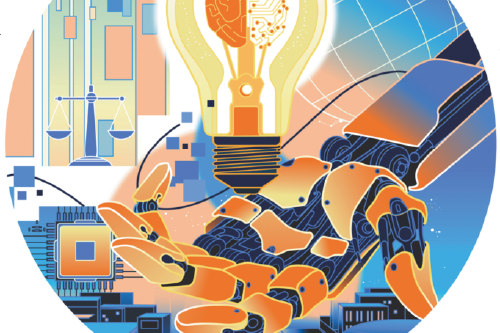
Central to this transformation has been China's deep investment in innovation. Between 2020 and 2024, national expenditure on R&D surged by nearly 50 percent, an increase of 1.2 trillion yuan, pushing R&D intensity to 2.68 percent of GDP. This level brings China closer to the average of OECD economies, reflecting the country's determination to compete at the global technology frontier. The results are visible: breakthroughs in semiconductor design, progress in domestic operating systems such as Huawei's HarmonyOS, advances in artificial intelligence and the expansion of China's digital infrastructure. By mid-2025, the country had built 4.55 million 5G base stations, gained 226 million gigabit-broadband users and climbed to second place globally in computing power. This digital architecture provides a foundation not only for smart industry upgrades but also for international connectivity in a world increasingly shaped by the flow of data and technological standards.
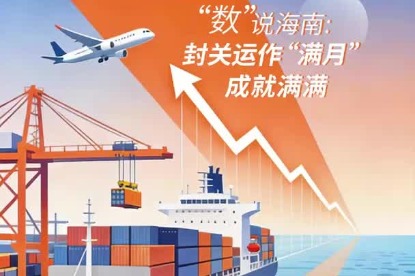
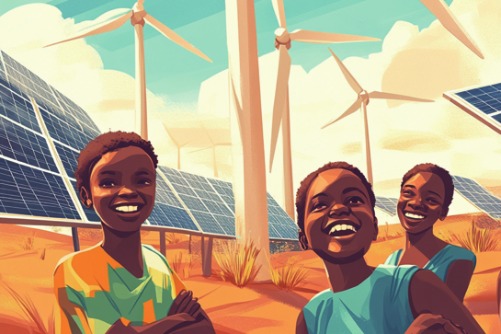
Alongside innovation, China's trade and outbound investment footprint has continued to deepen through the Belt and Road Initiative. Trade with the Belt and Road countries surged from $2.7 trillion in 2021 to $3.1 trillion in 2024, representing an average annual growth rate of 4.7 percent. By 2024, BRI trade accounted for 50.7 percent of China's total foreign trade, up from 45.3 percent just three years earlier. Two-way investment has also flourished, with more than $160 billion flowing from China into Belt and Road countries and over $80 billion coming from partner economies into China. Beyond numbers, these exchanges represent a deepening network of interdependence, one that offers Global South countries expanded market access, infrastructure linkages and collaborative opportunities in agriculture, technology and services. A defining feature of the 14th Five-Year Plan, however, has been its ecological dimension. China has taken solid steps in green transition, fulfilling promises that many observers doubted were achievable at such scale. Between 2021 and 2024, energy consumption per unit of GDP fell by 11.6 percent, resulting in a reduction of about 1.1 billion metric tons of carbon dioxide emissions — nearly half the European Union's total annual emissions. Installed renewable energy capacity more than doubled from 2020 levels, reaching 2.17 billion kilowatts by July, with one in three kilowatt-hours of electricity nationwide now derived from green sources. This expansion, spanning solar, wind, hydro and nuclear, underscores China's role as a global leader in renewables and its contribution to the fight against climate change.
The transition is also evident in everyday life. Ownership of new energy vehicles surged from 4.92 million in 2020 to 31.4 million by 2024, a more than fivefold increase that has transformed transportation patterns in cities and regions across the country. Sales of high-efficiency appliances have dominated consumer markets, while "smart upgrades" in industry have improved resource efficiency and reduced waste. These shifts reflect not just policy, but the embedding of green values into consumption and production — a step critical for long-term ecological sustainability.
Environmental quality indicators tell a similar story of progress. Water quality has improved in the main streams of the Yangtze and Yellow rivers; forest cover has expanded; and recycled scrap steel has increasingly replaced virgin raw materials in steel production, cutting emissions and conserving energy. While challenges remain, particularly in local enforcement and balancing industrial expansion with ecological preservation, the trajectory of the past four to five years demonstrates a tangible move to realize harmony between humanity and nature.
For developing countries, the implications of China's achievements under the 14th Five-Year Plan are profound. The expansion of China's domestic consumption and its growing imports of agricultural products, green energy technologies, processed goods and digital services create new opportunities for exporters in Africa, Latin America and Southeast Asia. At the same time, China's advances in digital infrastructure and renewable energy provide not only markets for South-South cooperation but also models for technological leapfrogging.
Equally significant is the opportunity for infrastructure connectivity. The lowering of trade costs through ports, railways and digital corridors enhances competitiveness for landlocked states and supports regional projects. Beyond economics, China's success in generating jobs and improving livelihoods illustrates the stabilizing effect of inclusive growth — an insight that resonates strongly for other Global South countries seeking to reduce inequality, build capacity and achieve social stability.
Still, these achievements are not without caveats. The geopolitical context — marked by rising protectionism, great power competition and volatile supply chains — adds uncertainty to the long-term durability of cooperation.
For the Global South, the lesson is clear: the benefits of China's achievements can be maximized through proactive strategies. Domestic green policies, aligned with China's own trajectory, can ensure that developing countries are not just recipients of green goods but also co-creators of sustainable growth. Most importantly, local communities must be engaged, and environmental safeguards embedded, so that projects deliver benefits broadly and equitably.
As the 14th Five-Year Plan draws to a close, China has demonstrated more than economic resilience and technological prowess. It has shown that large, middle-income economies can drive innovation, promote ecological responsibility and deepen international cooperation even amid volatile global circumstances. With strategic partnerships, inclusive policies and a commitment to sustainable development, these achievements can translate into shared prosperity, reduced inequality and enhanced stability worldwide. In a period of shifting global power and complex geopolitical change, China's path offers lessons not of imitation but of adaptation, reminding us that development, when anchored in a long-term vision, can be a force for collective progress. Now is the moment for other Global South nations, international organizations and China itself to shape cooperation that is fairer, more sustainable and more future-oriented.
The author is an associate professor and the executive director of the Center for Nigerian Studies under the Institute of African Studies at Zhejiang Normal University. The author contributed this article to China Watch, a think tank powered by China Daily.
The views do not necessarily reflect those of China Daily. Contact the editor at editor@chinawatch.cn.