



Brussels should handle rare earths issue with due prudence









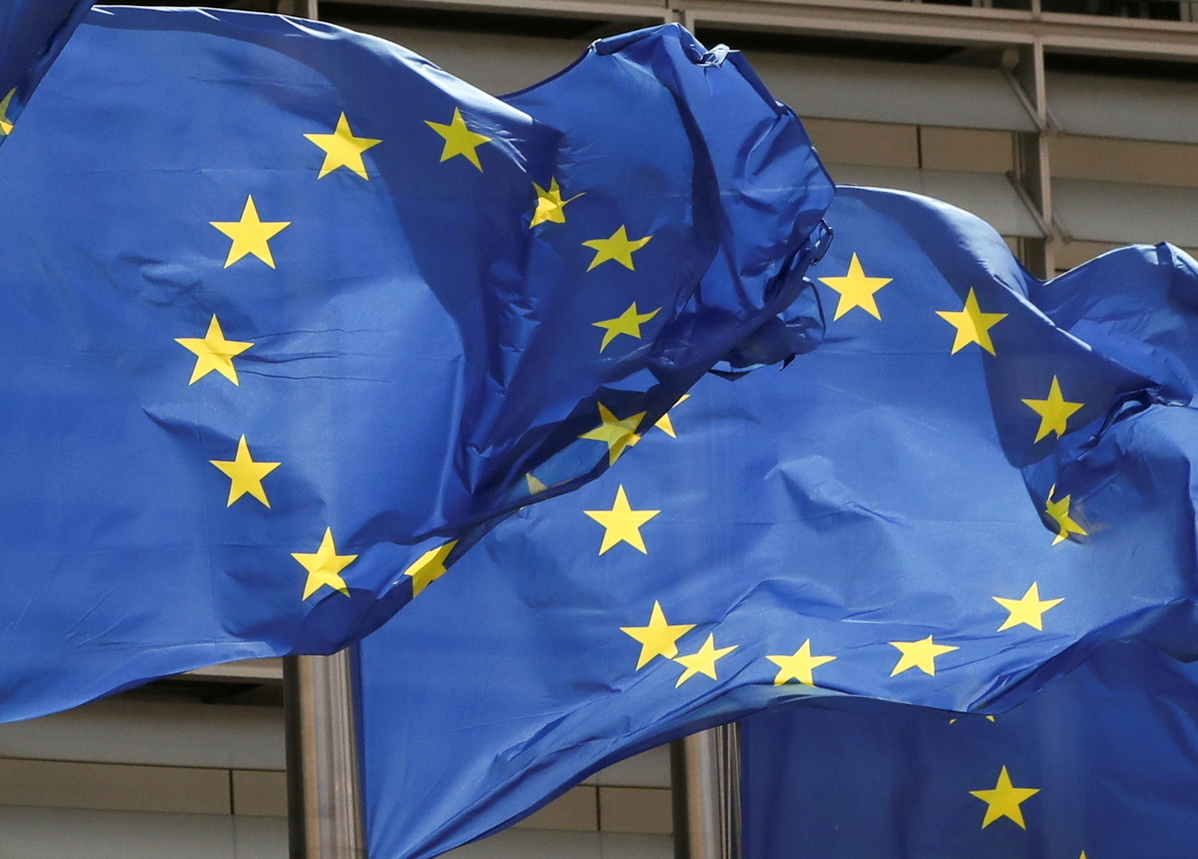
The European Union's latest plan to curb its reliance on Chinese critical raw materials, announced by European Commission President Ursula von der Leyen at the Berlin Global Dialogue on Saturday, comes at a time when mutual trust between Beijing and Brussels should be strengthened rather than weakened.
Under the current circumstances, China and the EU should all the more uphold their partnership, respect each other, enhance communication and work together to address the global challenges that demand cooperation rather than confrontation.
Von der Leyen's remarks criticizing Beijing's latest export control measures on rare earths and battery materials reflect a misunderstanding — or a misrepresentation — of China's policy intentions. China's recent decision to refine its export control system for certain rare earths is a legitimate, justified and responsible action taken in full accordance with international practice. The measures are not "export bans", but prudent controls aimed at ensuring that these strategically sensitive materials are used in line with China's global security obligations, including its non-proliferation commitments.
China has long been a responsible supplier in the global rare earths market, providing a large share of the world's rare earth magnets — materials essential for electric vehicles, wind turbines and advanced electronics. Yet, as a major country with a strong sense of its global responsibility, China must also take into account the international security environment and the expanding military uses of certain rare earths. The export control measures are thus defensive and transparent, not coercive or discriminatory.
China's export controls do not target any party. The Chinese government has made it clear that all legitimate and compliant applications for civil use can obtain licenses. Before implementing the measures, China notified relevant partners, including the EU, through established export control dialogue mechanisms. Eligible EU entities have no reason to worry about access to these materials, provided that their applications meet the necessary legal and security requirements.
In contrast, what should truly concern Brussels that affects the fitness of China-EU economic and trade ties are the so-called anti-subsidy tariffs it has imposed on Chinese-made electric vehicles and the arbitrary sanctions it has imposed on Chinese entities for their normal trade with Russia over the Ukraine crisis.
If the EU is genuinely committed to strategic autonomy and global economic stability, it should correct these mistaken policies rather than amplifying misperceptions about China's legitimate export control policies.
The EU has also faced challenges in its trade relations with the United States, which has repeatedly imposed tariffs on European products and pressured the bloc on energy and defense issues, attempting to force the bloc to toe the US line on geopolitical fronts.
While the US administration employs tariffs and sanctions to gain unfair advantages, China's actions aim to preserve global stability and ensure the responsible use of dual-use materials. Von der Leyen's advocacy of the EU's "independence" from major trading partners such as China, while accepting the bloc's deep dependence on the US for energy, resources and security, exposes a striking inconsistency.
It is notable that the EU's proclaimed "strategic autonomy" seems to mean decoupling from China, rather than addressing the complex nature of its structural reliance on Washington.
The Chinese and the EU economies are highly complementary, not conflicting. Complementarity does not constitute a "risk" or "threat"; rather, the real threat lies in waywardly betraying the rules-based international trading system, taking it for granted as long as the move serves one's own narrow ends.
Both China and the EU have benefited enormously from open markets and a globalized economy, and both have long been advocates for multilateralism and free trade. The last thing the world needs now is for China and the EU to drift apart due to misjudgment or external manipulation.





