LEGO keen to build on learning through play success









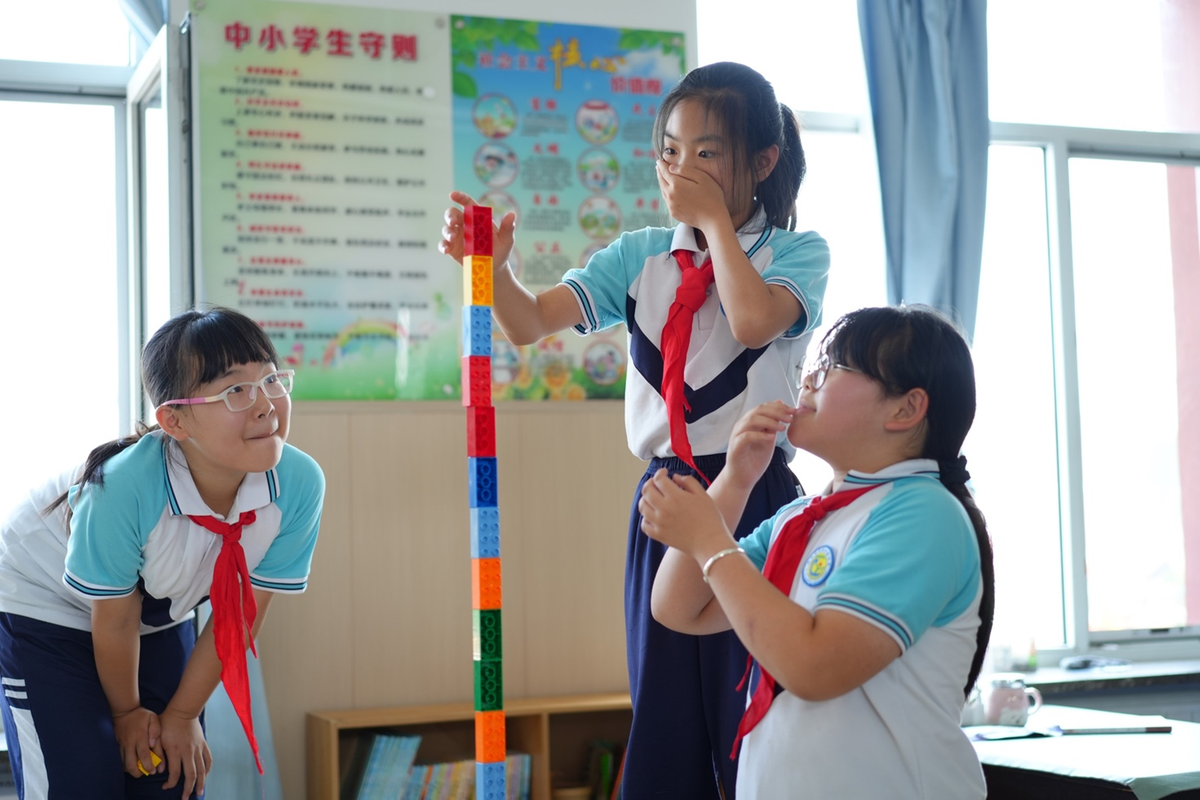
The Danish toy maker the LEGO Group said it aspires to become a global leader in learning through play and is committed to realizing this vision in China by developing and implementing more programs designed for Chinese children.
Play is crucial for developing and nurturing physical, social, emotional, cognitive, and creative skills, according to the LEGO Group. For example, beyond rough-and-tumble activities, balancing bricks is also a form of physical play that helps build motor skills and may even foster emotional stability.
Founded in 1932, the family-owned business has established a global presence, with its products sold in more than 120 markets.
Notably, 25 percent of the group is owned by the LEGO Foundation, which allows the charitable foundation to fund a range of social responsibility programs, as well as provide grants to related non-profits, non-governmental organizations, and research institutions, according to Diana Ringe Krogh, vice-president of social responsibility at the LEGO Group.
"We have an aspiration to enhance the lives of children, enabling them to learn and thrive through play," she said.
As of now, more than 60 colleagues in over 30 countries are driving local community engagement.
"There are over 200 million children in China and we want to provide them with opportunities for learning through play. Thanks to the great efforts that Chinese team did, we have turned the group's vision into tangible, impactful actions on the ground through a series of social responsibility initiatives and let more people know how play enhances children's essential skills as they grow," said Krogh.
In China, the group's local social responsibility team not only implements global programs but also develops ones tailored to the Chinese context, aming to widen access to play, especially for children from economically and socially disadvantaged regions, as well as for children with disabilities, said Gu Jingqiu, director of social responsibility of the LEGO Group China.
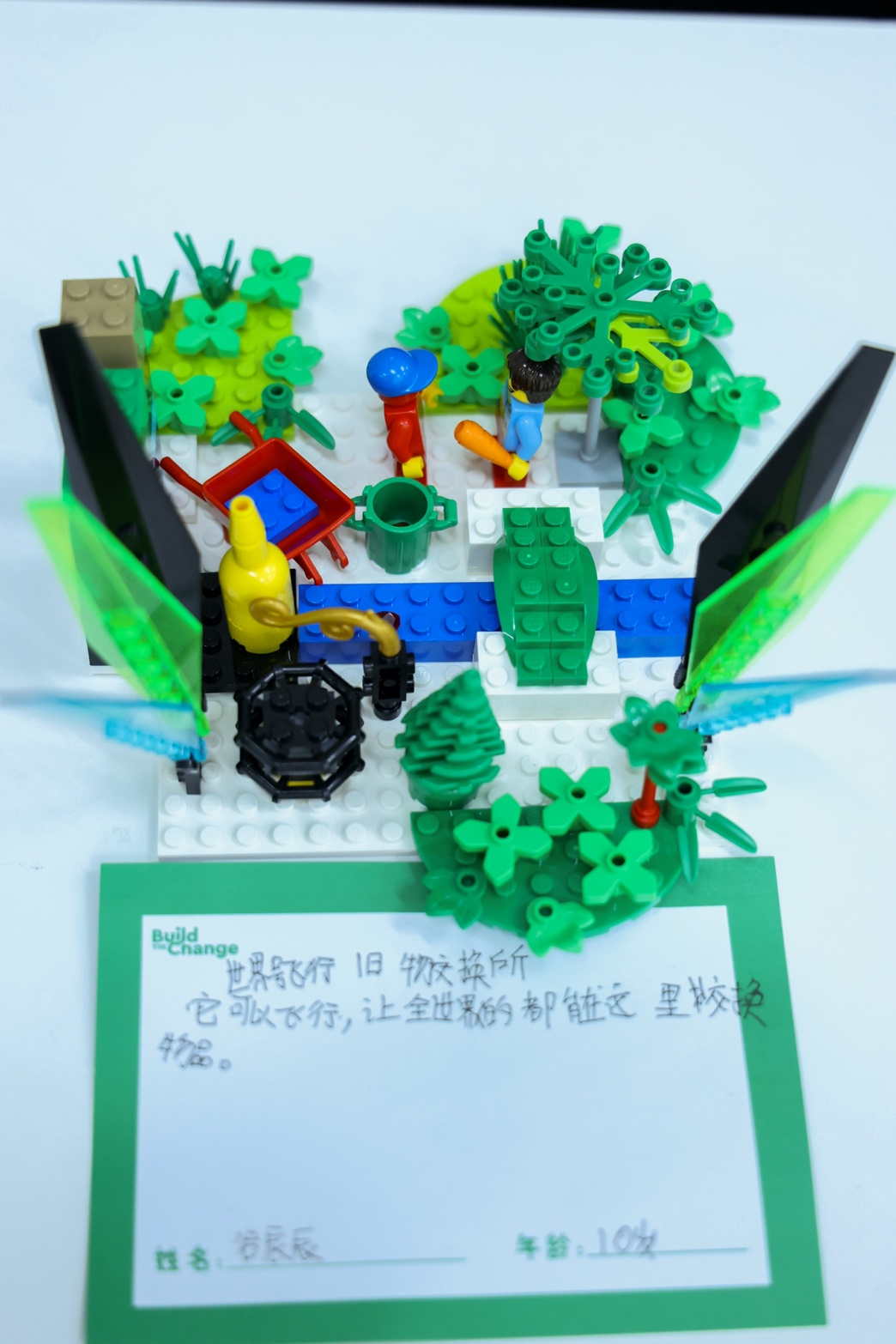
There are also programs designed to promote children's agency and amplify their voices, Gu added. In one such global initiative, Build the Change, children will use bricks to imagine and construct a sustainable future or a place where people can live and thrive.
More than 5.33 million children across the country have been reached with learning through play as of Dec 31, 2024, Gu said.
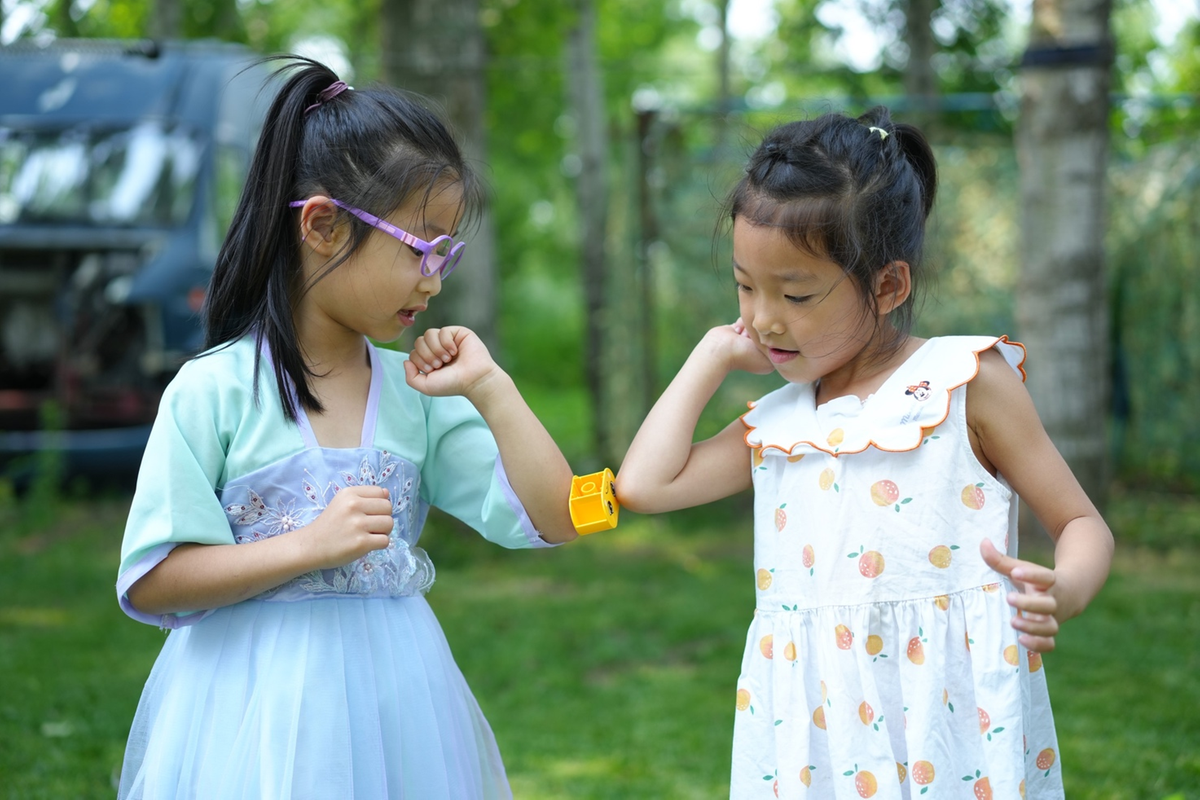
Conventional belief held by many parents is that children should prioritize learning over play for a prosperous future, Gu noted. Encouragingly, years of joint efforts with Chinese partners at all levels have begun to challenge this mindset.
In 2019, the group partnered with Save the Children (UK) Beijing Office to improve access to quality learning-through-play opportunities for preschool children aged three to six in Southwest China's Yunnan province.
The pilot was carried out in kindergartens in Dayao county, where learning through play was integrated into the curriculum and more play-based approaches were introduced in teaching.
Reflecting on the project, Zhang Wenqi, social responsibility senior manager of the LEGO Group China, said: "Through this program, the overall environment and the classrooms in the kindergarten looked different, full of playful materials and guidance. Teachers were able to organize their own activities with LEGO bricks and other play materials in their classes."
To better protect the legitimate rights and interests of preschool children, in 2024, Chinese lawmakers also voted to adopt a preschool education law.
Taking effect on June 1 this year, which coincided with International Children's Day, the law says preschools are required to focus on sensory exploration, play-based learning, and social-emotional development tailored to children's cognitive and emotional needs.
It prohibits academic testing, ranking, and screening at the preschool level to reduce unnecessary academic pressure and competition before the age of six. It also bans "primary school–style" teaching and forbids the early introduction of primary-level subjects, test preparation, and formal instruction in literacy or mathematics.
Gu welcomed the law as a positive step forward, saying that it also highlights the power and value of learning through play.
Another prominent example is the China-specific playbox program, in which each box containing 12 sets of LEGO's six-brick kit, 129 baseplates, and a variety of LEGO bricks that enable 15 to 20 children to play and build together, is given out to children in need.
Zhang said the program, collaborating with local charitable foundations and social services organizations, has donated more than 78,000 boxes across China and benefited more than 2.4 million children in over 235 cities nationwide, as of June 2025.
The implementation of the program goes beyond simply giving bricks to children; it involves equipping educators, including parents, teachers, and social workers, to truly apply learning through play at home or in the classroom, Zhang added, and over 15,300 social workers and teachers have been trained in how to use the playboxes to engage with children.
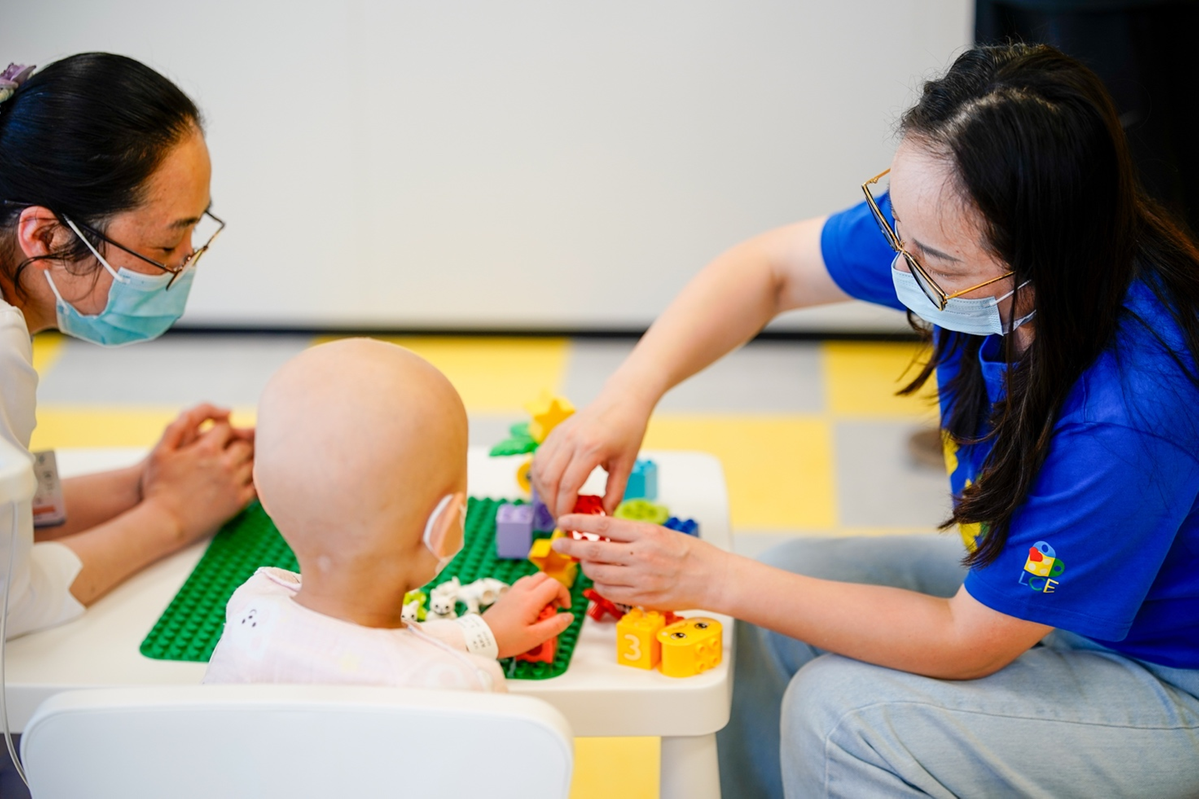
Migrant children and left-behind children, who often have less access to play and limited parental companionship, and are therefore more prone to feelings of loneliness and a lack of belonging, are a consistent focus of the program.
As these children are brought into local communities to play together, some who used to be very shy have become more outgoing and are now eager to make friends with others, Zhang said. They also share more with their parents, such as things they discover in everyday life or during play.
This year, to celebrate the United Nations-designated International Day of Play on June 11, the company, in partnership with the Shanghai United Foundation, designed playrooms in Shanghai's local communities and schools for migrant children, inspired by their own ideas of what a safe, stable and joyful playroom should look like, where regular workshops are held, according to Zhang.
Krogh, vice-president of social responsibility at the LEGO Group, said the best way to understand learning through play is by experiencing it firsthand.
"It was only when I started building that I realized I was using many skills I hadn't even been aware of while playing," she said. "The same applies to children; when they're role-playing, they're learning how to negotiate with one another and how to solve problems.
"There's also a need to redefine play and reimagine learning…We often don't think of play as something absolutely essential for children, for having fun, for learning about the world, and for developing a wide range of skills.
"And when we talk about learning, we often think of it as something that happens only in a school setting: sitting in a chair, looking at a board, and having a teacher tell you what to do. But learning is also about developing these skills, and it takes place everywhere."
zhengwanyin@mail.chinadailyuk.com