Can the 'peace agreement' secure long-term peace between Cambodia and Thailand?









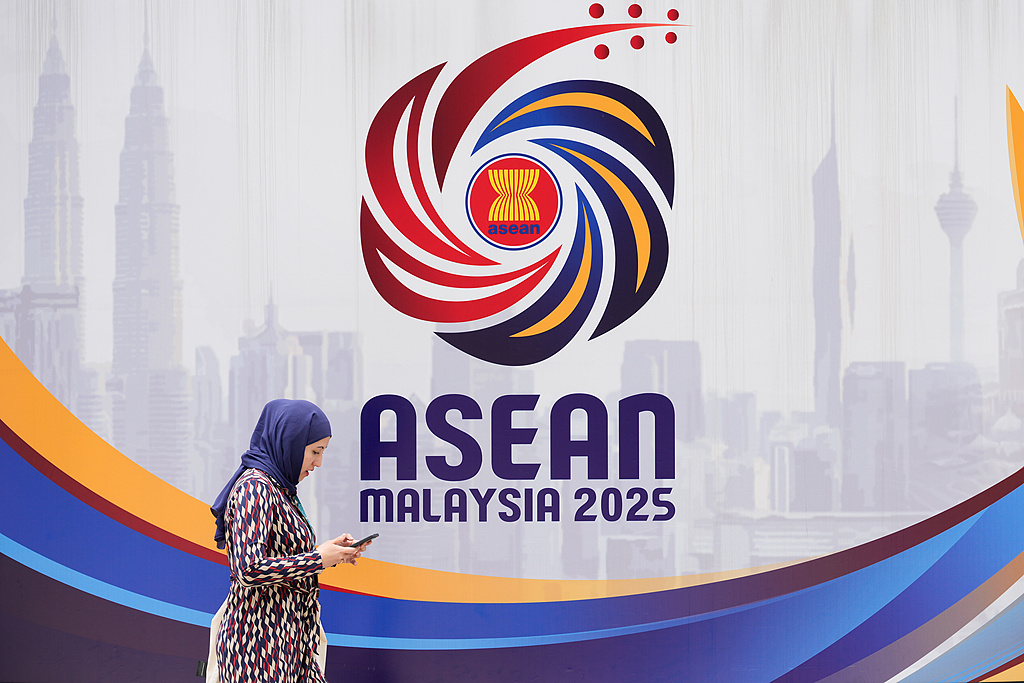
On October 26, the US leadership finally saw their wish fulfilled: they witnessed in Malaysia the signing of a "peace deal" between Cambodia and Thailand. However, the official title of this so-called "historic" agreement is, in fact, the Joint Declaration by Hun Manet, the Prime Minister of the Kingdom of Cambodia and Anutin Charnvirakul, the Prime Minister of the Kingdom of Thailand on the outcomes of their meeting in Kuala Lumpur, Malaysia. Both Hun Manet and Anutin deliberately avoided calling the document an "deal" in their statements. In a live broadcast before the ceremony, Anutin specifically emphasized to the Thai people that what he was about to sign was a statement, not a formal agreement. This suggests that what the US framed as a "historic" moment was in fact a compromise forced upon the ASEAN nations facing intervention from an external power.
Unlike the European Union, ASEAN is a regional organization primarily constituted through soft institutions. Coordination among member states is grounded in the principle of "non-interference in internal affairs", and joint decision-making follows the principle of "consultation and consensus". The fact that Cambodia and Thailand signed a "declaration" rather than a formal "deal" reflects how ASEAN's soft-institutional, flexible design is more readily acceptable to its members. Although soft institutions often do not yield immediate results, the resilience of the "ASEAN way" has helped raise living standards for more than 600 million people and has prevented major regional conflicts. As Kishore Mahbubani, Singapore's distinguished scholar and veteran diplomat, has put it, "ASEAN has brought peace and prosperity to a troubled region, generated inter-civilizational harmony in the most diverse corner of the earth and brought hope to many people."
The "ASEAN way" embodies an "Eastern wisdom" that aligns closely with China's long-standing cultural traditions of harmony and coexistence. Out of respect for the ASEAN way, China has never sought to dominate Southeast Asian affairs; it has consistently supported ASEAN centrality. In efforts to peacefully resolve the Cambodia–Thailand border dispute, China has assisted in its own manner by respecting the wills of both countries, respecting the rotating chair of the ASEAN and its mechanisms, and recognizing the region's own approaches to crisis resolution by adopting the "Asian security model" and the "ASEAN way." China's work, both visible and behind the scenes, has been substantial and effective: it has acted appropriately without overreaching, pursuing substantial outcomes rather than publicity, persuading rather than coercing, doing what it can without overshadowing the parties involved. This approach has earned unanimous affirmation and praise from the parties involved and other countries in the region. Although China was excluded from the Kuala Lumpur ceremony by the US side, Hun Manet still took the opportunity at the event to express gratitude to China.
Western societies differ from Asian countries. Western scholars often interpret ASEAN's diversity as a source of conflict and trouble, some even asserting that Southeast Asia lacks a "lingua franca". There is some truth to this perspective. Pronouncements by the United States supporting ASEAN centrality are often mere lip service. What it truly wants is to pressure ASEAN states to side with the US and, ultimately, lead the region. By labeling China as its primary strategic competitor and treating Southeast Asia as an arena for geopolitical competition between major powers, the US has exacerbated ASEAN states' anxieties about their own security. On the one hand, the costs and risks for ASEAN states of choosing sides have grown. Under an "America First" posture, even close US allies can become victims sacrificed on the altar of "Making America Great Again" policy. On the other hand, the weaponization of reciprocal tariffs continues to squeeze ASEAN countries' development space. In the Cambodia–Thailand border case, tariffs were used by the US as leverage to pressure the two leaders into signing. At the signing ceremony the US openly declared that "we will use business to keep the two countries from fighting; as long as they live in peace, we will do business with them." The United States did sign a trade agreement with Cambodia on that day, but the deal contained numerous unequal and exclusionary clauses and was by no means truly reciprocal or mutually beneficial.
Cambodia and Thailand are ancient civilizations of Southeast Asia. They share deep historical intersections, numerous cultural commonalities, frequent people-to-people exchanges, and close economic ties. This also means that their terrestrial border and territorial disputes are highly complex and must be resolved through equal negotiation, mutual understanding and concessions if a durable, mutually acceptable solution is to be found. Compromises imposed under external pressure that merely address symptoms rather than root causes risk deepening complexity and leaving hidden dangers. By ignoring the legitimate concerns of both Cambodian and Thai parties and insisting on seeking control, the US has in some measure increased uncertainty of achieving lasting peace between the two.
China and the ASEAN countries are linked by geography, shared cultural affinities, and a common "Eastern wisdom", and they are fellow members of the "Global South" with shared experiences of colonial exploitation and humiliation. Therefore, China better understands ASEAN's urgent needs to strengthen its capacity for independent development and self-defence. In balancing the two priorities of development and security, China displays strong empathy and can offer successful experiences as references for ASEAN states. One key lesson is that autonomy must remain in one's own hands.
Long-term peace in Asia is the foundation for regional development and prosperity, and China is increasingly proactive in shaping a regional environment of peace, development, and cooperation. ASEAN is one of China's most important partners. China consistently supports ASEAN countries in maintaining stability and accelerating development, and is willing to uphold ASEAN's central role in regional architecture and to support the "ASEAN way" in resolving internal issues. Lasting peace in Asia depends on the joint efforts of all countries in the region. China will continue to mediate between Cambodia and Thailand, working patiently and steadily to promote enduring peace between the two countries and safeguard long-term peace across Asia.
The author is vice-dean of the School of Asian Studies and director of the Center for Cambodian Studies at Beijing Foreign Studies University.
The views do not necessarily reflect those of China Daily.