


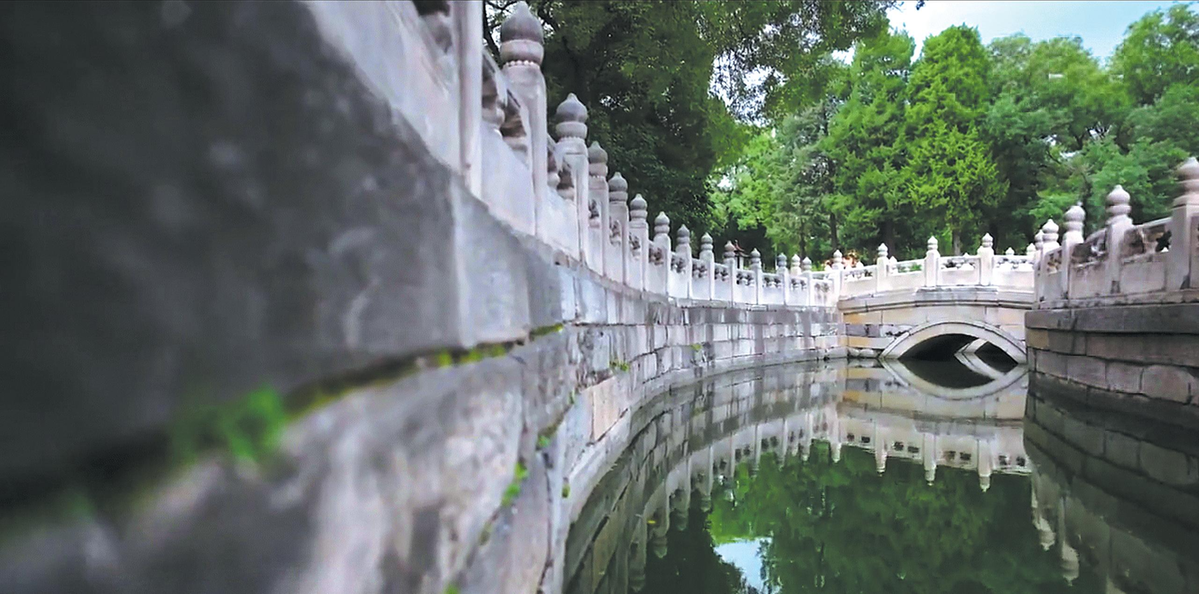
A 10-episode documentary uncovers the Palace Museum's transformation and preservation through the eyes of the staff, restorers and researchers, Xu Fan reports.
In October 1925, a plaque bearing the handwritten inscription of the Palace Museum was hung on the Shenwu Gate of the Forbidden City, marking the imperial palace's opening to the public.
The Palace Museum, also known as the Forbidden City, was China's imperial palace from 1420 to 1911 during Ming (1368-1644) and Qing (1644-1911) dynasties. With this year marking the 100th anniversary of its transformation to a modern museum, the 10-episode documentary, Bai Nian Shou Hu (A Century of Stewardship), has been airing on China Central Television's CCTV-1 and CCTV-9 as a tribute since Oct 9.
Turning the lens to the museum's staffers, the guardians of the world's largest and most completely preserved ancient wooden architectural complex, the documentary follows the meticulous work of artifact restorers and researchers across diverse fields, from restoring Western-style clocks to replicating ancient paintings and uncovering lesser-known historical stories.
Unfolding like a time scroll, the documentary opens with the bronze vessels housed in Taihe Dian (Hall of Supreme Harmony), where 24 emperors once held grand ceremonies. The museum's collection of more than 15,000 bronze pieces spanning multiple dynasties ranks among the largest of its kind in China, setting the stage for an immersive journey into the art and science of cultural preservation within its storied walls.
Ke Yongquan, director of the first episode, tells China Daily that the opening scenes build upon the popular 2016 documentary Masters in the Forbidden City, which became an unexpected hit and ignited young audiences' interest in cultural relic restoration.
"We have adopted a long-term, observational filming approach of following the restorers, hoping to gain their trust and reveal the stories behind their daily work and lives," says Ke.
For decades, the Palace Museum's restoration work has adhered to the traditional master-apprentice system. However, a shift is underway — the new generation of restorers now largely comprises young professionals with advanced academic backgrounds or overseas experience. Among them are Song Jianxiang, who holds a doctorate in materials science, and Yang Xiaochen, who earned a PhD in mechanical engineering in Finland.
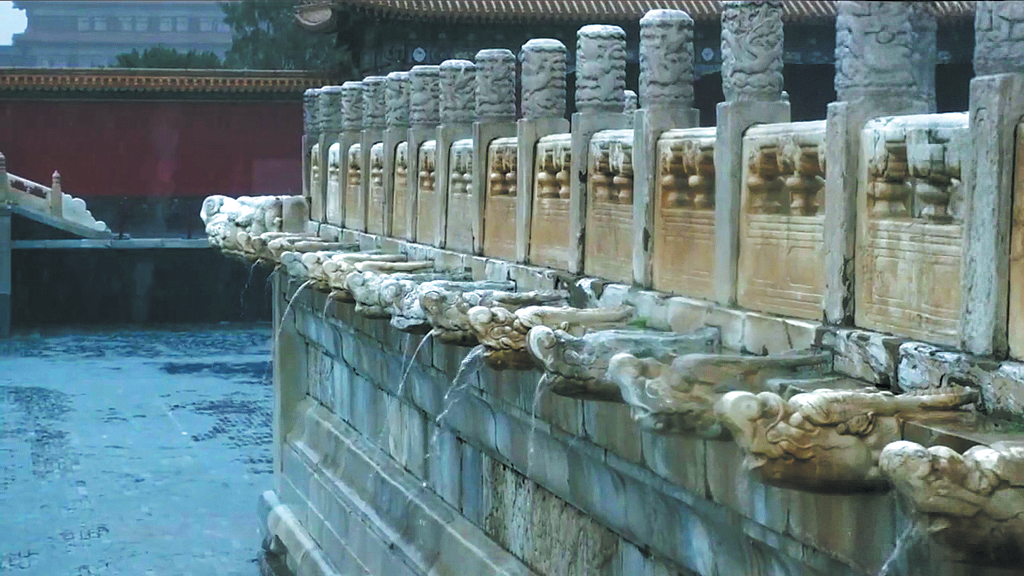
With the infusion of this new talent, the research and restoration of cultural relics have increasingly adopted cutting-edge technologies and scientific methods. One interesting example is the use of miniature robots to examine the palace's underground areas, where they have uncovered a remarkably well-designed drainage system stretching 15 kilometers. Constructed with bricks during the early Ming Dynasty, the system has effectively prevented flooding in the palace, even during heavy rainstorms that caused disasters elsewhere.
The principle of leveraging nature's own regulatory power has also found a modern application in preserving the 600-year-old complex, which is home to a rich collection of ancient trees, including 49 that are over 300 years old. As the climate warms each year, these "living "relics face the increased threat of aphids.
To protect the trees, the gardening team has devised an ingenious solution, described in the documentary as "a gentle weapon" — the team releases hundreds of thousands of harlequin ladybug eggs into the trees.
"A single ladybug can devour over 300 aphids a day, providing a natural and effective defense," explains director Li Wenju, who helms the second episode that focuses on nature preservation in royal gardens, such as the Cining Gong (Palace of Compassion and Tranquility), where the emperors' mothers once resided.
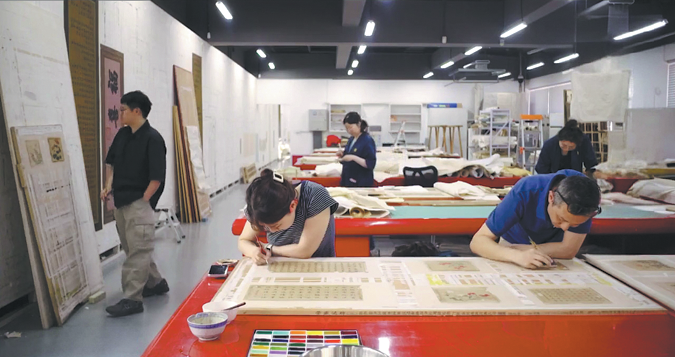
"Most of the team members hold advanced degrees from top universities and are passionate about their work, often describing their roles at the Palace Museum as a 'dream'. Their expertise has accelerated the adoption of new technologies, like artificial intelligence, in which data-driven approaches help make preservation more efficient and precise," adds Li.
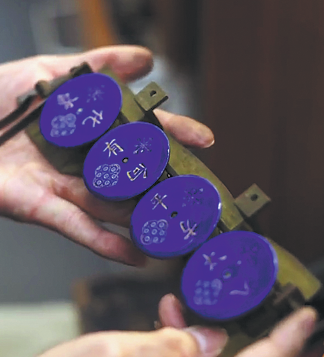
However, the palace's veteran restorers remain among its valuable "treasures". Wang Jin, a 64-year-old watch and clock restorer who has worked at the Palace Museum since he was 16, maintains his dedication to the intricate and time-consuming craft.
"The palace houses over 1,500 clocks and watches. These Western-style timepieces were brought by foreign missionaries or acquired from European countries during the reigns of Kangxi, Yongzheng, Qianlong emperors in the Qing Dynasty, who held a strong personal fondness for them," he explains.
"These clocks are prone to malfunctions. Thanks to generations of restorers, they have been preserved so well and continue to function, keeping time and performing as intended. This demonstrates the strength of our heritage," says Ke.
"Filming the restorers at work is an impressive experience. We are moved to see the incredible focus and reverence for the ancient objects. Only a small crew was allowed in the room, and we were all tiptoeing around, being super careful not to touch a thing. There are moments when you find yourself holding your breath, because protecting these artifacts is the number one priority," Ke shares.
The veterans' expertise has also drawn the attention of international restorers who come to learn from them. One such scene features 75-year-old master restorer Xu Jianhua, who lectures on the repair and conservation of a portrait depicting a Buddhist monk with close ties to Qing Dynasty Emperor Yongzheng.
Despite the differences between Chinese painting, calligraphy, and Western art forms, such as oil painting, foreign conservationists showed great interest in the restoration details shared by Xu. According to Ke, they posed specific questions regarding customized tools and the effects of various techniques, highlighting the unique value of the Palace Museum's restoration methods within the global conservation field.
The documentary also unveils some of the Forbidden City's more secluded areas. One example is the Ningshou Gong (Palace of Tranquil Longevity) garden, also referred to as the Qianlong Garden, which opened to the public in late September. It once served as the retirement residence of Emperor Qianlong, spanning more than 6,000 square meters and comprising four courtyards and 27 structures nestled among artificial rockeries.
"What strikes us most is that this is no ordinary imperial garden — it is a personal work of art designed by Emperor Qianlong himself. From the overall layout down to the decorative details, everything reflects his aesthetic sensibility and inner world," says Zhang Yuejia, director of the documentary's third episode.
Contact the writer at xufan@chinadaily.com.cn








