Graduates diversify career paths
With tough competition remaining in the job market, degree holders sniff out new ways to earn a crust











According to reports on the salaries for blue-collar workers for last year, the monthly income of delivery riders on average was 7,496 yuan, significantly higher than the average starting salary of 5,438 yuan for new graduates, Tang said.
Some young graduates are prioritizing practical income, hands-on experience and personal growth over the fading allure of purely respectable desk jobs, he said.
Cai Zhenhua, an associate professor at Xiangtan University's School of Public Administration, said it has become a rational choice within broader societal shifts. "Blue-collar work itself is evolving, infused with more technical and creative elements due to digitalization and industrial upgrades, creating novel roles demanding both knowledge and skill," he said.
Cai said that graduates are actively tearing off the old label of "degree equals identity", challenging stigma around manual labor and redefining the relationship between knowledge and work.
Social media has played a key role in normalizing and exploring this trend, with videos and posts by graduates detailing their blue-collar experiences attracting a lot of engagement.
Cai attributes this to a mix of novelty and genuine societal introspection.
When college graduates are doing any job that can make money, their stories break the stereotype of prioritizing educational backgrounds in finding jobs, and offer alternative choices for other graduates amid a slowing economy, he said.
Naturally, criticism persists. Some people label these choices as a waste of education, or even "squandered national resources". Both professors counter these views.
Tang said this critique stems from an outdated, narrow view of education's purpose and the nature of modern blue-collar work. "The core of higher education cultivates thinking skills and logical abilities, not professional labels," he said.
He cited Ministry of Human Resources and Social Security data showing college graduates in "new blue-collar" roles, such as those in smart logistics, had boosted industry efficiency by 23 percentage points.
Drawing parallels to Germany's "dual system" for vocational education, Tang said that high-quality talent is vital for industrial advancement.
"When college students use drones to inspect circuits or provide bilingual services to communities with large numbers of foreigners, they are redefining 'degree value' — it's not a framed diploma gathering dust, but the spark of knowledge that illuminates every position," said Tang.
Cai deems the "wasted education" accusation as being misjudged, rooted in a vague understanding of higher education goals and outdated perceptions of occupational evolution.
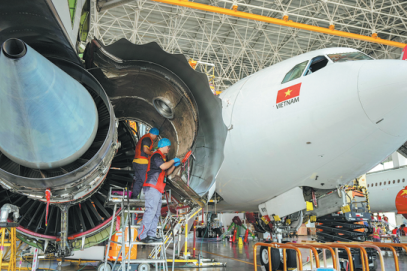
Blue-collar roles such as smart machinery operators, maintenance engineers and computer numerical control machine tool debuggers now command average salaries of around 12,000 yuan, surpassing many entry-level white-collar positions — a testament to the reshaping of professional value driven by digitalization and AI, Cai said.
He referenced Germany's experience, where precision mechanics from vocational schools often outcompete university graduates, underscoring the need for China to abandon a "degree-only mentality" and embrace a system based on competency.
"The master craftsmen enabling high-speed rail and the engineers designing it deserve equal respect," Tang said.
Cai added that top blue-collar roles demand systemic thinking, problem-solving and craftsmanship that rival knowledge work. The boundary between white-collar and blue-collar is blurring, he said.
Individual choice, he stressed, should be guided by forward-looking insight into industry trends, clear self-awareness of interests, and rational analysis of career paths, not outdated prestige. "The real 'iron rice bowl' is not a whitecollar or blue-collar job, but the irreplaceability of the workers themselves," Cai said.
Tang said both white-collar and blue-collar jobs are indispensable for the functioning of society. Developing respect for every form of work and career choice is an important step to building a fair and inclusive society.
Zhang Wanbo contributed to the story.
zoushuo@chinadaily.com.cn