


In the heart of Shanxi province, often described as an open-air museum of ancient Chinese architecture, a new exhibition is weaving digital fantasy from a blockbuster video game into the physical fabric of historical sites. It explores what happens when the roaring success of Black Myth: Wukong converges with the quiet, stoic grandeur of Shanxi's architectural treasures.
Opened to the public on Nov 1 in Taiyuan, Shanxi, the ancient architecture and digital art exhibition, Black Myth: Wukong Encounter Shanxi, is not merely replicating the game, according to the exhibitors, but also transforming the virtual landscapes of the hit game into a world of light, sound and craftsmanship.
Authorized by Game Science, the game's developer, it is the first major digital art show dedicated to Black Myth: Wukong, blending the game's rich, virtual landscapes with real-world cultural heritage. The exhibition spans 2,230 square meters and features intricate scale models of iconic temples, pagodas and sculptures from across Shanxi combined with digital projections to re-create the game's most memorable scenes.
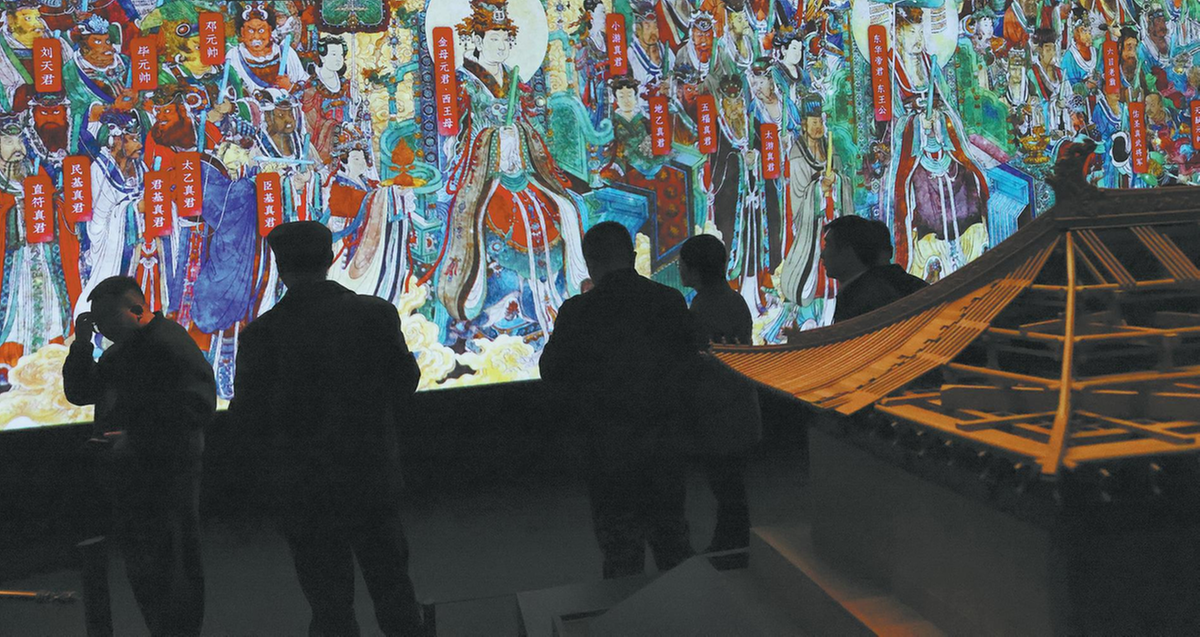
"We are not simply re-creating the game," says Cheng Yirong, the exhibition's chief curator. "We are building 'walk-in' ancient architectural art, allowing the architecture to tell its story."
Since its release in August last year, Black Myth: Wukong, the action rolep-laying video game adapted from the classic Chinese tale Journey to the West, has taken the global gaming world by storm. It sold more than 10 million copies in its first three days and went on to win accolades including Best Action Game and Players' Voice at The Game Awards 2024, as well as a spot on Time magazine's list of the year's best video games.
For Shanxi, 27 of the game's 36 key visual locations were drawn from the province's rich repository of ancient sites, such as the Foguang Temple, the Yingxian Wooden Pagoda and the Xuankong Temple (Hanging Temple).This deep connection between the digital and the historical has inspired fans to make real-world pilgrimages, transforming once-quiet heritage sites into must-see destinations.
"Throughout this year, we have seen countless players moved by the authentic depictions of ancient Chinese architecture and cultural relics in the game," Feng Ji, founder of Game Science and the game's director, wrote in the exhibition's preface. "Many were inspired to come to Shanxi, to experience the cultural treasures left by our ancestors."
The exhibition's diverse multimedia approach, which includes interactive panels, digital technology and archival documents, is designed to appeal to a broader audience, from families and architecture enthusiasts to academic tour groups.
"The exhibition format is highly diversified," says Wei Hong, head of the tourism management department at Shanxi Normal University. "The displays are not only rich in content but also exquisitely crafted. Seeing them in person gives visitors an intuitive and in-depth understanding that goes beyond what books and pictures can provide."
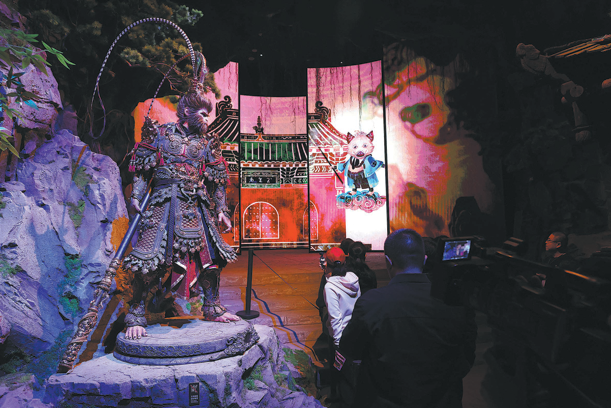
Wei highlights the diversity of Shanxi's architectural heritage, noting that the route from Datong to Yuncheng is particularly rich. "These ancient buildings include both official-style and distinct local-style structures, which are especially prominent in the southeast of the province," he says. "Each site possesses its own unique charm."
The exhibition is structured into five zones, guiding visitors from the game's digital origins through the architectural marvels of Shanxi.
Visitors are greeted by a life-size statue of the game's protagonist Destined One, and guided through the experience by the game's character Zhu Bajie, who breaks the fourth wall as a virtual docent.
For Jia Haowei, a 40-year-old docent at the exhibition and longtime fan of the game, the exhibition represents a novel form of public engagement. "This is a new exploration of digital immersive exhibitions," Jia says. "We hope digital technology allows ancient architecture not only to be protected, but to be re-experienced and to interact with the audience. It's as if the visitor is awakening a mural, creating a powerful interaction with the ancient artisans. We want every single visitor to become the discoverer."
Highlights include a towering 5.5-meter model of the Yingxian Wooden Pagoda, carved by master artisans using traditional mortise-and-tenon techniques. A six-minute digital projection sweeps across its surface, illustrating the change of seasons and the passage of time.
For the craftsmen, the project was a monumental task of preservation and presentation. Liu Xiaochen, a master woodcarver and a representative inheritor of intangible cultural heritage, led the team responsible for creating the wooden pagoda and temple replicas.
"Respecting the original is essential. All the mortise-and-tenon structures and carvings must follow the same principles as the ancient buildings," Liu says. "Ancient Chinese buildings are cultural relics, and the construction techniques are intangible cultural heritage."
In the Xuankong Temple section, digital light and shadow dance across a wooden model, evoking the temple's precarious perch on a cliff face. Another section dedicated to the Yuhuang Temple (Jade Emperor Temple) features seven brightly painted clay sculptures of celestial beings re-created by Li Yuanchao, an artisan who used traditional methods to capture the vivid expressions and flowing robes of the originals.

In Li's view, the clay of the Loess Plateau, along with colored minerals, sunlight and air, all "communicate" with each other to give the painted sculptures vitality.
"The hardest part to capture is the expression and spirit," Li says. "It's impossible to create an exact replica, not just because of technique, but because of how people in different times see the world."
For local officials, it is a two-way journey between Shanxi's cultural tourism and the game's creative team. "Black Myth: Wukong Encounter Shanxi is an exquisite integration of culture and technology, a collision of tradition and modernity," Wang Aiqin, director of the Shanxi provincial department of culture and tourism, says. She describes the exhibition as a significant practice in deepening cultural and tourism integration and empowering the industry with digital technology.
Home to 531 nationally protected cultural heritage sites, the highest number in China, and more than 28,000 ancient buildings, Shanxi safeguards over 80 percent of the country's wooden structures built during or before the Yuan Dynasty (1271-1368).
The exhibition also delves into the creative process behind the game, displaying over 60 pieces of original concept art, character models and storyboards.
"The digital re-creation of heritage sites from across the country in Black Myth: Wukong has renewed affection for traditional culture and even inspired travel," says Yu Ranxing, a co-founder of Game Science.
"This exhibition similarly employs many modern technological methods, showcasing a paradigm of Chinese innovation in the digital age."
Contact the writers at wangqian@chinadaily.com.cn








