GBA goes from bold blueprint to living reality
Area is a major national strategy devised, planned and advanced by President Xi









In December 2012, shortly after being elected as the general secretary of the Communist Party of China Central Committee, Xi Jinping embarked on his first inspection tour outside Beijing, choosing southern China's Guangdong province as his initial stop.
During a walk down from Lianhua Mountain Park in Shenzhen, Xi was stopped by a Hong Kong-based journalist who asked him: "General Secretary Xi, do you have any words for the people of Hong Kong?"
With clarity and conviction, Xi responded, "Hong Kong will surely thrive and prosper!"
At the end of that trip to the forefront of China's reform and opening-up, Xi urged Guangdong, which borders the Hong Kong and Macao special administrative regions, to work with the two SARs to build a world-class city cluster with stronger global competitiveness.
The televised moment left a deep impression on Hong Kong entrepreneur Sing Chan, who recalled that he was having dinner when Xi's remarks were broadcast alongside images of Shenzhen. "It struck me that something big — and closely connected with Hong Kong — seemed to be taking shape," he said.
Three years later, Chan moved from Hong Kong to Shenzhen to start his own company at an incubator in Qianhai, a pilot zone on the western shore of Shenzhen facing Hong Kong. He became one of the early entrepreneurs from the SAR to seize the opportunities brought by deeper regional integration.
On July 1, 2017, witnessed by Xi, the framework agreement on the development of the Guangdong-Hong Kong-Macao Greater Bay Area was signed in Hong Kong, marking the official launch of its construction.
Home to more than 80 million people, the Greater Bay Area comprises two special administrative regions and nine cities in Guangdong's Pearl River Delta region, including Shenzhen and Zhuhai, which borders Macao. It is often named as one of the world's four major bay areas, along with San Francisco, Tokyo and New York.
By the time Xi revisited Guangdong in 2018 and urged further efforts to advance the development of the Guangdong-Hong Kong-Macao Greater Bay Area, Chan had already helped dozens of Hong Kong startup teams settle in Shenzhen.
In Qianhai, Xi met with young entrepreneurs, including Chan, who was 30 at the time. "President Xi told us that youths are the future of the nation," Chan said, adding that he has come to truly understand the meaning of those words through his own experience in the years since.
Chan said he has personally witnessed the remarkable development of the Guangdong-Hong Kong-Macao Greater Bay Area, noting that "even the transformation of Qianhai alone has been extraordinary".
"Back in 2015, there were no subways and hardly any buildings — just the sounds of construction everywhere," he recalled. "Now it has become a vibrant hub for technology and business. The Greater Bay Area, as a whole, feels like a larger-scale version of that early Qianhai."
The development of the Greater Bay Area is a major national strategy personally devised, planned and advanced by Xi.
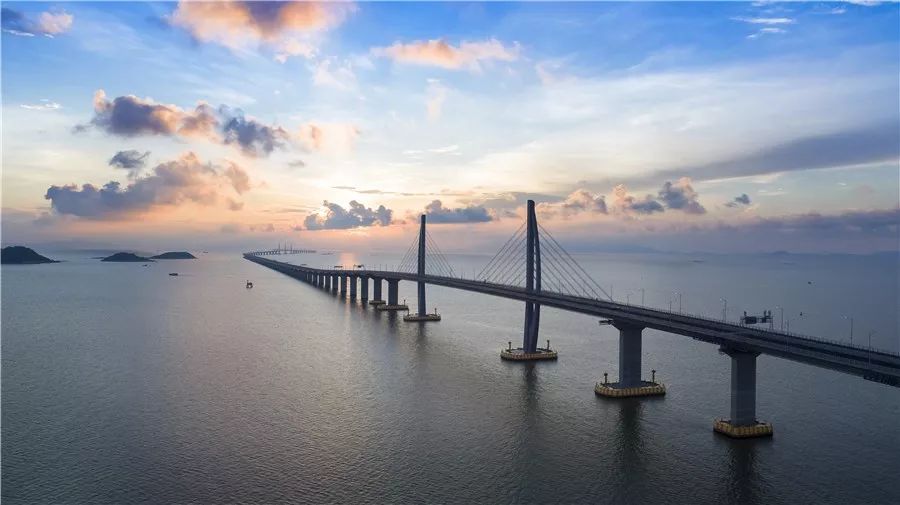
In 2018, when declaring the Hong Kong-Zhuhai-Macao Bridge officially open in Zhuhai, Xi said that it should not only be structurally sound but also well managed, in order to contribute to the development of the Greater Bay Area.
In February 2019, the outline development plan for the Guangdong-Hong Kong-Macao Greater Bay Area was unveiled, aiming to build the region into "a role model of high-quality development".
Since then, Guangdong, Hong Kong and Macao have introduced a series of coordinated policies covering infrastructure, innovation, industrial support, factor mobility and public services, gradually shaping a solid development framework for the region.
Covering an area of 56,000 square kilometers, which is less than 0.6 percent of the country's total area, the Greater Bay Area generated approximately one-ninth of China's GDP, with the figure last year reaching 14.79 trillion yuan ($2.09 trillion).
When Xi visited the Guangdong-Macao In-Depth Cooperation Zone in Zhuhai's Hengqin, during his trip to Macao in December last year, he stressed that "Macao plus Hengqin" is becoming a new model for enriching the practice of "one country, two systems" and a new high ground for advancing Greater Bay Area development.
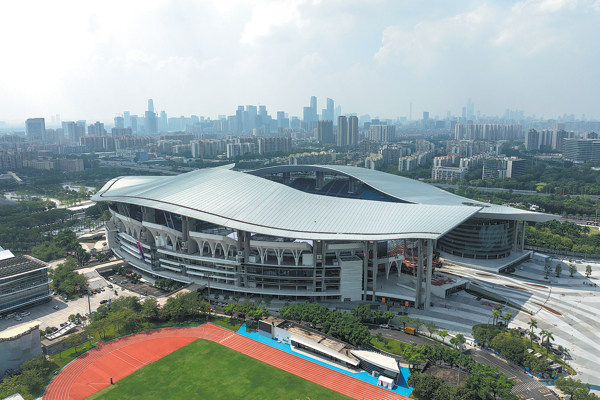
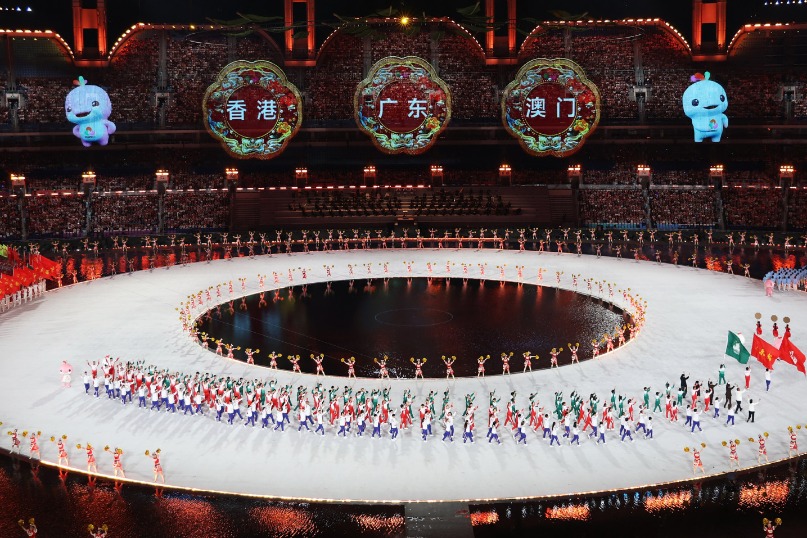
The call for sustained efforts to advance the building of the Guangdong-Hong Kong-Macao Greater Bay Area was reaffirmed during Xi's most recent visit to Guangdong last week, ahead of the opening ceremony of the 15th National Games.
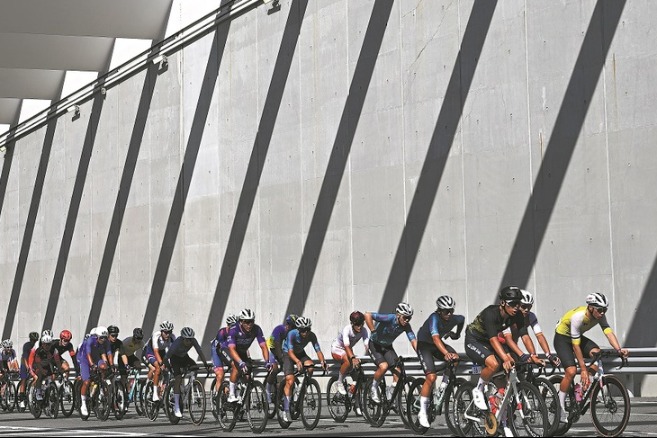
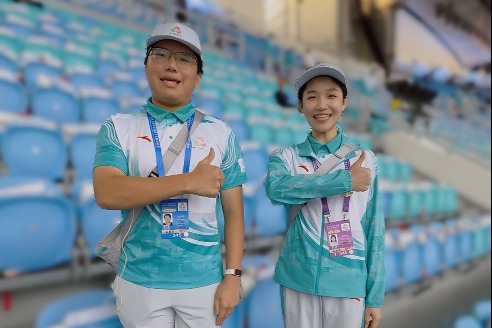
This year's games mark the first time the country's highest-level and largest comprehensive sports gala has been jointly hosted by Guangdong, Hong Kong and Macao.
Mao Yanhua, a professor of economics at the Institute of Regional Openness and Cooperation at Sun Yat-sen University in Guangzhou, said the joint hosting of the National Games "will not only test the progress of the Greater Bay Area's development, but also offer valuable experience for promoting deeper and broader regional integration in the future".
"The event shows that coordination among Guangdong, Hong Kong and Macao is not only possible, but increasingly smooth," Mao said.
"Sports competitions require cross-boundary collaboration on logistics, rules, standards and emergency responses — all of which the three governments have managed effectively."
He added that such successful cooperation provides valuable experience for building a high-quality living circle in the Greater Bay Area, and that the next steps should include deeper coordination in food safety, tourism, education, healthcare and other public services.
Mao also noted that events such as the National Games help foster mutual understanding among residents of the three regions and strengthen people's sense of belonging to the Greater Bay Area. "It is a vivid embodiment of the practice of 'one country, two systems' in the field of sports," he said.
Xie Baojian, deputy director of the Hong Kong and Macao Economic Research Institute at Jinan University in Guangzhou, said that Guangdong and the two SARs have long enjoyed complementary advantages.
"Hong Kong and Macao play vital roles in Guangdong's opening-up, particularly in finance, innovation and professional services, while Guangdong provides strong industrial support and a vast market," Xie said. "Together, they form a natural partnership in advancing Chinese modernization."
Tim Summers, an assistant professor leading the Greater Bay Area Research Initiative at the Chinese University of Hong Kong, described the region as "key to China's future development".
"It is already the most internationally connected part of China," he said. "Hong Kong serves as a global financial center, Shenzhen as a technology and innovation hub, Guangzhou as a trade powerhouse, and Macao as a tourism and cultural bridge. Together, they reflect the dynamism of China's growth and its deepening engagement with the world."
Summers noted that the Greater Bay Area is home to leading companies in sectors ranging from electric vehicles and drones to consumer technology. "These companies will play an important role in shaping the economic development of the wider Asian region as they expand their global footprint," he said.
"I believe that greater exposure to developments in this part of China can help people to understand the extent of China's growth and development, and the potential for the future," he added.
Contact the writers at mojingxi@chinadaily.com.cn