



Beyond family
Experts call for community-based caregiving with more local support









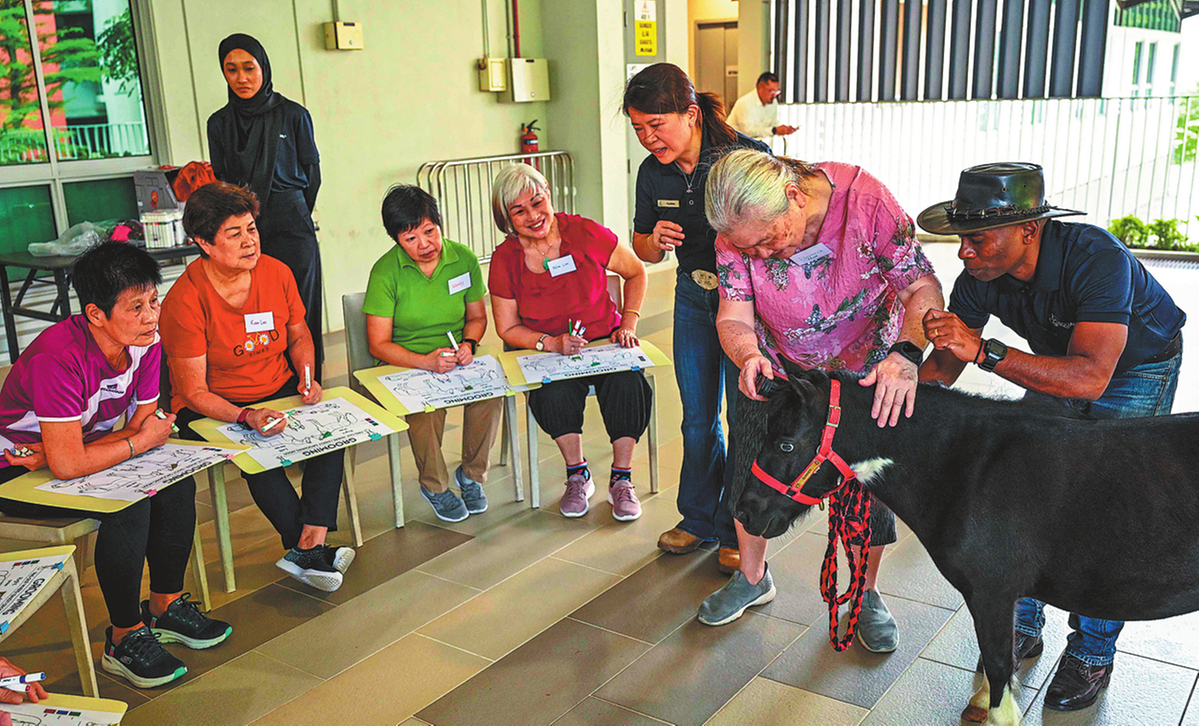
Editor's note: In this weekly feature China Daily gives voice to Asia and its people. The stories presented come mainly from the Asia News Network (ANN), of which China Daily is among its 20 leading titles.
For the past eight years, Peh Kim Hiok has been part of the Singapore Red Cross' ElderAid program, where she befriends three seniors in her Tampines neighborhood.
The 62-year-old visits the seniors each month to check if they need help, or simply to lend them a listening ear. The homemaker was her mother's caregiver for about 15 years, until she died a few years ago.
While it was by chance that she became a volunteer — having stumbled upon a recruitment drive at Our Tampines Hub — these days, she also helps out at Singapore Red Cross-organized excursions, as well as at temples and community events.
"My three children are all grown up, so I thought: why not help these old folks?" said Peh, who added that volunteering keeps her active. She also plays the ukulele, swims, and does yoga and zumba.
With the pace at which Singapore is graying, aging experts said the country needs more seniors like Peh, who are redefining care beyond the bounds of one's family.
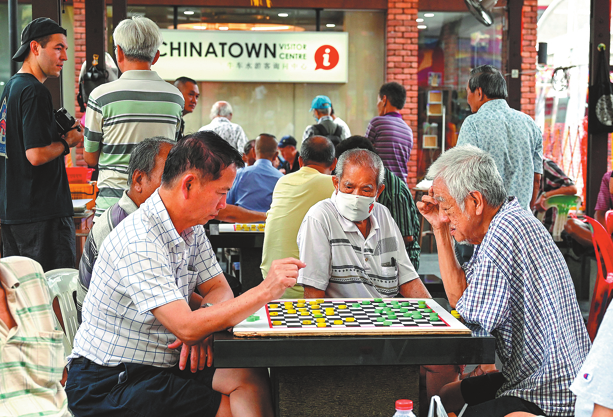
The latest population figures released in September showed the proportion of citizens aged 65 and above is rising, and at a faster pace than in the previous decade.
The city-state is expected to become a super-aged society in 2026 — defined internationally as having at least 21 percent of the population aged 65 or older — while about one in four Singaporeans will be in this age group come 2030.
Alongside research showing that more than eight in 10 older adults here prefer to grow old in their current homes, the need for caregivers will only continue to rise, said Paulin Straughan, director of the Centre for Research on Successful Ageing, or ROSA, at Singapore Management University.
Simply continuing to outsource caregiving to migrant domestic workers is not the solution, as domestic helper numbers have already outstripped earlier projections. In 2012, the government projected their numbers could rise by 50 percent and reach about 300,000 by 2030. This figure was exceeded in 2024.
The fact that source countries are themselves aging, while competition intensifies globally for caregivers and nurses, means there is a need for homegrown talent to take on eldercare roles, Straughan said.
"As we move to a super-aged and, eventually, hyper-aged society, and given the transformation in family structures with smaller family size, increase in older persons households and singles households, it is critical that we learn to embrace our neighborhood and community as family," she said.
The good news is that the large cohort of baby boomers who have begun entering the post-65 age range is generally healthier than the generations before them.
The National Population Health Survey released earlier in October showed greater health-seeking behavior among older Singaporeans, such as participation in screening for chronic diseases and colorectal cancer.
A comprehensive study by the Institute of Mental Health also found a lower prevalence of dementia and stroke among older adults in 2023 than in 2013.
Meanwhile, ROSA's data showed more than two-thirds of baby boomers reported no difficulties across all measured instrumental activities of daily living — complex, multistep activities necessary for independent living, such as using transportation.
This group is also more likely to be socially active, with better social networks than their parents, said Kelvin Tan, head of program in Applied Ageing Studies at the Singapore University of Social Sciences.
This greater independence, alongside Singaporeans' preference for aging-in-place, helps contextualize moves by the government in recent years to build up care services in the community and improve local infrastructure, such as through "Age Well Neighborhoods", he said.
The initiative will see more community care apartments and active aging centers being built in the coming years. Other schemes to help with caregiving needs include the enhanced home personal care service, which provides services like 24/7 monitoring for frail seniors, and the shared stay-in senior care services, where a caregiver provides stay-in care for a few seniors.
Changing demographics
While the government efforts will go some way in building Singapore's caregiving capacity, experts such as Institute of Policy Studies deputy director and senior research fellow Christopher Gee said a stronger push is needed to nurture a society of caregivers if Singapore is to stay resilient in the face of its changing demographics.
Despite being healthier than earlier cohorts, about 30 percent of older adult caregivers report having two or more chronic conditions such as hypertension and diabetes, said ROSA.
This shows a need to strengthen caregivers' physical health, alongside programs to mitigate caregiver burnout.
One senior facing these challenges is Ijah Yatim, 73, who has hypertension and high cholesterol, and is a caregiver to her mother with dementia.
"As time goes by, I'm feeling burnt out, especially when she does not sleep well at night, besides her behavioral changes," she said. "I have to prioritize myself and practice more self-care."
Gee said spreading the caregiving load more broadly will help. It is also in keeping with the push for Singapore to become a we-first society, though he acknowledged it will require a mindset shift away from dollars and cents to growing one's social capital through caring for others.
Existing tools that nudge people to build good habits — such as the Healthy 365 app that provides benefits for meeting health targets — can be a possible model to incentivize volunteering or other pro-social behaviors, he said.
Even without such incentives, many are signing on to get more involved in community caregiving.
The Silver Generation Office, or SGO, said its network of Silver Generation Ambassadors has grown from 3,000 in 2022 to nearly 9,000 today, in part through partnerships with companies, institutes of higher learning, and community-based recruitment.
The Silver Generation Ambassadors go door to door to check on seniors, and ensure they receive timely assistance and care, especially for those who may be less mobile or socially isolated.
Beyond face-to-face engagements, the SGO has introduced tele-engagement and will soon add digital engagement, said SGO chief Sng Hock Lin. Data analytics will also be used to guide outreach efforts and better understand emerging needs.
"The new modes of outreach are designed to better connect with younger seniors and future seniors who may be more digitally savvy, and enable us to engage seniors with a variety of preferences and lifestyles," he said.
Singapore Red Cross chief executive officer Benjamin William said Singapore should also continue building on its deep-rooted Asian culture of piety to encourage more people to care for their neighbors and seniors.
"ElderAid's greatest incentive — a sense of renewed purpose and fulfillment; the gift of friendship and community — is non-tangible, and we believe that it should be this way," he said.
Peh agreed, and said she considers the three seniors as her friends.
"When I couldn't visit them during the COVID-19 pandemic, they told me they really missed me a lot," she said.
THE STRAITS TIMES, SINGAPORE










