



Smart tech able to help China age with dignity









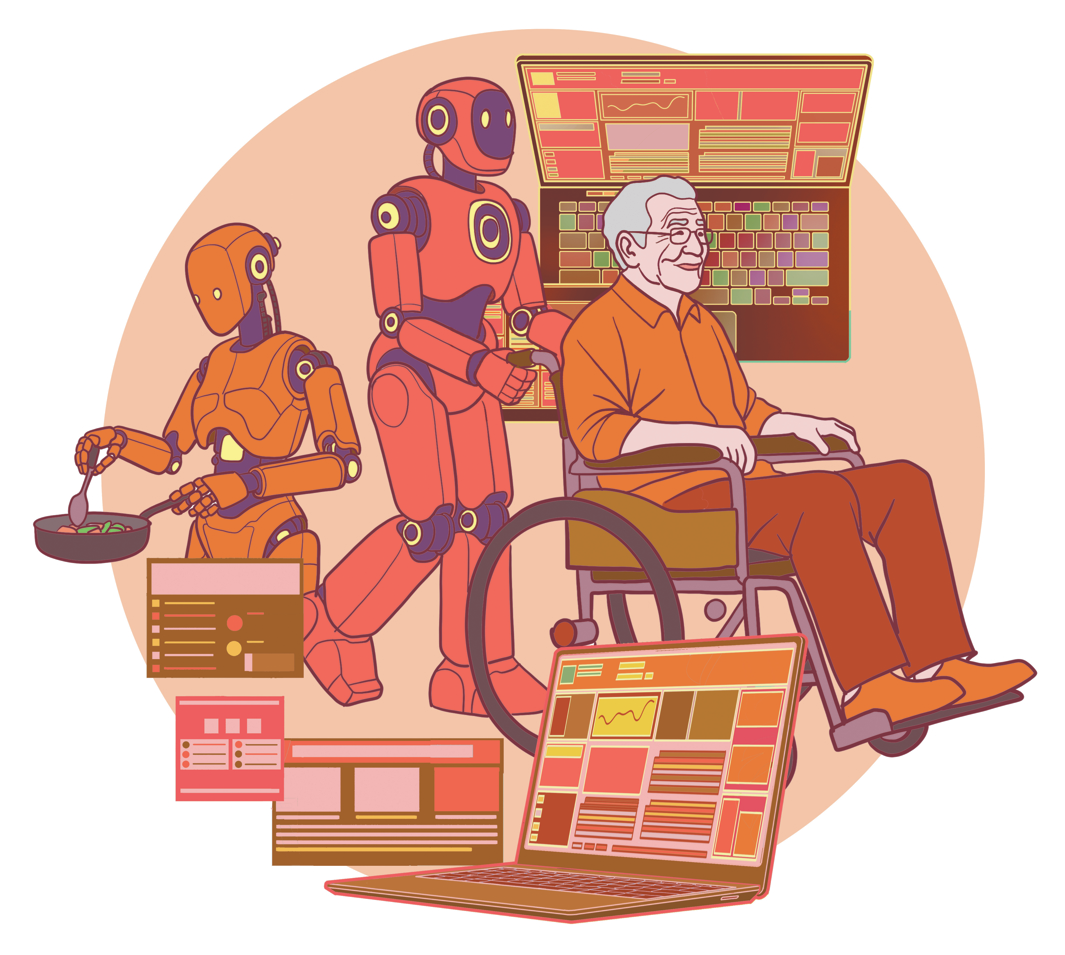
How is a small rural community in China leading the way in elder care innovation? Kemu Mountain Township in Linli county, Changde of Hunan province, has recently been recognized as one of China's exemplary models in 2025 for creating an elder-friendly society by leveraging cutting-edge AI technology.
Partnering with China Mobile in the past two years, the township has launched Hunan's first rural smart elderly care platform, integrating internet and cloud computing to provide comprehensive services — from policy advice to healthcare — seamlessly blending online platforms with local village health clinics to cover the full spectrum of home and community-based elder care. Now the pioneering services include installing emergency buttons, smartwatches, sleep monitors, and surveillance systems in the homes of 200 seniors, ensuring real-time health data transmission and 24/7 response.
The 14th Five-Year Plan (2021-25) period was pivotal for China's strategy to address population aging. By the end of 2024, the country had 310 million people — 22 percent of the total population — aged 60 and above. Therefore China elevated "active response to aging" to a national strategy. To develop national undertakings for the aged and improve the elderly care service system during the 14th Five-Year Plan period, it called for a tech-enabled smart eldercare system that integrated homes, communities and institutional services with medical, rehabilitative and wellness care.
Over the past five years, policy guidance and market innovation have worked in tandem, with notable results. The infrastructure for elderly care has expanded rapidly. More than 1,800 smart eldercare service platforms have been built nationwide, covering over 300,000 urban community facilities. Cities such as Beijing, Shanghai, and Hangzhou now have street-level smart eldercare centers across the board.
Technology is moving deeper, with the use of AI-powered health monitoring, safety protection, and daily assistance. Fall-detection alarms, smart pillboxes and cognitive-screening apps are now increasingly common. Service models are also evolving. "Internet plus nursing", "online consultations plus doorstep drug delivery", and "virtual hospital wards" are on the rise. In some areas, "time banks" encourage younger people to provide help to seniors via smart platforms and bank service hours to redeem care in the future.
As China moves from the 14th to the 15th Five-Year Plan (2026-30), it's clear that between 2026 and 2030 China's silver economy will require higher quality service and broader inclusion. The focus will shift from basic "elder care" to comprehensive "aging support".
The recently released recommendations for the 15th Five-Year Plan (2026-30) continues to advocate for actively responding to population aging and refine the policies and mechanisms for coordinating the development of elderly care programs and industries.
Technology will dissolve physical limits even further. Personalized health management will become the standard where AI-powered copilots trained on behavioral data will predict chronic-disease risks and propose interventions, AR glasses will aid low-vision reading while exoskeletons will help people with mobility issues walk independently.
The industrial ecosystem will also have to adapt because the silver economy will stretch beyond food, clothing, housing, transport and daily goods into culture, lifelong learning, and intergenerational programs. By 2030, it could reach 20 trillion yuan ($2.8 trillion).
Policy design must get ahead of the curve. The priorities include a unified national long-term care insurance system, better alignment of personal pensions and commercial insurance, and financial innovations such as reverse mortgages and "house-for-care "models.
Countries that started early offer valuable lessons in this regard. Japan's "robotic eldercare", the Nordic model of "embedded community care", and Singapore's "smart aging city" approach are all worth studying.
China's strengths in 5G, AI and mobile payments are fertile ground for developing smart eldercare. Looking ahead, China should deepen international cooperation in standards, joint research and development and pilot projects. Exporting "Chinese smart eldercare solutions" and participating in elder-service systems in countries along the Belt and Road Initiative can lead to mutually beneficial engagement.
Aging itself is not a problem. Our failure to adapt is. The 14th Five-Year Plan laid a solid foundation for smart eldercare. The new five-year plan is expected to bring more coherent systems and deeper integration. We don't need only smarter machines, but a more inclusive society; not just efficient care, but a life of dignity in old age. Every older person should not just be "cared for", but also be "secure, joyful, and engaged".
The author is a senior researcher at the Aging Society Research Center, Pangoal Institution.
The views don't necessarily reflect those of China Daily.
If you have a specific expertise, or would like to share your thought about our stories, then send us your writings at opinion@chinadaily.com.cn, and comment@chinadaily.com.cn.





