



Make cities smart, culturally rich, livable









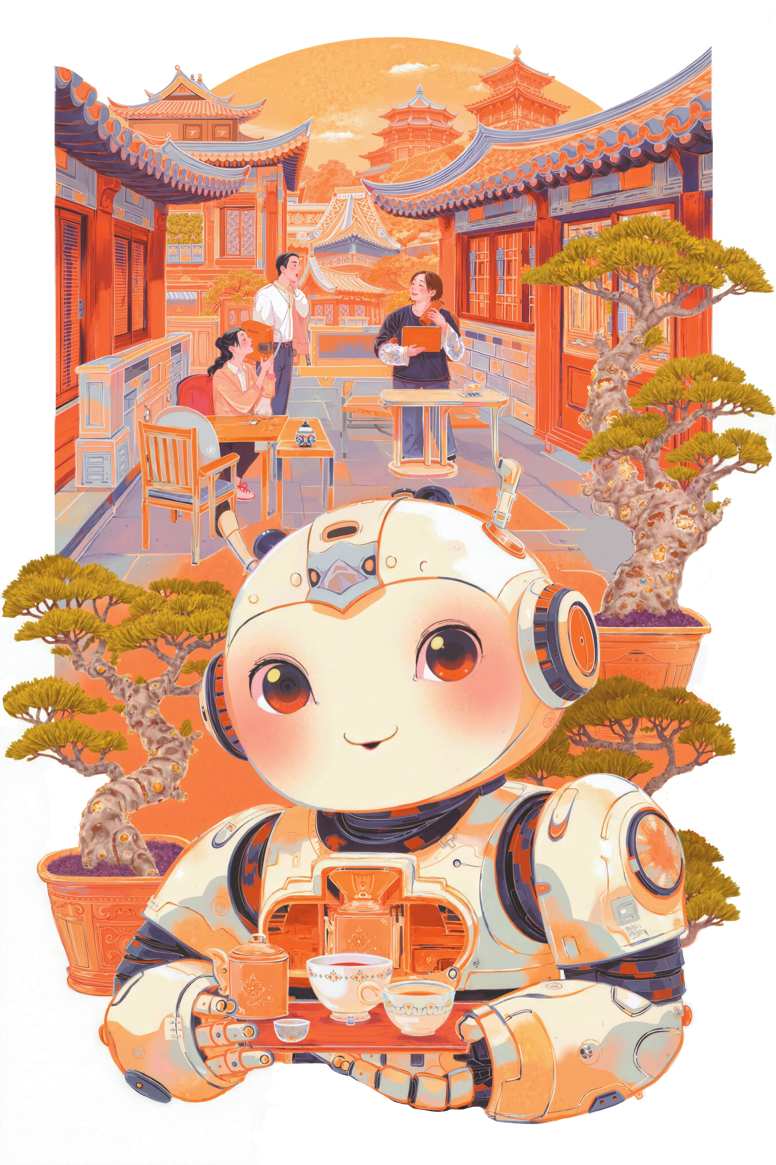
As the country strives to achieve basic modernization by 2035, urbanization was among the important focuses of the fourth plenary session of the 20th Central Committee of the Communist Party of China, as it is expected to unleash the potential for growth and improve the well-being of the people.
In 2015, at the Central Urban Work Conference, President Xi Jinping warned against "strange, bizarre buildings" that had turned some Chinese cities into testing grounds for grand spectacles. His words were a reminder that cities should be built for people, not for show.
A decade later, this year's CUWC, held in Beijing in July, marked another turning point, by calling for shifting the focus from large-scale construction to management, operation and maintenance. In the new era of urban governance, the construction of endless buildings is giving way to efforts to make cities livable, sustainable and people-centered.
This transformation is vital as China looks ahead to 2035, a pivotal year in China's modernization journey, because by then, nearly 80 percent of the country's population is expected to live in cities.
But the question is: What kind of cities will they live in?
For decades, progress was measured by skylines full of skyscrapers and expressways. But concrete and glass alone do not make a city great. A livable city is one where people feel at home, where public spaces invite children to play, neighbors to gather and the elderly to walk safely.
The guiding principle of a livable city should be "living structure". Put simply, living structure means cities and architecture that feel natural and humane both in structure and appearance. Living structure is evident in trees, with their branches jutting out of the trunk, the twigs emerging from the branches, and leaves, flowers and fruits from the twigs — or in rivers that fork out into narrower rivers, rivulets and streams, and vice versa. Chinese traditional buildings reflect the same principle: a courtyard opens into a house, a house into a neighborhood, each layer connected and balanced.
This pattern — big things made up of numerous smaller, harmonious things — is what makes a place look coherent, welcoming and alive. Studies show that people instinctively prefer such environments, because they reduce stress, improve orientation, restore attention and strengthen community bonds.
Today, artificial intelligence is allowing us to measure and even generate these qualities. Using AI, we can analyze whether a street layout encourages interaction or whether a facade reflects cultural memory. It's not about replacing planners or architects with AI, but about giving them better tools to build or improve urban environments in which people feel at home.
Looking at China's urban future, one of the most important shifts must be defining planning standards. For too long, rules have emphasized density and height as the main measures of progress. Yet what truly matters is whether neighborhoods are livable and welcoming. Features such as small parks within walking distance or street networks that connect people rather than divide them are just as crucial. Embedding these living qualities into urban standards would ensure that beauty and livability are treated not as luxuries, but as necessities.
Equally important is the role of technology in governance. As China moves from a construction-driven era into one focused on management and renewal, AI can become a powerful tool in facilitating this shift. By scanning old neighborhoods, identifying underused spaces, and suggesting targeted improvements, AI can help city planners adapt to changes more effectively. This does not mean replacing human planners with AI, but rather equipping them with the insight that makes governance more responsive, flexible and people-centered.
In addition, the demographic reality of 2035 demands a new commitment to inclusivity. China's urban population will reach a historic high, hence, cities must be designed to serve all residents. Elderly residents need shaded benches and safe walkways, children need playgrounds and young people need digital hubs and creative spaces. A city that balances these needs becomes a mosaic of resilient communities where every generation can thrive.
China's cultural heritage can be a strong foundation for turning this vision into reality. Traditional buildings and urban forms embody centuries of living structure, while modern AI provides the tools to apply these lessons at scale. Together, they can develop cities that are modern yet rooted in culture, efficient yet humane. This vision aligns with the United Nations Sustainable Development Goals and the New Urban Agenda, which call for livable, inclusive, resilient and sustainable cities.
The 2025 CUWC made clear that the future of Chinese cities lies not in endless expansion but in thoughtful governance. By including living structure into urban standards, using AI as a tool for renewal, and for promoting designs that serve all generations, China can ensure that its urbanization by 2035 is not just massive in scale but meaningful in impact.
The next decade is expected to be a historic opportunity to develop cities that are smart, culturally rich and livable — places where tradition and technology meet to improve the well-being of every citizen. That should be the promise of a new era of urban governance.
The author is a professor of urban informatics at The Hong Kong University of Science and Technology (Guangzhou). The views don't necessarily represent those of China Daily.
The views don't necessarily reflect those of China Daily.
If you have a specific expertise, or would like to share your thought about our stories, then send us your writings at opinion@chinadaily.com.cn, and comment@chinadaily.com.cn.





