



Latin America urgently needs green credit









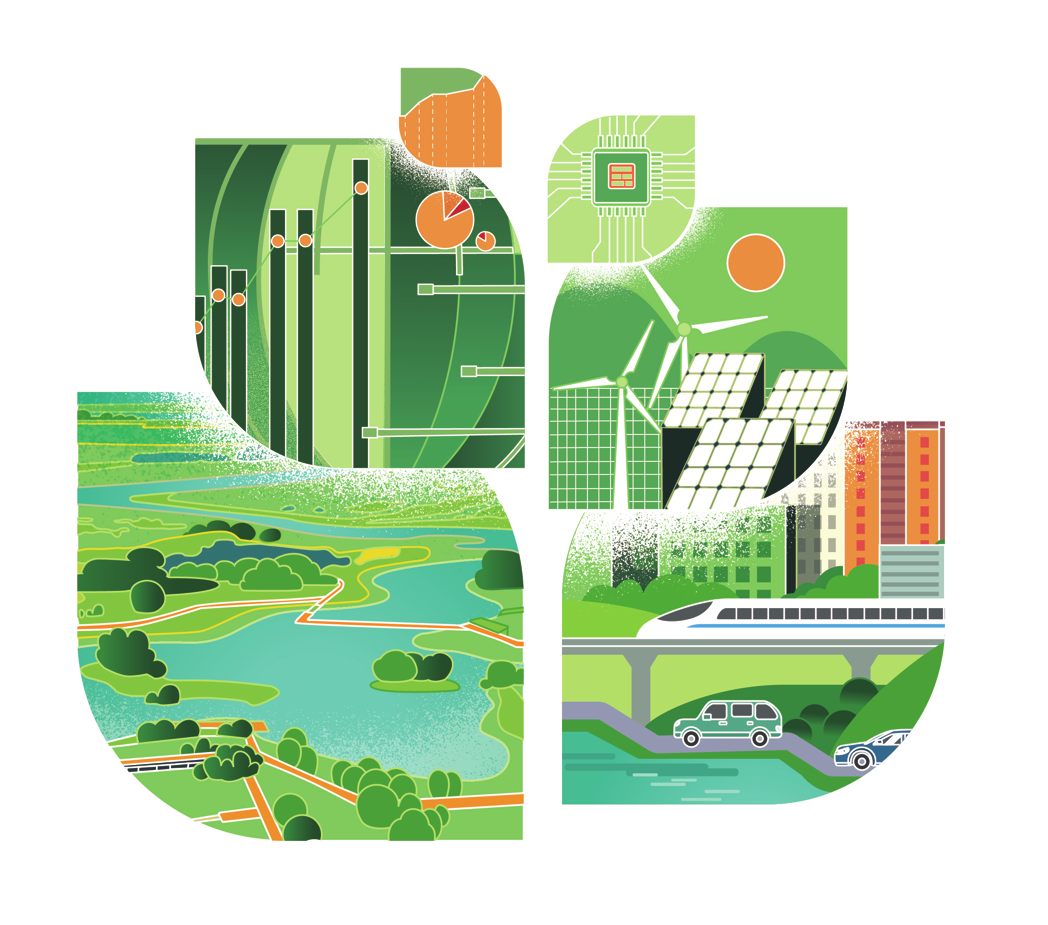
For many years, China's image in Latin America has been associated with building large infrastructure projects, importing commodities and investing heavily in strategic sectors such as energy and mining. This perception remains valid, but it is no longer sufficient. Quietly but decisively, China is beginning to project itself in the region as a green creditor — a financial actor willing to mobilize resources for energy transition, environmental protection and decarbonization.
This new role emerges just as Latin America is hosting the COP30 climate summit. Hosting the United Nations' conference in Belém, in the heart of the Amazon region, is profoundly symbolic. The Amazon rainforest is not only the largest tropical forest on the planet, but also a decisive regulator of the global climate, a reservoir of biodiversity, and home to millions of people whose livelihoods depend on its preservation. By bringing the world's climate negotiations to the banks of the Amazon River, Brazil has underscored both the urgency of protecting this vital ecosystem and the central role of the Global South in shaping climate solutions. Belém itself, which has for long been a gateway between the Amazon forests and the Atlantic, has become a stage where the struggle for sustainable development meets the demand for global climate justice.
The timing could not be more significant: Latin American countries urgently need climate finance to honor their emission-reduction commitments and to reshape economies still reliant on oil, coal and deforestation. China's growing role in green bond issuance, financing solar and wind energy and exploring green hydrogen, places it at the center of an emerging agenda where traditional lenders such as the World Bank, IMF and IDB have often been slow and reluctant.
Since the mid-2010s, Chinese banks — notably the China Development Bank and the Export-Import Bank of China — have introduced environmental clauses and expanded financing for projects labeled as sustainable. More recently, Chinese firms have become major players in renewable energy across Latin America. State Grid is now among the largest electricity transmission operators in Brazil, while China Three Gorges manages hydro, solar and wind power assets in the country. In Chile, green bonds were issued with significant Asian, including Chinese, participation, channeling funds into clean transport and renewable generation.
China is the global leader in green finance, accounting for over 20 percent of the world's green bond market in 2023 and surpassing Europe in growth momentum. Latin America, with its vast renewable potential and reserves of critical minerals such as lithium, copper and nickel, has become an ideal testing ground for China's ambition to project itself as a climate power.
Brazil is pivotal in this new landscape. Beyond being China's largest trading partner in the region, it has unparalleled potential to attract climate-related credit. The Tropical Forests Forever Facility, championed by Brazilian President Luiz Inácio Lula da Silva, would resonate strongly with Chinese banks and the BRICS' New Development Bank. By linking China's financial surplus with the Amazon's ecological wealth, the fund could anchor long-term preservation strategies that are hampered by lack of financing.
At the same time, new opportunities are emerging in frontier sectors. Research on green hydrogen in northeastern Brazil, distributed solar energy projects and the transition of urban transport systems in cities such as S?o Paulo and Bogotá are already attracting Sino-Latin American joint ventures. China's presence is no longer confined to commodity purchases and highways but has shifted to encompass innovation and climate-oriented finance.
This transformation is even more striking when contrasted with the United States. Instead of leading global efforts against the climate crisis, Washington is retreating into fossil fuel nationalism.
China, in contrast, positions itself as a green financier. It's a contest in which Beijing offers credit, technology and climate partnership, while Washington offers tariffs, sanctions and pressure. In Latin America, the contrast is especially visible: Chinese-backed renewable projects are advancing, while Western institutions have failed to offer concrete proposals.
Still, this new role for China must be examined critically. Not all investments labeled "green" are socially or environmentally benign; large hydro projects or poorly regulated lithium mining can have serious impacts. There is also the risk of greenwashing, where the label does more work than the substance.
The challenge for Latin American governments is to establish clear frameworks for climate finance, demand social and environmental safeguards and avoid reproducing patterns of dependency. The opportunity lies in negotiating from a position of strength: Latin America is not begging for loans but choosing between partners with competing agendas.
China's emergence as a green creditor in Latin America is an opportunity to channel external resources into energy transition, biodiversity protection and climate resilience. But it is also an invitation to critical reflection: without strong planning and regulation, even green capital can reinforce vulnerabilities rather than resolve them.
The contrast with the US administration ideas highlights the crossroads before the region. On the one side, there is a fossil-fuel nationalism that denies climate urgency; on the other, there are financial bridges toward a greener future. Latin America must decide whether to remain a passive object of external competition or to act as an active subject of a sustainable development project.
The author is a retired professor from the University of Brasília and member of Brazilian Association of Economists for Democracy.
The views don't necessarily reflect those of China Daily.
If you have a specific expertise, or would like to share your thought about our stories, then send us your writings at opinion@chinadaily.com.cn, and comment@chinadaily.com.cn.





