



Rising heat, rising risk need regional actions









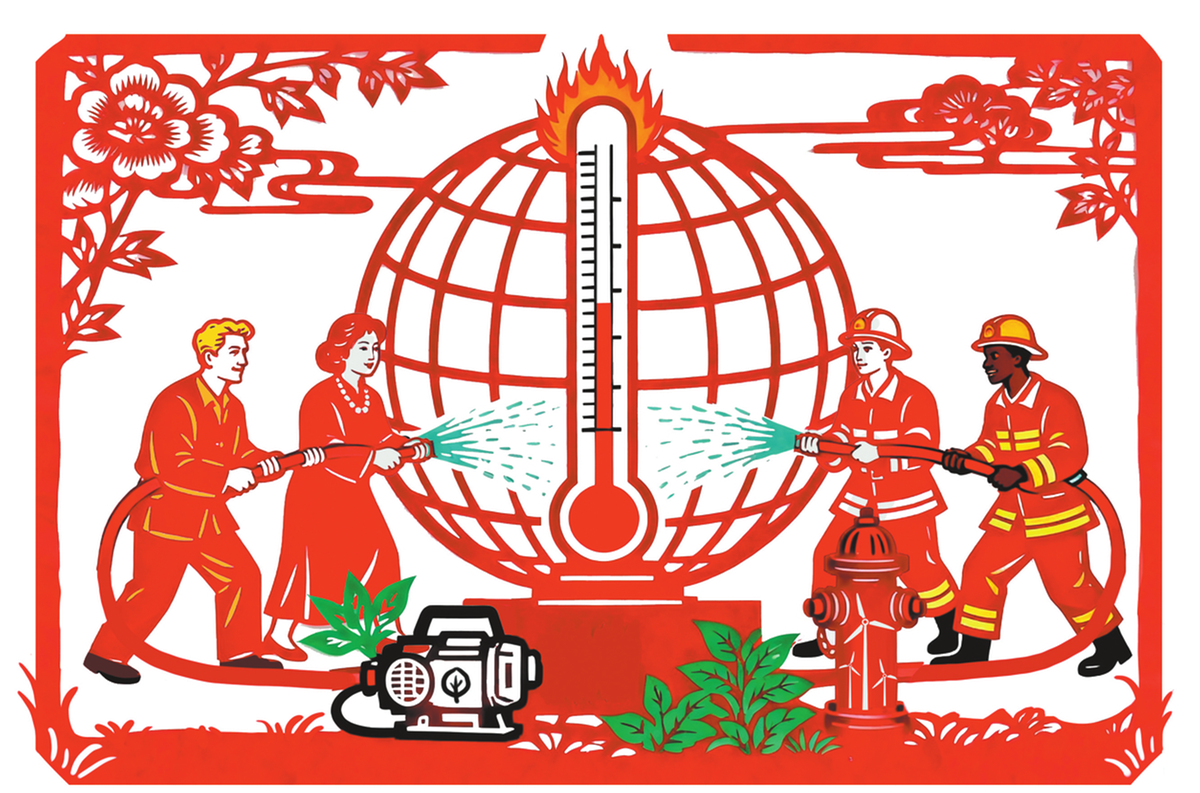
The year of 2024 was the hottest on record globally. In Asia and the Pacific, Bangladesh was the worst-hit country, with about 33 million people affected by lower crop yields that destabilized food systems, along with extensive school closures and many cases of heatstroke and related diseases. Children, the elderly and outdoor low-wage earners in poor and densely populated urban areas suffered the most, as they generally had less access to cooling systems or to water supplies and adequate healthcare. India, too, was badly affected, with around 700 heat-related deaths mostly in informal settlements.
Higher-income areas usually lie in cooler, greener neighbourhoods, so the hottest districts are often the poorest — adding to social inequality. In the city of Bandung, Indonesia, for example, a study shows that there can be temperature differences of up to 7 C between the hottest and coolest parts of town.
Future prospects for the region will depend critically on the progress of climate change. Under a high-emissions scenario, we project that extreme heat will be more frequent, intense and widespread — what were once occasional events will become seasonal or even year-round phenomena. Rising temperatures also affect other parts of the Earth's ecosystem — notably glacial melt. Warming in the Arctic can influence weather, precipitation and glacial behavior across Central and South Asia. Globally, this century, glaciers have lost about 5 percent of their volume. By 2060, under a high-emissions scenario, the Islamic Republic of Iran, Mongolia, Myanmar, Turkiye and Uzbekistan could lose more than 70 percent of their glacier mass. These phenomena also add to sea-level rise, raising existential risks for some countries in the Pacific.
To tackle these challenges, countries will meet this week at the United Nations Economic and Social Commission for Asia and the Pacific to consider opportunities to integrate heat risk into early warning systems and development planning. The key priority is to move from reactive heat risk management to long-term, science-informed strategies. Policy actions are needed at local, national, regional and global levels. This is the International Year of Glaciers' Preservation, which offers a critical opportunity for collective action.
At the local level, nature-based solutions such as trees lining streets, urban parks, green roofs and wetland conservation help lower urban temperatures. These measures can increase shade, promote evapotranspiration and act as heat sinks, reducing heat island effects. Vegetation and tree canopies can reduce peak summer temperatures by up to 5 C. While effects vary by vegetation type and density, green roofs and walls in Singapore, for example, have been shown to reduce surface temperatures by up to 17 C and ambient air temperatures by as much as 5 C.
Countries in Asia and the Pacific can significantly reduce heat-related illness, mortality and disruptions to livelihoods by building heat-ready, multi-hazard early warning systems. Expanding heat-health warning systems in just 57 countries could save approximately 100,000 lives each year.
To support countries, ESCAP plans to scale up climate-responsive and inclusive social protection schemes that include technical support for heat-specific social protection provisions that ensure heat readiness, along with income and non-income support, especially for the poor living in densely populated urban areas.
Additionally, recognizing the benefits of nature-based solutions, our efforts can strengthen collaboration among national governments, municipalities and local communities to create green, cooling cross-border corridors.
These passages can chill the air, reduce surface temperatures and provide buffers against desertification, land degradation, drought and sand and dust storms.
Finally, we must push the use of innovative space solutions to strengthen heat preparedness in early warning systems. Despite the proven benefits of early warning systems, coverage remains incomplete. Only 54 percent of global meteorological services issue warnings for extreme temperatures, and even fewer provide alerts for heatwaves or thermal stress. In Nepal, for example, a community survey revealed that about three-quarters of respondents from vulnerable groups had not received any heat alerts.
ESCAP can leverage existing cooperation to share Earth observation data and technical expertise for mapping and monitoring heat exposure and city vulnerability to urban heat island effects. This information enables greater precision in forecasting and quantifying heat risk, as well as for issuing timely heat alerts.
The Asia-Pacific region has considerable experience in managing cascading disasters. But the rising threat of extreme heat adds a new level of urgency. Every country needs to act now to meet the scale of this evolving disaster risk landscape and to turbocharge regional cooperation. ESCAP stands ready to support countries in these endeavours — as we prepare for an ever-hotter world.
The author is under-secretary-general of the United Nations and executive secretary of the Economic and Social Commission for Asia and the Pacific (ESCAP).
The views don't necessarily represent those of China Daily.
If you have a specific expertise, or would like to share your thought about our stories, then send us your writings at opinion@chinadaily.com.cn, and comment@chinadaily.com.cn.





