



China's nature reserves drive biodiversity, ecosystem restoration









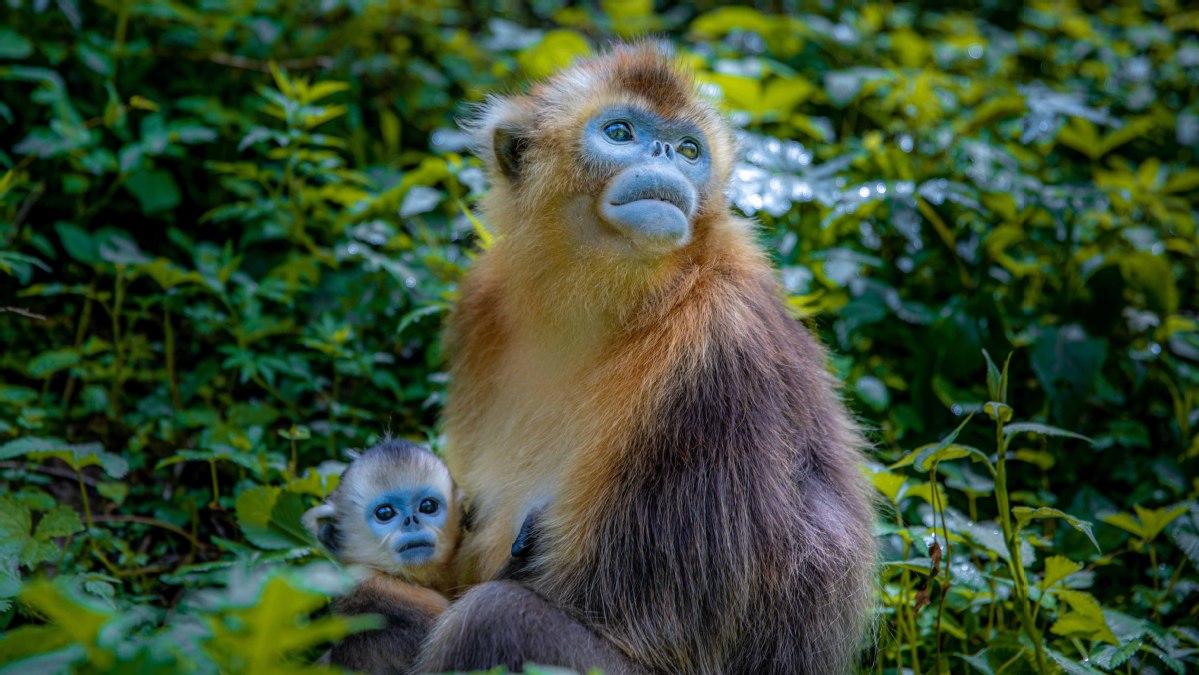
A comprehensive assessment of China's national-level nature reserves has revealed significant improvements in ecosystem stability and biodiversity, with over 90 percent of the reserves reporting population growth for key species, according to the Ministry of Ecology and Environment.
At a news conference on Friday, Pei Xiaofei, spokesman for the ministry, shared that 82 percent of the protected areas reported an expansion in the distribution range of key species.
The ministry stated that the assessment was launched in 2022 to evaluate the effectiveness of conservation efforts at national-level nature reserves, with all on-site evaluations now complete.
Pei noted that over 80 percent of the assessed natural reserves show increased above-ground biomass, and more than 70 percent registered a rise in forest coverage.
He highlighted that progress in the conservation of wetland reserves showed a 60 percent increase in the proportion of land covered by natural wetland.
Citing the population growth of the Yangtze finless porpoise and the Sichuan golden snub-nosed monkey as evidence of biodiversity improvements, Pei said the population of Yangtze finless porpoises observed in three reserves in Anhui and Hubei provinces grew from 192 to 269, with their distribution range continuing to expand.
In Shennongjia National Nature Reserve in Central China's Hubei province, the population of Sichuan snub-nosed monkeys increased from 1,471 to 1,618, while its habitat area expanded by 13 percent, he added.


- China issues work plan to strengthen food safety in kindergartens and schools
- China's cybersecurity agency issues warning on AI agent OpenClaw
- PLA delivers two guided-missile destroyers to the East Sea Fleet
- Racing through Jiading of Shanghai
- Guangzhou Baiyun International Airport cements its position as a key global aviation hub
- Shanghai enterprise gets world's first approval for implantable BMI medical device





