Unified market set to spur development
Domestic demand to benefit global supply chains, investments










China's next stage of development will rely on building a more unified national market, expanding domestic demand and deepening high-standard opening-up, even as protectionism continues to rise globally, a leading trade expert said.

In an exclusive interview with China Daily, Zhou Mi, senior researcher at the Chinese Academy of International Trade and Economic Cooperation, said China is shifting its development focus "from speed to efficiency and quality", and its "super-sized" domestic market will increasingly influence global supply chains, investment patterns and business strategies.
Zhou's comments come as national policymakers reinforce efforts to accelerate the building of a unified national market.
At a meeting of the Central Commission for Financial and Economic Affairs in July, the leadership underscored market unification as a cornerstone for creating a new development pattern and driving high-quality growth. Recommendations for the upcoming 15th Five-Year Plan (2026-30) also highlight the need to remove institutional barriers that fragment the domestic market.
A unified market, Zhou explained, aims to allocate resources more efficiently and provide companies with a more predictable business environment. This requires consistent standards and qualifications nationwide and smoother flows of goods, people and capital across regions. Several provincial governments, he noted, have already begun consultations and roll-out work.
But unification does not mean uniformity, he stressed. "Regions can still develop based on their strengths. The key is reducing hidden barriers and lowering transaction costs so that resources move freely," he said. A more integrated market, he added, will serve as a strong foundation for China's development strategy over the next five years.
Zhou highlighted consumption as a crucial driver as China evolves into the world's largest consumer market. The challenge lies in boosting both consumers' purchasing power and their willingness to spend, an effort closely tied to stable incomes, better public services and a stronger social safety net.
Recent policies, such as consumption vouchers, the expansion of "15-minute living circles", and measures to support rural e-commerce, have helped rebuild confidence. More important, Zhou said, China's supply system is becoming more sophisticated. "Even traditional industries like textiles are upgrading materials for different climates and specialized uses," he said. "Across sectors, companies are integrating better technology and responding more quickly to local and global needs."
High-quality supply and high-quality demand reinforce each other, he added, fostering more resilient long-term growth.
Despite rising global protectionism, China remains committed to opening its market wider. Measures such as expanded unilateral visa-free entry, the new K visa, and the Ministry of Commerce's "Shopping in China" and "Export to China" initiatives aim to make travel, investment and trade easier for foreign businesses and consumers, Zhou said.
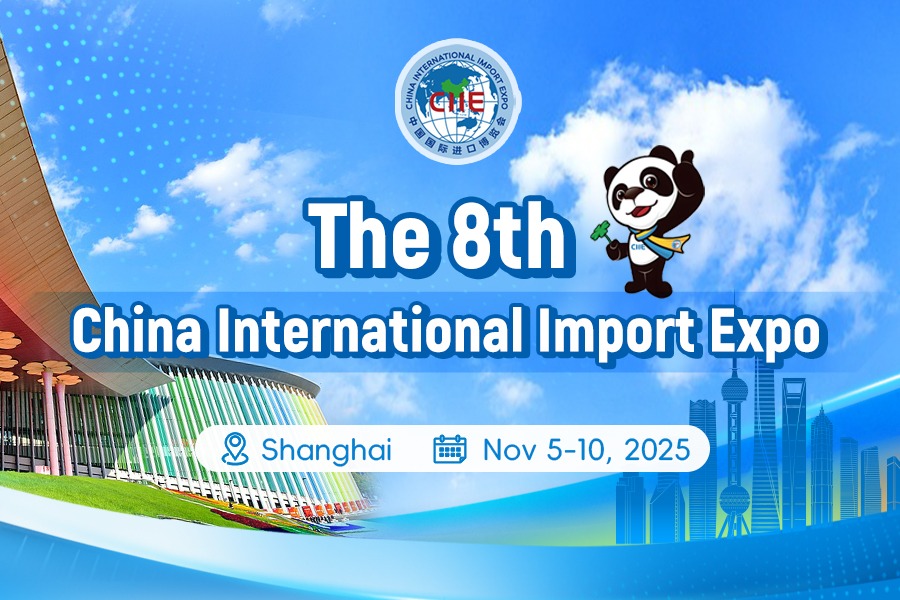
The China International Import Expo, he said, illustrates how China is increasingly becoming a destination market rather than solely an exporter. "When other economies raise tariffs and impose restrictive policies, China's large and diverse market becomes even more valuable for global companies," he said, citing the country's push to expand service-sector opening-up and develop new forms of service consumption.
On concerns that China's export strength depends partially on relocated industries, Zhou offered a more balanced view. Industrial migration, he said, is a natural part of global economic cycles. Some industries will relocate due to costs or market considerations, just as China once benefited from earlier waves of industrial transfer. But many Chinese companies are now multinationals and can adjust their global footprints flexibly.
Responding to commentary abroad that China prioritizes technological self-reliance over consumption, Zhou said such claims overlook the everyday nature of consumer spending. "Innovation projects are visible, but consumption is silent — it happens in millions of households," he said. "Consumption forms the foundation of diversified and sustainable development, while innovation is the engine. The two reinforce each other."
Looking ahead, Zhou cautioned that the midterm elections in the United States could intensify political rhetoric on China and heighten trade frictions. Global supply chains are already adjusting due to tariffs and geopolitical tensions, adding uncertainty for businesses worldwide.
China's approach, he said, remains steady: ensuring policy stability and transparency while expanding high-standard opening-up. He pointed to the nation's white paper, released in April, on China-US economic and trade relations as an example of Beijing's consistent support for multilateralism and WTO rules. "Our position is clear. We respond to unfair treatment, but our principles do not change," he said.
China will continue to broaden opening-up, make fuller use of trade agreements such as the upgraded Version 3.0 China-ASEAN Free Trade Area, strengthen dispute-resolution services for companies and remain committed to global economic integration.
As China moves into a new phase of development, Zhou said, market unification, stronger consumption, openness and innovation will form the interconnected pillars shaping China's domestic economic transformation and its engagement with the world.
Dilnaz Dilmurat contributed to this story.