


Willow Pattern sparks new links between ceramic heartlands










STOKE-ON-TRENT, Britain — Charity shops scattered along the streets of Stoke-on-Trent display stacks of plates painted with delicate willows, arching bridges, and Chinese-style pavilions. For many locals, these motifs borrowed from traditional Chinese paintings are as familiar as the smell of kiln smoke that once hung over the town.
Professor Neil Brownsword from the University of Staffordshire says: "Everyone in Stoke-on-Trent has got something of this Willow Pattern."
Back in the Qing Dynasty (1644-1911), the design helped boost exports from Jingdezhen, Jiangxi province, China's millennium-old porcelain capital. Porcelain wares traveled down rivers and across seas to Europe, where Staffordshire potters studied them closely, borrowing the cobalt blue and reworking the scenes into what became one of Britain's most iconic ceramic designs.
"It is not purely Chinese, nor entirely British, but a product of cultural exchange," says professor and curator Hou Tiejun from Jingdezhen Ceramic University.
Stoke-on-Trent was once home to famous British ceramics brands, such as Spode, Wedgwood, and Royal Doulton. Its canals and kilns shaped the city's skyline. But by the 1990s, mass ceramic production and rising costs eroded the local industry, and generations of craftsmanship began to disappear.
"My stepfather worked in the Spode factory. My grandmothers worked in other factories. It's not what it was," says Sue, a museum volunteer born and raised in the city, noting that changing consumer tastes also played a part. "If you don't respond quickly to people's changing tastes, then you get left behind."
Jingdezhen faced its own challenges in the late 20th century but found a path to reinvent itself. By the early 2000s, it began rejuvenating its ceramic legacy by converting old kiln complexes into creative districts, including the well-known Taoxichuan Ceramic Art Avenue.
When Brownsword visited in 2023, he found a vibrant scene: "I was amazed by a younger generation, 17 — and 18-year-olds, going to shops and picking up ceramics and kind of being interested."
Tim Jenkins, an archaeologist and adviser to the Stoke-on-Trent city council, says: "For Jingdezhen, one of the most important elements is embedding that craftsmanship and creativity at the heart of the city's master plan, and encouraging young craftspeople to make a living and sell within the city."
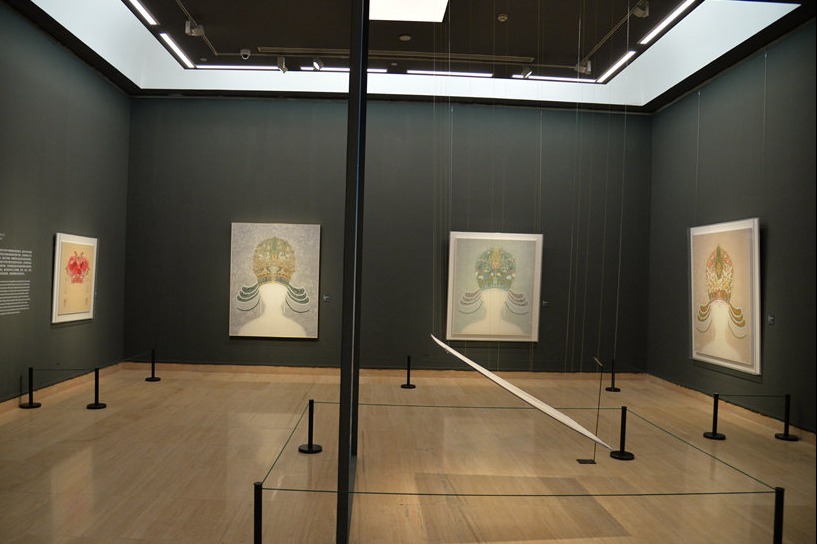
At the Spode Museum gallery, Yvonne and Jean stand before willow-patterned plates and ceramic works created by students from Jingdezhen Ceramic University. "People don't appreciate the china anymore," Yvonne says. "They buy cheaper versions."
Jean agrees, noting that famous names like Spode or Wedgwood are no longer as valued as they were before. "Everybody in Stokeon-Trent does know someone who worked in the pottery factories," Yvonne says. Yet, many factories have been hollowed out as companies outsourced production.
Still, both cities have found a common thread to connect their past with modern development.

At an international ceramics symposium held recently, the Lord Mayor of Stoke-on-Trent Steve Watkins told an audience of scholars and craftspeople that the two cities should "continue to stand proudly as global capitals of ceramics", passing their hard-won skills to future generations through deeper cultural and academic exchange.
For Jenkins, the future of ceramics relies on creating "safe spaces for young craftspeople to experiment, to fail, and to grow". Stoke's revival, he says, lies not only in preserving its industrial legacy but in rediscovering its creative one.
The Willow Pattern — designed in Britain and inspired by China — is once again a bridge between two places separated by continents yet linked by material, memory, and resilience.
- Shared blue-and-white legacies link Britain, China ceramic hubs
- French pavilion designs the future for diplomacy and collaboration
- The unforgotten artisans of the Forbidden City
- Slips unearthed at Liye archaeological site dig into details of Qin life
- From ancient lanes to historic crafts: Discovering Fuzhou