



Tianjin turns hub for green electricity trade
Surging renewable energy transactions in port city hit 40 percent









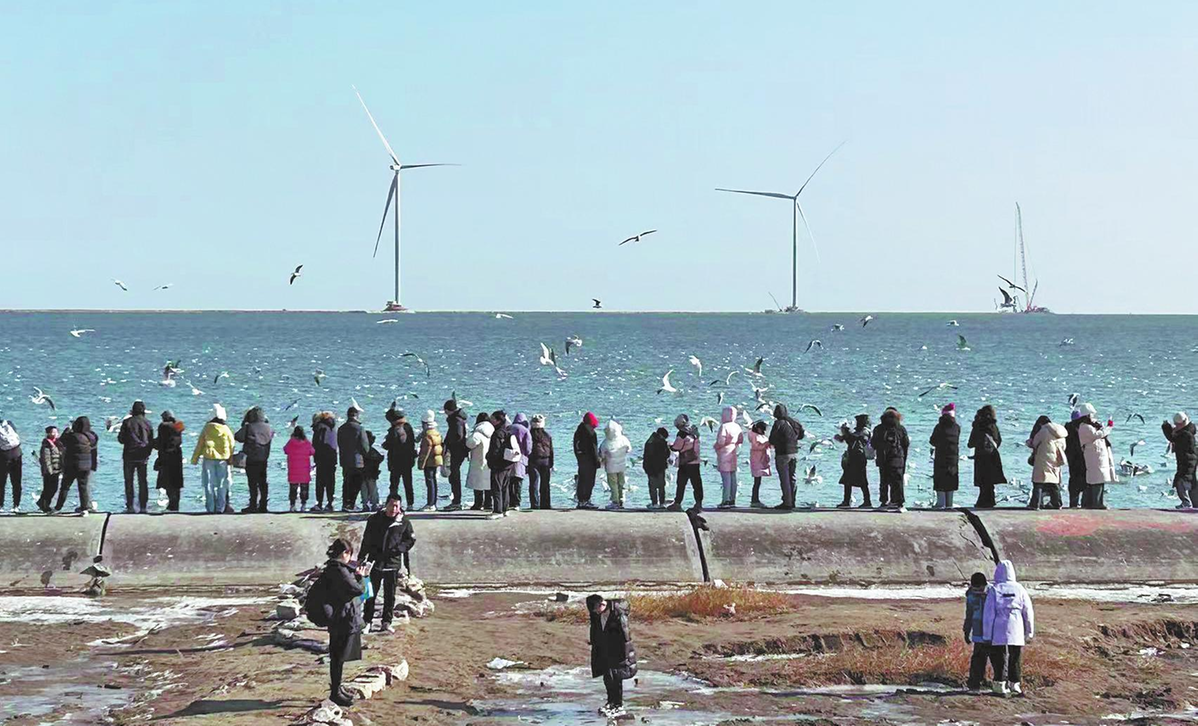
Editor's note: As protection of the planet's flora, fauna and resources becomes increasingly important, China Daily is publishing a series of stories to illustrate the country's commitment to safeguarding the natural world.
Since the launch of the national green electricity trading market in 2021, Tianjin, a port city in northern China, has seen its trade in renewable energy skyrocket from 12 million kilowatt-hours in 2021 to 17.3 billion kWh for this year. The remarkable growth has led to a dramatic cut in carbon dioxide emissions as well as toxic and harmful substances such as sulfur dioxide, nitrogen oxides and particulate matter.
State Grid Tianjin Electric Power Co, a subsidiary of national electricity provider State Grid, estimates the reduction is the equivalent of the amount of CO2 absorbed by 767 million trees for a whole year.
The national green electricity trading market facilitates transactions for both physical green electricity and related green electricity certificates so that large-scale users, such as manufacturers and data centers, can purchase their energy and ensure that it comes from a renewable source.


- Beijing-Pyongyang passenger rail service to resume Thursday
- Shanghai and Jiangsu integration boosts sports-tourism development
- China Eastern Airlines restores direct flights between Shanghai and Stockholm
- RedNote targets AI-run accounts with new governance rules
- China's draft law on ethnic unity aims to serve as global model, political adviser
- Spring blossoms complement the Honghe Hani Rice Terraces in Yunnan





