Five-year plans offer lessons for success










The world turned its attention to China as the country recently held the Fourth Plenary Session of the 20th Central Committee of the Communist Party of China, which approved recommendations for formulating the nation's 15th Five-Year Plan (2026-30).
Since shortly after the founding of the People's Republic of China in 1949, the five-year plans have served as the cornerstone of the nation's transformative journey, serving as road maps for high-quality growth. Initiated in 1953, these plans have provided continuity amid global turbulence. This legacy is evident in China's ascent from agrarian poverty to the world's second-largest economy, lifting more than 800 million people out of extreme poverty while achieving average annual GDP growth of nearly 10 percent over seven decades.
Economically, the five-year plans have driven sustained industrialization and innovation. The First Five-Year Plan (1953-57) prioritized heavy industry, channeling 20 percent of resources into factories, dams and roads, doubling industrial output and establishing an industrial base.
The country's post-1978 reforms integrated market mechanisms, with the Seventh Five-Year Plan (1986-90), for example, emphasizing reform and opening-up and spurring foreign investment and export-led growth. This shift propelled China's GDP from $150 billion in 1978 to $19 trillion by 2024. The 14th Five-Year Plan (2021-25) stressed "dual circulation", boosting domestic consumption while engaging with global markets, amid US-initiated global trade tensions.
Socially, five-year plans have promoted inclusive progress, evolving from economic silos to holistic blueprints. Investments in education, health and urbanization have narrowed urban-rural divides: Literacy rates soared from 20 percent in 1950 to 97 percent today, life expectancy doubled to over 78 years, and the social safety net expanded to cover 1.3 billion people.
Critically, five-year plans' strength lies in adaptability. From command economy to socialist market hybrid, they decouple policy from electoral cycles, enabling long-term vision.
The plans are "phased deployments" for modernization, underpinning China's twin miracles of rapid growth and stability. Indeed, the five-year plans have anchored China's structural and comprehensive transformation with far-reaching domestic and global impacts. They offer key lessons for other jurisdictions, particularly emerging economies that still struggle with a plethora of development challenges.
China's growth story isn't a ready-made plan that other countries can just copy, but it does offer practical ideas that can be adjusted to fit different places. These ideas have helped turn a poor country into a global leader, and they come from clear thinking, steady effort and a focus on results.
First, there's long-term planning through the five-year plans. These plans set big national goals like building a modern economy and break them into steps that everyone works on together. While many countries change direction every few years because of elections, China has kept moving in the same direction for decades. Other nations can do something similar by creating national strategies that last beyond one government, or by setting up independent groups to guide key projects.
Second, China believes in trying things small before going big. The saying "crossing the river by feeling the stones" means testing ideas in one area, seeing what works, and then using the best ones everywhere. Shenzhen started as a small experiment and grew into a global city.
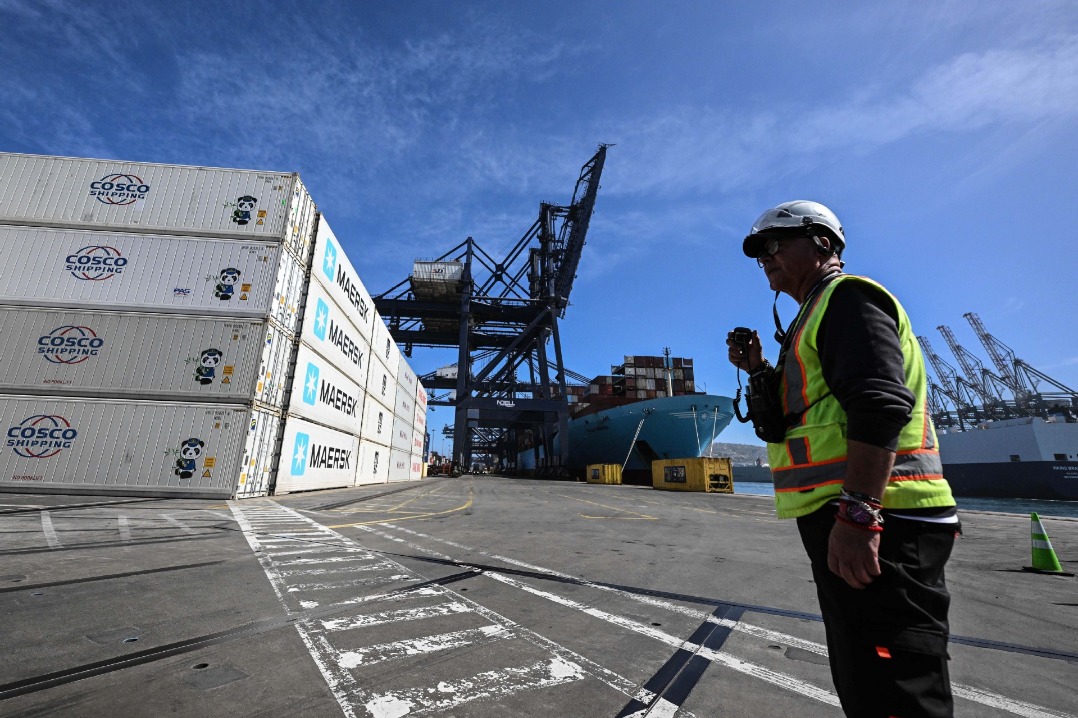
Third, China puts infrastructure first. It builds roads, ports, railways and internet networks early, even before the money is fully there. These projects make everything else easier: Goods move faster, factories open and jobs appear. Other countries can follow this by using public-private partnerships where companies help pay, or by focusing on projects that will earn money later, like toll roads.
Fourth, China ended extreme poverty with a careful, step-by-step system. It didn't just send money. It found every poor family, figured out exactly what they needed (a cow, a loan, a school), and assigned a local official to make sure it happened. The lesson here is to know who needs help, track the results, and hold someone responsible.
Fifth, China is now putting a lot of emphasis on innovation. The government invests in science, builds research centers, brings talent home, and protects new ideas with strong laws. This has made China a leader in artificial intelligence, electric cars and green energy. Other countries can borrow this by creating their own research funds, offering tax breaks to skilled workers who return home, or teaming up with universities and companies.
Finally, China connects with the world through a series of global initiatives such as the Belt and Road Initiative, the Global Development Initiative, the Global Security Initiative, the Global Civilization Initiative and the Global Governance Initiative. The Belt and Road Initiative has built railway lines in Kenya, ports in Pakistan and power plants in Southeast Asia. These projects boost trade and create jobs. Other countries and groups like Japan, India and the European Union are now launching their own versions.
At its heart, China's success comes from two things: a government that can get things done, and a willingness to adjust as it goes. The ideas are there for anyone to use. The real work is to make them fit your country, your people and your future.
The author is a scholar of international relations with a focus on China-Africa development cooperation, based in Nairobi, Kenya.
The views do not necessarily reflect those of China Daily.