When Chinese pop culture joined US' favorite parade









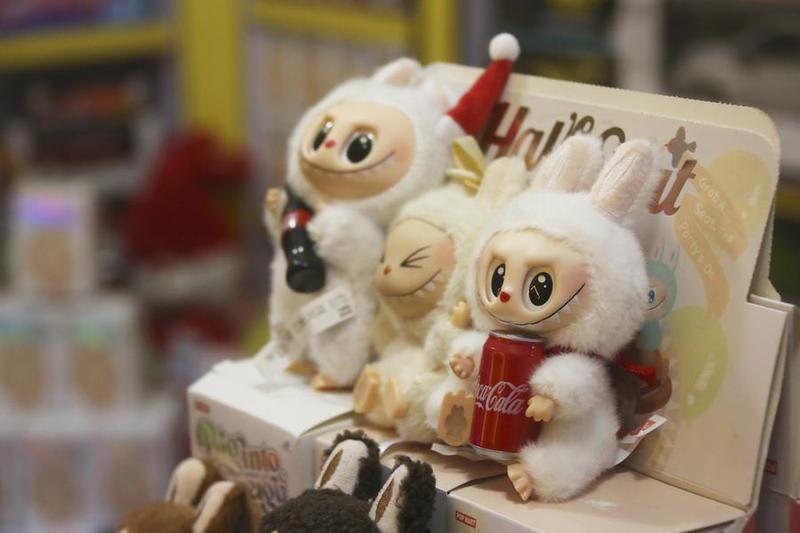
For decades, China's global image has centered on its ancient history, industrial prowess and the monumental infrastructure it builds. China has been building high-speed railways, bridges and satellites connecting continents. Yet a quieter question lingered: could China also offer the world a moment of simple, shared joy? During this past Thanksgiving Day, the answer surfaced, unexpectedly, on the crowded streets of New York City, not through high-level diplomacy, but through the playful swagger of a "Nordic monkey-like forest elf" with pointed ears, serrated teeth, and big eyes — better known as Labubu.
New York during the Thanksgiving Day Parade is its own kind of cultural theater — a jubilant display of Americana where tradition and spectacle merge. Into this iconic ritual wandered Labubu, the mischievous vinyl character created by Hong Kong-based artist Kasing Lung. Its presence was more than a marketing cameo. As Snoopy and SpongeBob floated overhead, Labubu mingled at the street level, high-fiving children and posing for selfies. Here was a distinctly contemporary Chinese pop icon, not framed behind museum glass or official messaging, but moving freely through the pulse of Manhattan.
What happened next revealed something meaningful. Spectators didn't see, in Labubu, a "Chinese export". They saw a character with a wonderfully contradictory charm: sharp fangs beneath wide, innocent eyes. Children squealed with delight at its chaotic cuteness, so different from the soft, rounded mascots typical of parades in the United States. Adults unaware of its Asian origins smiled at the audacity and energy it brought to the sidewalk. In those moments, Labubu shrugged off all labels. It wasn't "culture from China". It was simply fun, the most universal, translation-proof currency of human connection.
Labubu's appearance in New York represents the latest step in a more gradual global rise. The "blind box" model pioneered by its parent company, Pop Mart, helped propel the character Kasing Lung created for children's picture books (The Monsters series) from a niche collectible to an international sensation. The affordable, small-scale gamble taps into a universal thrill: discovery, surprise and the joy of collecting. But moving from retail shelves to a New York parade marks a deeper shift. It transforms Labubu from a product owned by individuals into an experience shared with the public. By inserting itself into a quintessential US tradition, Labubu showed that China's contemporary creative culture can participate in and enrich global rituals.
What made this moment particularly resonant was what Labubu did not carry. It had no slogans, no messaging, no political undertones. Its success offers a quiet lesson in soft power: the most effective cultural ambassadors often arrive without a script. Labubu's design philosophy, "Charm in Chaos", is inherently inviting. It doesn't preach harmony. Instead, it embraces imperfection with a playful confidence instantly understood by people everywhere. In an age heavy with curated narratives and strategic storytelling, there is something refreshing, even disarming, about a character whose mission is simply to be delightfully weird.
The global journeys of Japan's Hello Kitty and the Republic of Korea's Line Friends illustrate how beloved icons can become part of the daily fabric of life abroad. These characters didn't conquer foreign markets through speeches or campaigns; they succeeded by slipping into lunchboxes, phone screens, airport lounges and childhood memories. Labubu's Thanksgiving cameo was a first stitch in that same global tapestry, marking China's entry into a realm long dominated by its East Asian neighbors: exporting characters that bring emotional comfort, whimsy and cultural familiarity.
Crucially, the moment also reframes the idea of what "Created in China" can mean. For years, that phrase has evoked efficiency, scale and manufacturing expertise. Labubu offers a different association: creativity, humor and the power to spark spontaneous joy. When a character born in a Hong Kong sketchbook can generate smiles on a Manhattan sidewalk, it signals a shift in China's cultural presence, a move toward sharing stories and aesthetics that resonate beyond national borders.
As the parade crowds dispersed carrying memories of marching bands and towering balloons, some left with a new, unexpected impression: a mischievous, sharp-toothed creature from afar that felt entirely at home in New York. That small memory matters. In an era of geopolitical tension and cultural misunderstanding, shared moments of delight are surprisingly potent. They bypass intellectual defenses and forge quick, genuine connection.
Labubu's journey from collectible figurine to street-side celebrity is more than a curious anecdote. It is a signpost of China's growing confidence in expressing the lighter, more playful aspects of its modern identity. It shows that global conversation need not always take place on grand stages or through solemn forums. Sometimes it happens through a grin, a wave, a child's laughter. In the coming years, China's cultural outreach may increasingly be built not only with steel, policy or technology, but also with vinyl, whimsy and characters that embody the unexpected charm of modern Chinese creativity.
In New York, for one festive afternoon, Labubu proved that cultural bridges can be built from the ground up, sometimes literally by a small creature dancing under giant balloons. And in doing so, it offered a glimpse of a future in which China's soft power is carried not by slogans, but by smiles.
The author is the founding director of the Belt and Road Initiative Sri Lanka (BRISL), a pioneering organization dedicated to research, dialogue and engagement on China's Belt and Road Initiative.
The views don't necessarily reflect those of China Daily.
If you have a specific expertise, or would like to share your thought about our stories, then send us your writings at opinion@chinadaily.com.cn, and comment@chinadaily.com.cn.