War and teas: Chibi city steeped in history
Famous battleground and ancient beverage industry impresses foreign media tour group









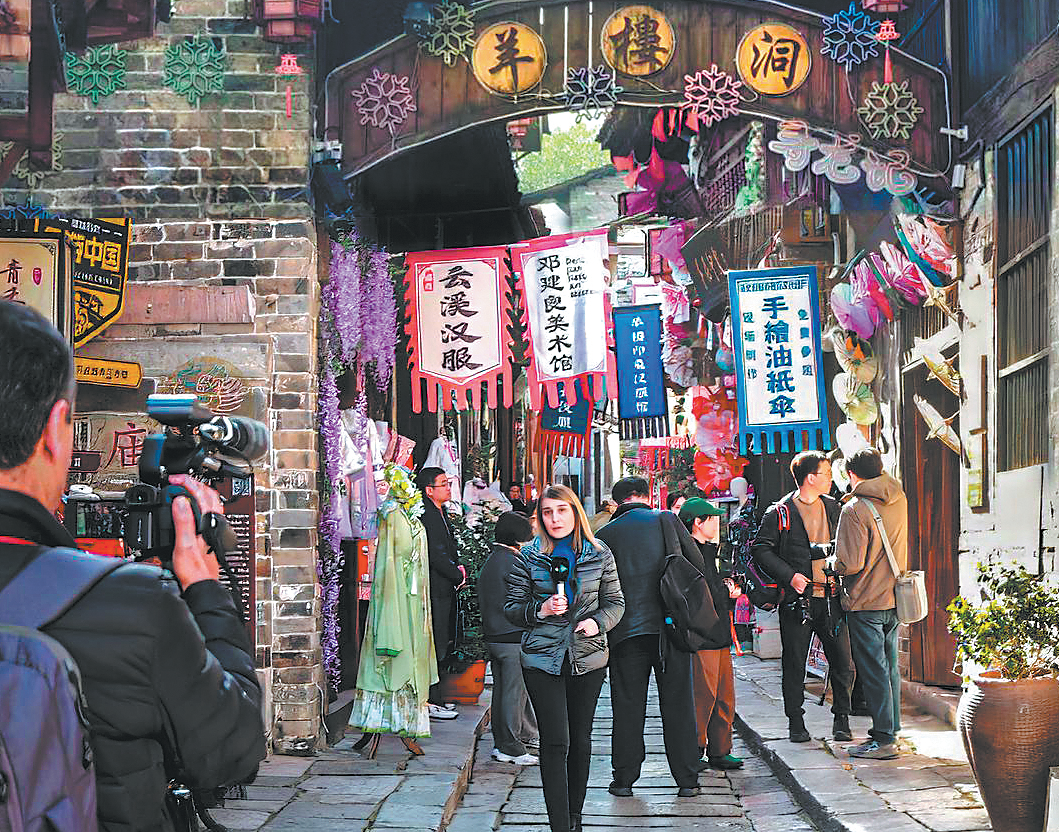
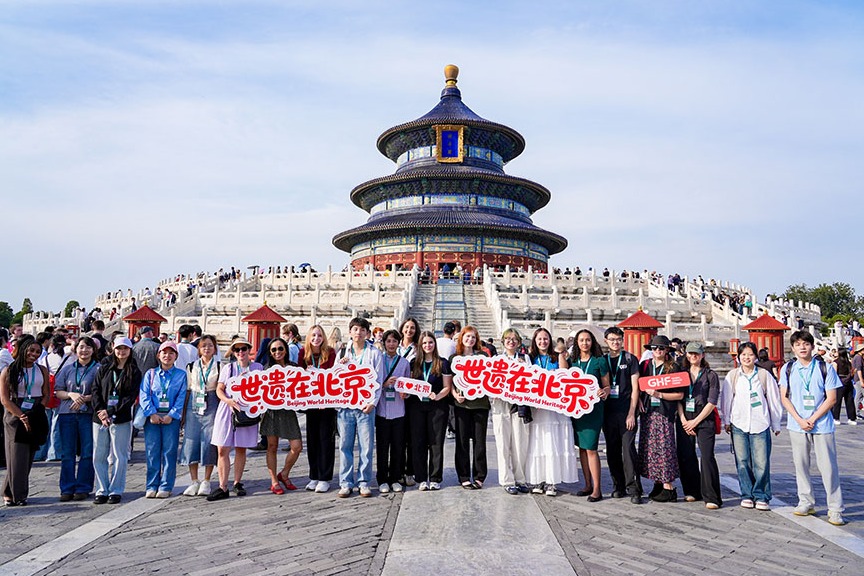
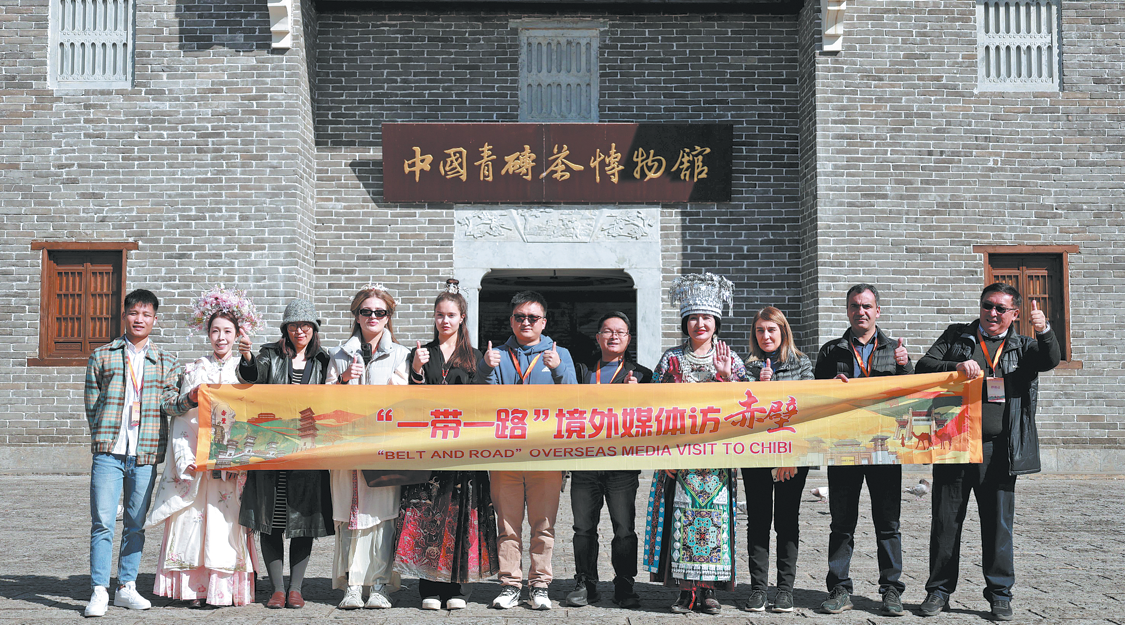
In late November, a cultural tour brought 10 foreign journalists from countries including Kazakhstan, Azerbaijan, Vietnam and South Korea to Chibi, an ancient yet vibrant county-level city in Central China's Hubei province.
This city is not only home to one of the most famous battlefields of China's Three Kingdoms period (220-280) but marks the origin of the "tea road" connecting Eurasia.
Legendary battle
Nestled on the southern bank of the Yangtze River's middle reaches, Chibi carries the legacy of the eponymous Battle of Chibi, a pivotal conflict fought some 1,800 years ago. This classic battle of "defeating the many with the few and the strong with the weak" laid the foundation for the tripartite confrontation of the Three Kingdoms, shaping China's historical trajectory.
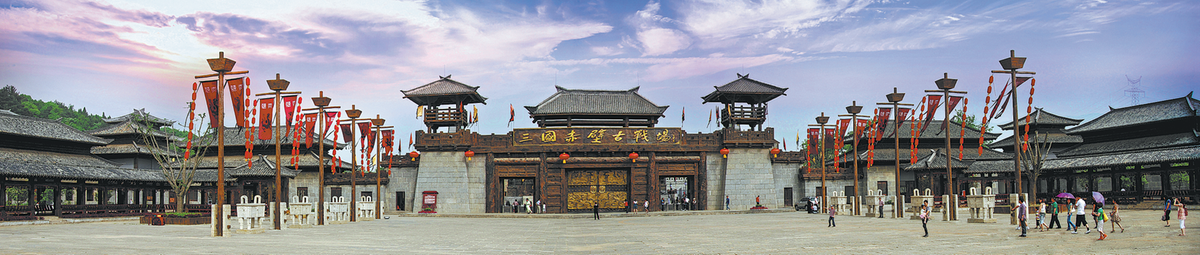
Today, the ancient battlefield scenic area in the city's northwest is a national 5A-level tourist attraction and a national key cultural relic protection unit. More than a mere historical site, it functions as an open-air museum dedicated to the history of the Three Kingdoms.
Within the scenic area, two Chinese characters chi bi (red cliff) are carved on the reddish-brown stone cliffs along the Yangtze River. Research shows these characters may have been inscribed as far back as the Tang Dynasty (618-907) or even earlier, witnessing centuries of literary admiration and historical reverie.
A South Korean journalist said that a visit here is like stepping into a moment in history. "South Korean readers are very familiar with and fond of Three Kingdoms stories, but being on the actual ancient battlefield is an experience far beyond reading books or watching dramas," the journalist said.
The scenic area is dotted with many other relics. For example, the Fengchu Hut is said to be where the strategist Pang Tong studied military tactics, and a millennia-old ginkgo tree outside the hut is a living link to the past.
The Baifeng Platform, meanwhile, is reputed to be where Zhuge Liang, the era's most celebrated strategist, observed the weather and prayed for the east wind which turned the tide of the Battle of Chibi.
Chibi's cultural tourism has evolved beyond mere relic preservation. A standout attraction is the live-action drama Red Cliff: Borrowing the East Wind, which integrates dramatic intensity with historical ambience, taking audiences on an immersive journey through thousands of years.
This "scenic area plus performance "model enriches Chibi's tourism and disseminates Three Kingdoms culture in a more vivid, internationally accessible way.
"I could almost smell the smoke of the Three Kingdoms military camps," said a Vietnamese journalist. "I have always admired Chibi, and the Three Kingdoms culture is very famous in Vietnam. As a former Chinese language student, seeing the scenes I read about in books felt like fulfilling a lifelong dream."
Intangible culture
If the Three Kingdoms battlefield is Chibi's soul, then Qingzhuan (dark brick) tea is its lifeblood. The city is renowned as the "hometown of Chinese Qingzhuan tea" and is the birthplace of Hubei's aged dark tea.
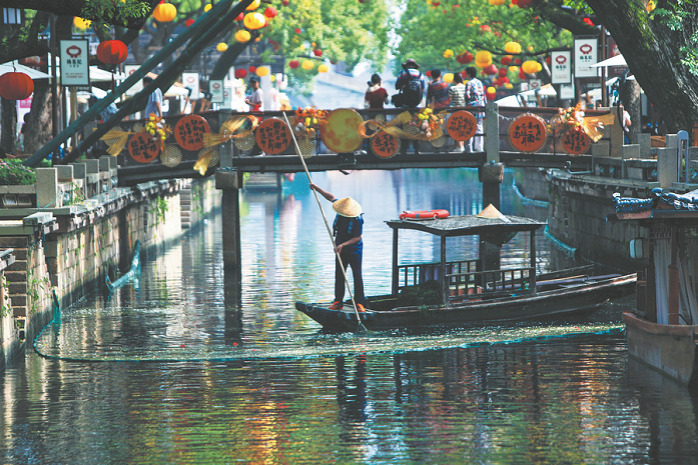
Yangloudong, a historical town in southwestern Chibi, is hailed as one of China's first ancient tea towns and the starting point of the China-Russia Great Tea Road.
Tea production in Yangloudong began in the Song Dynasty (960-1279) and flourished in the Qing Dynasty (1644-1911), with more than 200 tea houses at its peak.
The town's 2,200-meter-long street dating from the Ming and Qing dynasties (1368-1911) is known as "the cradle of China's tea industry".
On the street, an old house with the sign "Fuchang Tea House" was once the site of a tea house founded in 1861 by Russian merchants from Czar Nicholas I's family.
In the house, an eye-catching feature is a Western-style angel water fountain in the courtyard. A century ago, Russian traders integrated European aesthetics with Hubei's traditional architecture.
Standing in front of this building, a young Russian blogger couldn't hide her surprise. "Few Russians could go abroad in that era, yet someone actually came to Chibi to do business and open a tea house back then. It's simply incredible," she said. In recent years, Chibi has invested nearly 400 million yuan ($56.56 million) in the overall renovation of Yangloudong, creating seven tea culture attractions and transforming the ancient town from a relic protection unit into a fully equipped cultural tourism destination with a unified aesthetic and beautiful environment.
Key attractions include the China Qingzhuan Tea Museum, which showcases ancient Chinese tea culture, the evolution of dark brick tea, and its historical progress along the Great Tea Road, as well as a historical post office and the site of a Russian tea processing factory. In 2024, Yangloudong welcomed 1.35 million tourist visits.
The ancient town's tea culture is epitomized by the Zhaoliqiao brick tea-making technique, a core part of China's dark tea heritage. In November 2022, the technique was included in UNESCO's representative list of the Intangible Cultural Heritage of Humanity, as part of "traditional Chinese tea processing techniques and their associated customs".
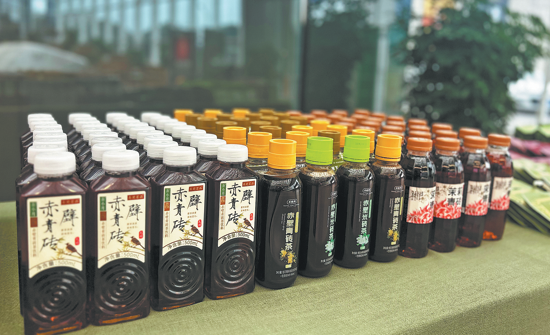
Zhaoliqiao Tea Factory, the largest compacted brick tea production base in Hubei, produces dark tea renowned for its mellow, sweet flavor. It is popular in China's northwestern border regions and global markets. The Chuan-branded Qingzhuan tea and two brands of rice brick tea products are beloved both at home and abroad.
Qingzhuan tea is produced by compacting dark tea, with the production process mainly divided into six major stages and 72 distinct procedures. Rice brick tea falls under the category of black tea reprocessing and is made through a series of procedures including steaming, pressing and drying.
A journalist from Malaysia said that the most fascinating part was watching masters turn loose leaves into tea bricks through the complicated procedures.
"The depth of history and the sophistication of craftsmanship seem to be perfectly sealed in these small tea bricks, allowing them to cross time and space and be preserved to this day," she said.
The Hubei Qingzhuan Tea Industry Development Group exemplifies the industry's high-quality modernization in the new era. The group has 10 member enterprises and more than 1,333 hectares of standardized tea farms, with an annual production capacity of 15,000 metric tons of various teas.
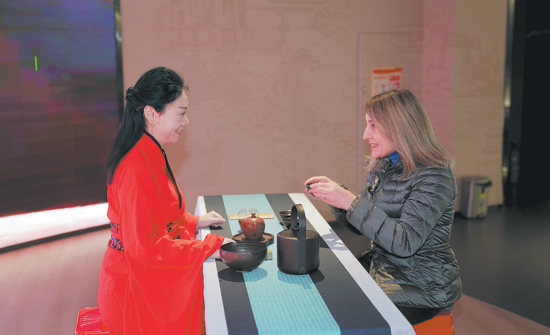
"Traditionally, the Qingzhuan tea required boiling and prying, which are cumbersome for fast-paced overseas markets and young consumers," explained Yang Jie, head of international trade for Yangloudong's tea industry.
To adapt, Chibi's tea makers have revamped both form and flavor, such as launching lightweight tea bags and cold-brew options, and infusing flavors like jasmine, osmanthus, lime, and even milk tea. "We don't pressure young people to appreciate pure tea's depth immediately; instead, we use accessible flavors and convenient formats to invite them to try it," Yang added.
In addition to product innovation, sales models have evolved. Chibi's tea enterprises leverage cross-border e-commerce platforms such as Amazon and eBay, and use new media to tell Chinese tea culture stories, helping this ancient oriental leaf go global. Currently, the public brand value of Chibi Qingzhuan Tea has exceeded 5.1 billion yuan, ranking first in Hubei and listing among the top 20 of China's regional tea brands in 2024.
Green development
The trip to Chibi is not only a search for historical roots but a visit to the city's future development. Known as Hubei's "southern gateway", Chibi boasts a comprehensive transportation network, with railways, high-speed rail lines and expressways crisscrossing its territory, and the Yangtze River's waterway flowing eastward.
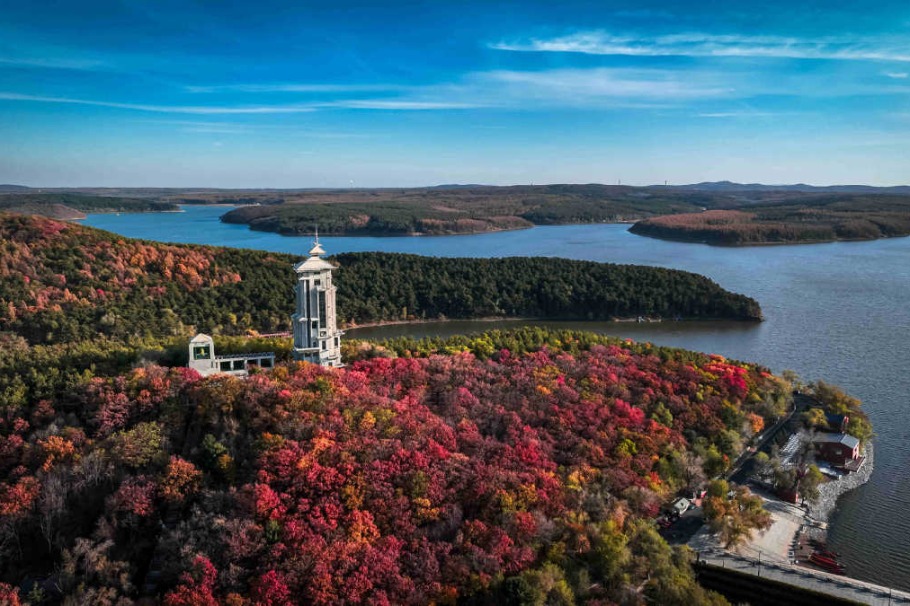
The city shines ecologically. Its forest coverage rate reaches 44 percent, and the excellent air quality rate in the urban area remains above 90 percent.
Additionally, it is rich in natural resources, including 25,333 hectares of moso bamboo, 1,733 hectares of kiwifruit orchards and hot springs with a daily flow of 6,000 metric tons. These assets have earned Chibi national and provincial honors, including the title of "National Model City for Ecological Civilization Construction".
Economically, the city has maintained a good momentum in recent years. In 2024, its GDP reached 57.5 billion yuan, a year-on-year increase of 6.9 percent. Its comprehensive economic strength ranked 112th among China's counties and 11th in Hubei.
With its blend of historical charm, cultural vitality and green development, Chibi has emerged as a key window for the international community to witness the inheritance of Chinese civilization and China's high-quality development in the new era.
haonan@chinadaily.com.cn