



'Fragrance economy' set for heady expansion
Several cosmetics, fashion and lifestyle companies racing to secure strong foothold in China's perfume market









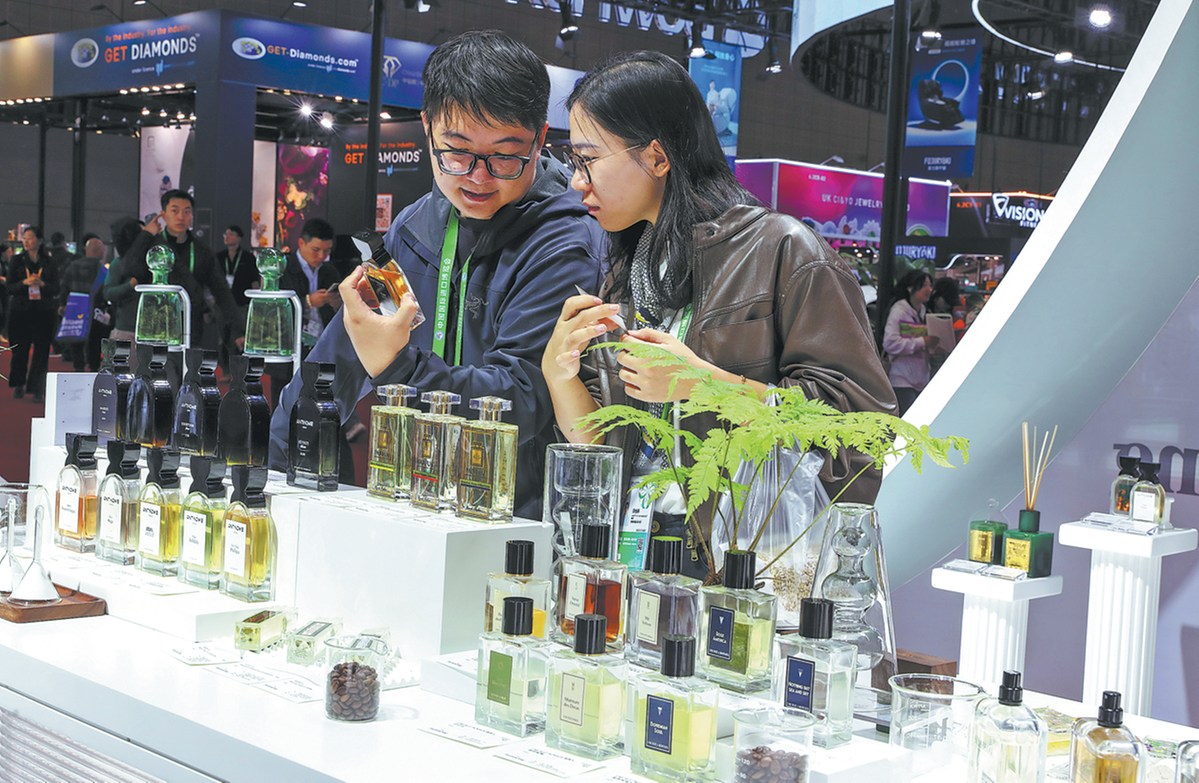
The perfume market in the country is entering a phase of rapid expansion, reshaping what was once a niche category into one of the most closely watched growth areas in beauty.
Foreign luxury houses including Dior, Chanel and Tom Ford Beauty are doubling down, rolling out flagship fragrances. Domestic brands are also attracting more investors.
Homegrown brands such as To Summer, Wenxian Documents and Melt Season — known for packaging and narratives rooted in Eastern aesthetics — have drawn strategic investments from multinational players including LVMH and the Estee Lauder Companies.
A rising number of cosmetics, fashion and lifestyle companies are racing to secure a foothold in what many executives describe as the rise of China's "fragrance economy".
Chinese beauty companies such as Proya, Kans and Maogeping have entered the category this year.
The momentum is underpinned by strong sales growth.
The category of fragrance has been maintaining growth over the last five fiscal years (FY21-25), emerging as one of the group's most resilient engines, according to the group.
In China, the category's growth has outpaced many other beauty segments, reflecting changing consumer priorities among younger shoppers.
Recent results highlight the payoff. Tom Ford's Bois Pacifique and Black Lacquer, along with Le Labo, all posted double-digit growth on the Chinese mainland.
To sustain growth, Estee Lauder has intensified investments in innovation infrastructure. The company's Fragrance Atelier — an internal innovation hub — serves as a shared engine supporting brands including Jo Malone London, Tom Ford, Le Labo, Kilian Paris and Editions de Parfums Frederic Malle. The goal is to balance global consistency with local relevance, said the group.
Paris-based Fragrance Atelier is being integrated into Estee Lauder's global innovation network, working alongside innovation centers in China, the United States, Belgium and Canada.
The company aims to create what it calls a "global intelligence, regional complementarity" model — allowing cultural inspiration and consumer feedback from different markets including China to be translated more quickly into new fragrances.
Technology is central to the effort.
The Estee Lauder Companies has begun incorporating artificial intelligence across the fragrance development process, from olfactory research and patent analysis to regulatory compliance. The company estimates that digitalization could shorten development cycles by 30 to 50 percent.
The underlying driver is a deep shift in consumer attitudes. Fragrance in China is moving away from functional use — such as masking odors — toward emotional value and self-expression, said the group.
"Scents are increasingly viewed as tools for mood regulation, individuality and lifestyle signaling, particularly among Gen Z and millennial consumers," said the group. This shift has fueled demand for niche, premium and story-driven fragrances. Consumers are paying closer attention to originality, depth and exclusivity, while also expecting immersive retail experiences that extend beyond test strips.
"I've become obsessed with perfume," said Zhan Lingling, a 28-year-old Beijing resident who bought Le Labo's Santal 33 this year as a gift for herself. "It makes me feel fresh and confident, and puts me in a good mood all day." Despite the brand's premium pricing, she said she plans to gradually collect more of Le Labo's fragrances.
Brand storytelling, spatial design and cultural resonance — often linked to China-chic aesthetics — are now key purchase drivers.
For Estee Lauder, fragrances have become a core pillar of its China business. The group has paired portfolio expansion with a redesign of offline experiences, using localized retail concepts to deepen emotional engagement.
Le Labo's fragrance laboratory in a traditional courtyard in Beijing and Jo Malone London's boutique in Suzhou, Jiangsu province, inspired by classical gardens, are often cited as examples of global brands blending local culture with brand DNA.
Le Labo has gone further by introducing on-site, hand-blended fragrance services at its Sanlitun outlet in Beijing, offering a "made-for-you "experience. The store is only the second in the country to provide such a service, following the brand's Qiantan Taikoo Li site in Shanghai.
Industry analysts say such experiential models not only increase dwell time and conversion, but also strengthen brand loyalty in a crowded market.
The broader market data underscore the opportunity.
According to iiMedia Research, the perfume market in China reached 20.7 billion yuan ($2.9 billion) in 2023, up 22.5 percent year-on-year, and is projected to climb to 51.5 billion yuan by 2029.
Maogeping Cosmetics, best known for its makeup business, launched two fragrance lines in the first half. Its interim report shows fragrance sales of more than 35,000 units, generating 11.4 million yuan in revenue, with a gross margin of 77.6 percent.
Shanghai Shangmei Cosmetics, owner of the Kans brand, plans to debut a fragrance range spanning perfumes, candles and diffusers by year-end.
Fashion and lifestyle brands are also experimenting.
Domestic bag maker Songmont collaborated with Chinese perfumer Yili to launch the Tambacmont fragrance series in November. Cashmere brand Erdos partnered with Wenxian Documents on a home fragrance collection.
Local fragrance brands are also becoming more confident overseas. To Summer opened its first store in the Hong Kong market in September, positioning the city as a gateway for overseas expansion. Melt Season, meanwhile, debuted a store at Tokyo Narita Airport, aiming to boost global awareness through high passenger traffic hubs.
As Chinese consumers continue to prioritize emotional value, personalization and cultural resonance, fragrance is emerging as one of the clearest symbols of new consumption trends — and one of the most competitive battlegrounds in the beauty market.
"Fragrance products combine high added value, strong brand loyalty and cultural significance," industry analyst Wang Chunjuan, a member of the China Community Commerce Committee, told Securities Daily. "By expanding into this sector, companies can not only diversify their profit, but also enhance brand recognition and user loyalty."
Still, challenges remain.
Wang pointed to gaps in perfumery craftsmanship, raw material traceability and upstream supply chains among domestic brands. "Addressing these weaknesses will require sustained investment in R&D, high-end fragrance ingredients and talent development," she said. "Some companies are already moving in that direction by building proprietary supply chains and recruiting experienced perfumers."


Today's Top News
- Chinese leaders extend Spring Festival greetings to retired senior officials
- China successfully recovers first-stage booster of Long March 10 rocket from sea
- Longer Spring Festival break fuels travel boom
- Whatever the season, China will keep tourists busy
- Is Spring Festival without fireworks applaudable?
- Vital role of family virtues in governance







