Looking beyond COP30
Coordinated action is needed to strengthen resilience, accelerate innovation and ensure that the benefits of energy transition are shared across nations and generations










The 30th United Nations Climate Change Conference (COP30), which concluded in Belém, Brazil, on Nov 22, provided clearer direction for the next stage of the global energy transition. The conference reached new consensus on scaling renewable energy, improving access to green finance and strengthening South-South cooperation, while placing modern energy system development at the intersection of energy security, economic growth and climate governance. As political commitments increasingly align with technological choices, the world is entering a phase defined by the rapid expansion of clean energy and continued cost reductions that underpin deeper decarbonization.
Yet the nature of the challenge has shifted. The central question is no longer whether a particular clean-energy technology is inexpensive, but whether power, transport, industry and buildings worldwide can absorb rising shares of clean energy in ways that are affordable, bankable and scalable.
Over the past decade, renewable generation, energy storage, electric mobility, industrial efficiency measures and cleaner heating technologies have advanced rapidly. Falling solar, wind and battery costs have made clean energy more attainable for both developed and developing economies. But recent experience shows that technological progress alone does not guarantee a smooth transition. Supply chain disruptions, higher global interest rates, geopolitical uncertainties and volatility in critical minerals have constrained further cost reductions and increased financing pressures — especially for emerging economies with higher capital costs. As clean energy shifts from a supplementary role to becoming the backbone of national energy systems, new structural constraints have surfaced across multiple sectors and layers of governance.
In power systems, many countries face growing stress as renewable penetration climbs. Grid-connection queues are lengthening; conventional flexibility resources are retiring faster than replacements can be added; and negative prices appear more frequently. In some regions, system costs rise even as zero-fuel-cost renewable capacity expands — underscoring that power systems dominated by variable renewables require substantial investment in transmission upgrades, reserves, storage, digitization and flexibility services. Without mechanisms that fully price and allocate these system-level costs, curtailment increases, inefficiencies build up and the economic value of renewable energy becomes harder to capture in practice.
End-use sectors are also undergoing structural change. In transport, electric vehicles, urban rail and new-energy vessels are expanding rapidly, reinforcing the shift toward electrification. But without smart-charging systems or time-of-use pricing, peak loads may rise, complicating grid operation. In heavy industry, electrification and efficiency improvements are essential but insufficient for deep decarbonization. A broader portfolio of technologies, including green hydrogen and ammonia, carbon capture and storage, bioenergy, geothermal heat and zero-carbon industrial heat, is required. In buildings and heating, heat pumps, low-carbon district heating and digital energy management systems are reshaping urban energy use and influencing long-term planning and household behavior. These changes demand updated governance frameworks, new infrastructure investment and workforce retraining in both advanced and developing economies.
At the same time, fossil-fuel producers and hydrocarbon-dependent economies face a strategic redefinition. They remain central to energy security in many regions, yet they are increasingly expected to take on responsibilities in methane abatement, low-carbon hydrogen development, carbon management and in some cases negative-emissions technologies. For resource-dependent economies, balancing fiscal stability, competitiveness and transition pressure has become a defining issue in the global political economy after COP30.
Meeting these challenges requires coordinated progress in institutional reform and technological innovation. On the institutional side, countries need more integrated and forward-looking policy architectures. Stable climate targets, effective carbon-pricing mechanisms, inclusive green finance standards and just-transition frameworks are essential to align emissions reduction with economic and social stability. For the Global South, achieving energy system upgrades under tight fiscal constraints will require reforms to multilateral development banks, better coordination between debt and climate agendas, and innovative financing tools tailored to infrastructure and mitigation needs.
Technological advancement must also accelerate across the energy value chain, from resource extraction and processing to conversion and end-use consumption. Mature technologies such as solar, wind, storage and smart grids must continue to scale up, while low-carbon solutions in fuels, heat, transport and industry must commercialize more quickly. These include green hydrogen and ammonia, sustainable aviation fuel and advanced biofuels, high-efficiency heat pumps and zero-carbon district heating, low-carbon cement and steelmaking, carbon capture and utilization, and digital and artificial intelligence-enabled tools across supply chains.
China offers a comprehensive example of how institutional and technological progress can reinforce one another. In the power sector, interregional transmission projects have eased supply-demand mismatches and improved cross-provincial resource allocation. Coal-fired units, supported by flexibility retrofits and compensation mechanisms, are shifting from baseload generators to critical providers of system stability and peak regulation. Markets for energy storage, ancillary services and capacity continue to expand, sending clearer price signals for a wider range of flexibility resources. Meanwhile, the integration of spot power markets, green electricity certificates, carbon trading schemes and new storage trading mechanisms is helping create a more coherent multi-market framework for managing high renewable penetration.
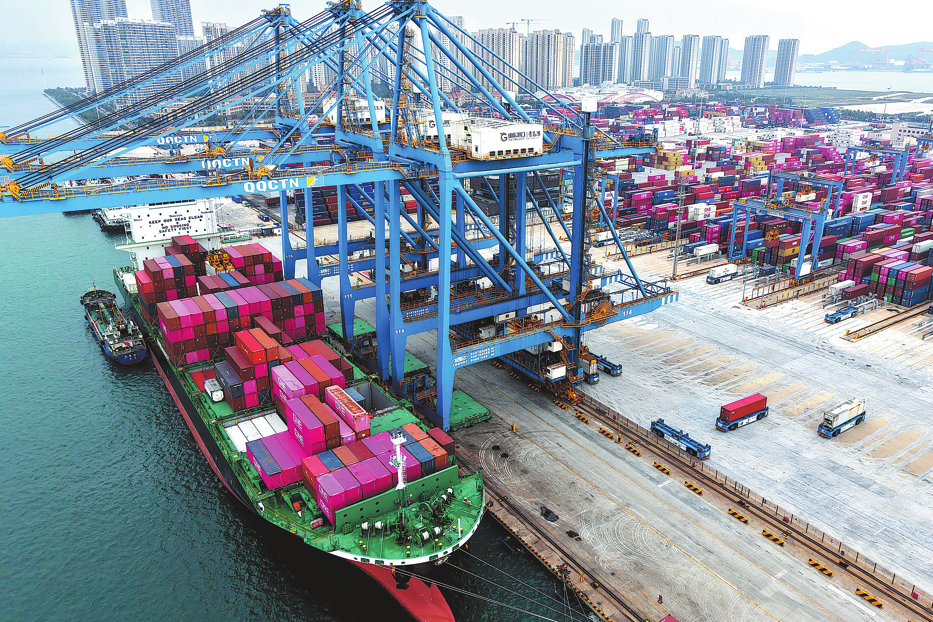
In end-use and industrial sectors, China's globally competitive supply chains in photovoltaic panels, wind turbines, EVs and batteries provide accessible low-carbon technologies for both domestic and international markets. Demonstration projects in hydrogen, zero-carbon industrial parks, near-zero-carbon cities and green ports are testing cross-sectoral mitigation pathways and producing replicable models for system-level decarbonization.
In managing supply chains and critical minerals, China promotes multilateral cooperation to build open, stable and sustainable supply networks for lithium, nickel, rare earths and other essential materials, while improving environmental safeguards and community engagement.
Looking ahead, global climate governance after COP30 must sustain momentum in technological cost reduction while placing greater emphasis on systemic coordination. Countries should adopt unified and transparent frameworks for system cost accounting and investment planning that incorporate grid upgrades, energy storage, hydrogen infrastructure and mineral development. Energy market mechanisms across regions also need better alignment. Greater coherence among capacity, ancillary service and carbon markets can enhance resource sharing and reduce vulnerability to extreme weather and geopolitical shocks. And the Global South requires predictable long-term support in financing, technology and capacity building to prevent rapid emissions growth while enabling sustainable development.
The global energy transition has entered a phase in which rapid technological progress coexists with increasingly complex system-level challenges. The goal is no longer simply to deploy more renewable energy, but to reshape institutions, markets and infrastructure so that clean energy can be integrated efficiently, reliably and equitably. COP30 has clarified the direction of travel. What is needed now is coordinated international action that strengthens resilience, accelerates innovation, and ensures that the benefits of the transition are shared broadly across nations and generations.
Guo Bowei is an associate professor at the School of Applied Economics and the director of the Center for Research on Global Energy Strategy at Renmin University of China. Zhang Xuan is a senior engineer at the Energy Research Development Institute at China Southern Power Grid. The authors contributed this article to China Watch, a think tank powered by China Daily.
The views do not necessarily reflect those of China Daily.
Contact the editor at editor@chinawatch.cn.