Seeds of security take root in the south









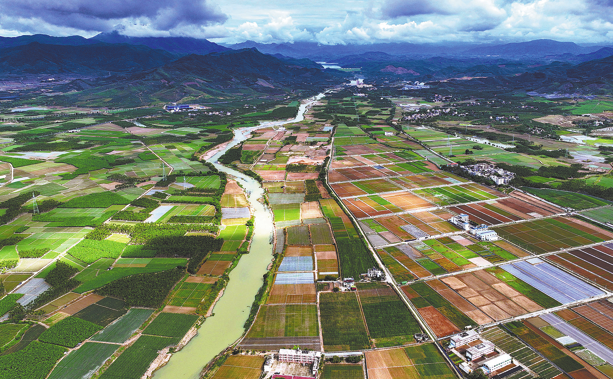
Even in mid-December, farmlands at the Nanfan Scientific and Research Breeding Base in the southern Hainan city of Sanya remain a lush green. Rice, cotton, soybeans and a wide range of grain, fruit and vegetable crops thrive here. Lin Dezheng, a 35-year-old farmer, moves between the fields, carefully recording key growth data for the crops.
"Watching seeds grow into healthy seedlings is a source of great joy," he said.
Seed breeding requires an optimal balance of light, water, humidity and temperature. Hainan, with its year-round springlike climate, boasts favorable light and heat conditions for crop growth, earning a reputation as a "breeding accelerator".
Seeds are the "chips" of agriculture and the development of breeding technology is directly tied to national food security and the core competitiveness of the agricultural sector.
Nanfan — literally meaning "breeding in the south" — is a crop-breeding technique that takes advantage of the mild winter and spring climates of southern Hainan Island and other parts of southern China. It allows crops originally planted in North China during summer to be replanted in the south for one or two additional growing cycles during the cooler seasons.
On June 1, 2020, the Chinese central government issued the Overall Plan for the Construction of Hainan Free Trade Port, which calls for greater efforts to advance Nanfan breeding and build it into a global center for tropical agriculture and a global hub for the introduction and transit of animal and plant germplasm resources.
On June 3, 2020, the Yazhou Bay Science and Technology City, located in the western part of Sanya, was officially inaugurated. The Nanfan Scientific and Research Breeding Base, which is also known as Nanfan Agricultural Silicon Valley, is a key component of the YZBSTC.
Seed breeding depends on breakthroughs in both laboratories and field trials, according to local officials. To address a shortage of skilled workers, local authorities launched several training programs in 2024 covering agronomy, seed multiplication, plant protection and horticulture. The programs attracted more than 300 participants.
Like many other local villagers, Lin now works as a professional after completing the program. He has also mastered new techniques such as artificial pollination and farmland management, which have benefited the crops on his own land.
The advantages of the Hainan Free Trade Port and steadily improving research conditions have also drawn a growing number of foreign researchers.
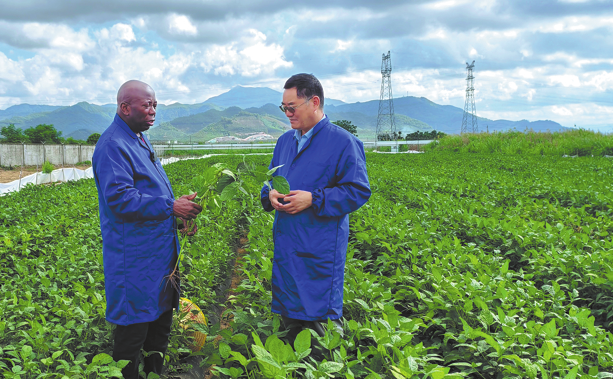
Felix Dapare Dakora, a foreign academician of the Chinese Academy of Engineering, was born in Ghana. In 2024, he was recruited to work full time at the YZBSTC.
"I came here to promote China-Africa agricultural cooperation," Dakora said. "Hainan shares similar tropical farming conditions with African countries, which can provide important support for advancing that cooperation."
Relying on the platform of the National Nanfan Research Institute of the Chinese Academy of Agricultural Sciences, Dakora has quickly established ties with multiple Chinese breeding institutions. Their collaboration focuses on breeding soybeans, pumpkins, cowpeas and winged beans, as well as research into biological nitrogen fixation, with the aim of introducing more Chinese technologies to Africa.
Song Weibin, a professor at the State Key Laboratory of Maize Biobreeding and Sanya Institute of China Agricultural University, said Nanfan breeding serves as a "ballast stone" for safeguarding national food security. More than 70 percent of new varieties of major crops in China have been developed through Nanfan programs.
Using corn as an example, Song said Hainan maintains an average temperature of 20-25 C from October to April, with abundant sunshine and no frost. This creates ideal growing conditions for thermophilic corn. After corn is harvested on China's mainland, researchers can immediately transport breeding materials south to Hainan, allowing at least two generations a year and sometimes three.
Hainan is also geographically isolated from major corn-producing areas on the mainland. These differences create natural selection pressure, making the region a natural laboratory for evaluating and screening crop varieties for stress resistance, Song added.
In recent years, the State Key Laboratory of Maize Bio-Breeding has made advances in developing corn varieties. For example, Zhongnongda 201 has set a high-yield record for summer maize in Anhui province. The annual promotion area of Zhongnongda 778 has exceeded 200,000 hectares in 2025.
On Thursday, the Hainan FTP launched the island-wide special customs operations, highlighting the country's broader push for high-standard opening-up. Regarding the policy benefits following the launch, Song said academic exchanges between domestic breeding experts and international corn research institutions will become more convenient.
Zero-tariff and low-tax policies will also support international entrepot and offshore trade in seeds. Imported precision instruments, reagents and small equipment used in breeding are eligible for zero-tariff treatment, significantly lowering research costs.
In addition, the export of breeding technologies and products, particularly to countries and regions involved in the Belt and Road Initiative, is expected to expand steadily, Song said. Germplasm resources such as corn imported from around the world will be able to undergo more efficient entry, quarantine, identification, research and exchange within Hainan.