



Pottery craft breathes new life into village
Revived Jingxing Kiln sparks cultural and economic renewal









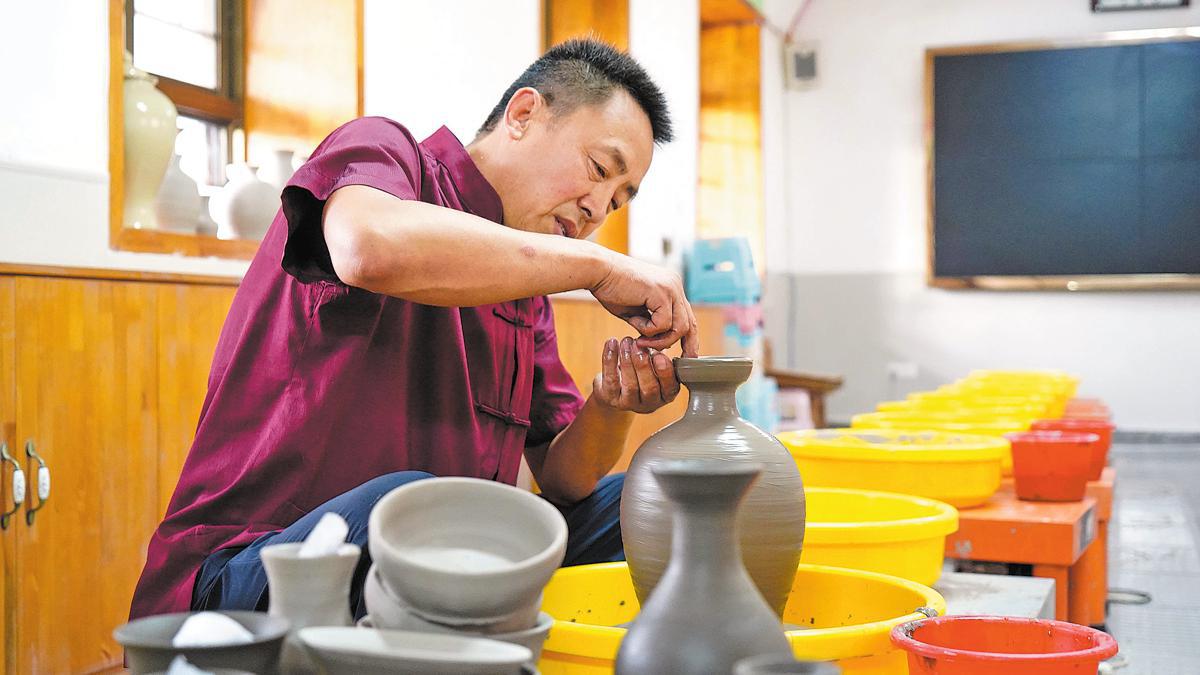
He has helped bring back over 10 traditional styles of porcelain figures. "I used to worry this craft would die," he said. " But now, I see hope."
The kiln culture's revival has seen many people like Ma go back to their roots. Li Wei used to work far away from the village. After hearing about the project, he returned home to open his own workshop.
"My grandfather and father were potters. I want to pass this on," Li said. Every day, tourists visit his workshop to try making their own small dish or cup. "I think this is the best way of cultural transmission," he said.
Another potter, Yu Huiming, runs an old porcelain brand nearby. His team focuses on creating new glazes using minerals found in Jingxing's soil.
"We have developed over 30 unique colors and can produce more than 20,000 pieces of ceramics annually," Yu said.
Their products are very popular." Tourists not only buy our finished pieces, they also want to learn how it's done," he said.
He added that the demand brings the ancient craft alive and makes it relevant to people again in the small village, where over 80 ancient kiln sites have been found. The local leaders decided not to just protect these sites, but to make them part of daily life.
"Ceramic elements are everywhere, but old items should not merely be regarded as display pieces. They should be made accessible for visitors to touch and play with," said Yin Haiting, president of the Jingxing Kiln Culture Research Association.
Based on this concept, old walls have been built from special fireproof boxes called "saggers", becoming popular spots for taking photos. A new museum was also set up, showing pieces from different dynasties and displaying how porcelain was made with a screen.
An old-style house has been turned into a guesthouse, with the flower pots and decorations all made of local ceramics.
In the yard outside, a cafe serves visitors with handmade Jingxing cups.
Liu Guohui, the cafe owner, teaches customers how to make coffee in these rustic cups. "Many people fall in love with the feeling of contrast, and end up buying a set," he said." We aim to combine tradition and fashion, so that more young people can experience the charm of traditional culture."
The revival of the old culture has changed local people's lives.
"Before, our young people had to go outside to find work," said a female villager surnamed Ma. "Now my son and his wife have jobs right here at home, while I sell small pottery. We can all stay together."
The revival has also boosted local tourism, which has further created many jobs.
According to local authorities, local families have opened hotels, restaurants and shops. And the village's collective income has grown significantly, improving life for everyone.
During this year's May Day holiday, tens of thousands of visitors came to the village. This "cultural tourism" model has become a reliable way for people to earn a living without leaving their hometown.
Local officials believe the culture is the key to sustainable growth. In the future, they want to work with universities, create more advanced craft courses, and use digital tools to tell the kiln's long story.
Duan Jianbin and Zhao Rixi contributed to this story.
zhangyu1@chinadaily.com.cn


- Labubu lights up Shanghai lantern show
- Cherry blossom festival in Yongfu town celebrates agricultural innovation and cultural exchange
- China's first domestically built cruise ship welcomes its 1 millionth guest
- The Devil Still Dances: High Vigilance against Japanese Militarism's Infiltration in Sports and Culture Fields
- 189 historical artifacts of Japanese invasion donated to museum in NE China
- Death toll rises to 8 in North China factory explosion












