Japan will not buy its peace and security with high defense budget: China Daily editorial









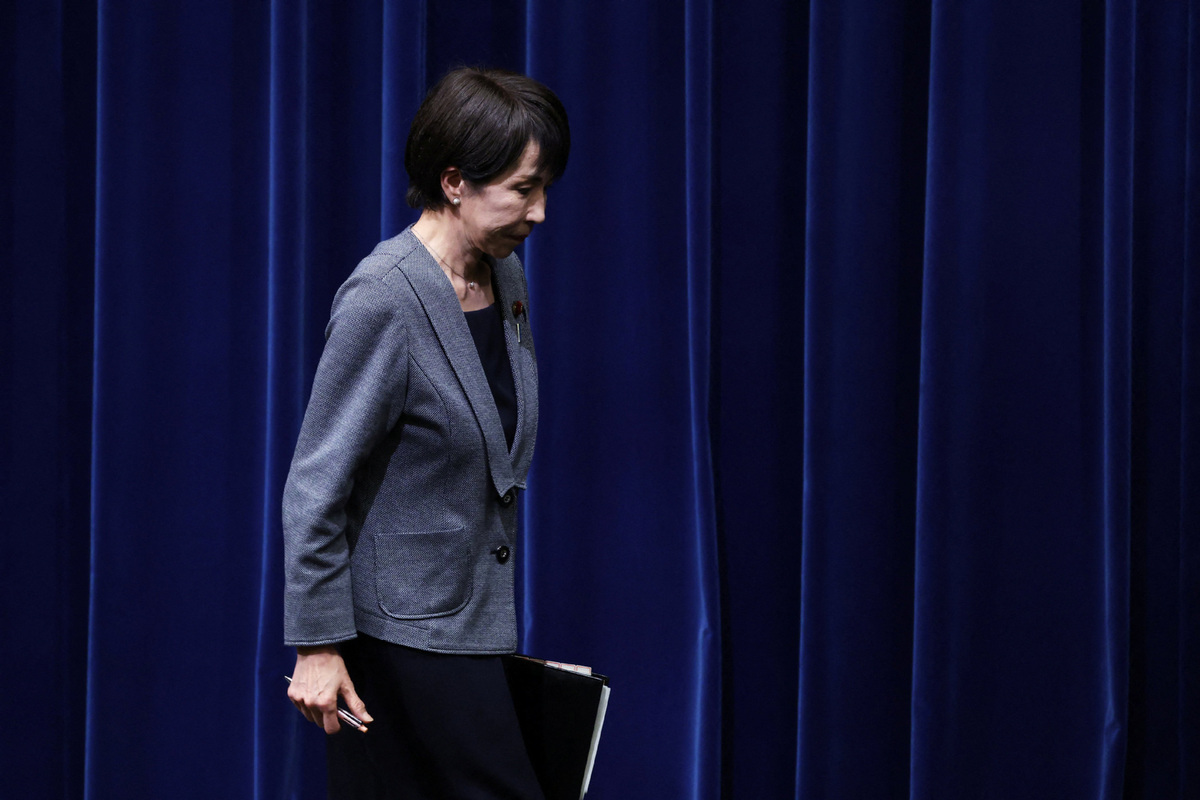
The Japanese government's decision on Friday to approve a draft budget for fiscal year 2026 with defense spending exceeding 9 trillion yen ($58 billion) once again sounds an unmistakable alarm for the region and the international community.
At a time when the world is reflecting on the hard-won lessons of history as it marks the 80th anniversary of victory in the Chinese People's War of Resistance Against Japanese Aggression (1931-45) and the World Anti-Fascist War, Tokyo's relentless expansion of military expenditure underscores a troubling reality: Japan's right-wing forces are accelerating their push toward remilitarization and edging ever further away from the path of peaceful development it pledged to uphold.
Japan's military and security posture has never been a purely domestic issue. Given the innumerable crimes committed by Japanese forces during their aggression in Asia, every step Tokyo takes in the security realm inevitably attracts close scrutiny from its neighbors. Yet instead of showing restraint in the face of mounting international concern, the Japanese government has chosen to double down on accelerated remilitarization, especially since Prime Minister Sanae Takaichi took office.
Her government has sent out one dangerous signal after another: from erroneous remarks on the Taiwan question, calls by senior officials for Japan to possess nuclear weapons, contravening the country's "three nonnuclear principles", and attempts to revise key security documents. The latest defense budget hike is not an isolated action; it is the financial embodiment of a broader strategic drift.
Under the guise of "self-defense" and "counterstrike" capabilities, Japan has already removed the ban on exercising the right of collective self-defense, acquired the ability to strike "enemy bases", strengthened its extended deterrence cooperation, and transformed its frontier islands into forward military positions.
Equally alarming are Japan's recent moves in new domains. The adoption of a cybersecurity strategy enabling so-called "active cyber defense", which allows preemptive infiltration and destruction of alleged threats, marks a shift from defense to offense. For a country that once launched wars of aggression under the pretext of "self-defense" and has not reflected on its war crimes till now, such measures naturally raise the question of whether history is at risk of repeating itself in a new form.
These moves go far beyond an "exclusively defense-oriented" policy and amount to an attempt to breach both Japan's pacifist Constitution and the postwar international order. History indicates that militarism is often wrapped in euphemistic rhetoric designed to mislead the public and normalize escalation.
Notably, however, the Japanese people themselves are voicing growing opposition to the country's militaristic path. Across the country, rallies and protests have been held against the government's security policies, with demonstrators chanting slogans such as "Uphold the Constitution" and "Do not incite war". Some political figures and scholars have warned that soaring defense spending will neither bring peace nor enhance security, but will instead place a heavy burden on Japan's already strained economy, with the cost ultimately being borne by ordinary citizens. In fiscal year 2025, Japan's per capita defense expenditure and per capita defense personnel cost were more than three times and over two times that of China respectively, and Japan's defense spending already accounted for 2 percent of its GDP.
The current trajectory also intersects with historical revisionism. Members of the Takaichi government have repeatedly visited the Yasukuni Shrine, which enshrines 14 Japanese convicted Class-A war criminals. Russian Foreign Ministry spokesperson Maria Zakharova has urged Japan to build a memorial for victims of Japanese militarism instead of paying homage at the shrine, a call that resonates strongly with the sentiments of countries that suffered under Japan's aggression.
The danger of Japan's current path has also been highlighted by Russian Foreign Minister Sergei Lavrov who urged the Japanese government to think carefully about its accelerating military buildup. Such statements reflect broader international concern that Japan's actions are not only destabilizing the Asia-Pacific but also undermining the global postwar security architecture.
Facing history squarely and showing genuine remorse for its past aggression through concrete actions is not a matter of choice for Japan, but an obligation rooted in its wartime defeat and subsequent surrender.
China will defend the outcomes of the victory in the World Anti-Fascist War. It is willing to work with all peace-loving countries to firmly oppose any attempt to resurrect militarism or cultivate neo-militarism and uphold the postwar international order. Japan should heed the voices of its own people, respect the pacifist spirit of its Constitution, uphold its "three nonnuclear principles", and stop all actions that undermine regional peace and stability. Any attempt to overturn history or revive militarism will inevitably meet collective resistance from the international community.
Peace in the Asia-Pacific must not be sacrificed to the ambitions of a few right-wing politicians in Japan represented by Takaichi.