Stability, openness and development
China's Central Economic Work Conference provides an important reference point to help shape development prospects for the Global South, particularly ASEAN economies










China's Central Economic Work Conference, held from Dec 10 to 11, has served as an important policy forum for setting the direction of economic governance for 2026.Convened against a backdrop of slowing global growth, rising geopolitical tensions and renewed protectionist pressures from major advanced economies, the conference sent a clear signal of continuity, policy discipline, and strategic foresight.
More importantly, it offered insights into how China's economic trajectory over the next year could help shape the development prospects of the Global South, particularly the economies of the Association of Southeast Asian Nations that are deeply integrated with China through trade, investment and regional production networks.
At its core, the conference reaffirmed the guiding principle of "seeking progress while maintaining stability", a framework that reflects policymakers' recognition of both domestic challenges and external uncertainties. Rather than pursuing short-term stimulus at the expense of long-term sustainability, the conference emphasized the need to stabilize growth, employment, prices and expectations while advancing structural reforms that strengthen productivity and resilience. This balanced approach has become increasingly relevant as global economic conditions remain volatile and policy coordination among major economies weakens.
One of the clearest signals to emerge from the conference was the commitment to a more proactive fiscal policy in 2026, alongside a moderately accommodative monetary stance. Fiscal policy is expected to play a stronger countercyclical role, with greater emphasis on boosting domestic demand, supporting innovation-driven industries and enhancing social welfare. These priorities align with China's broader effort to shift its growth model toward consumption, services and high-value manufacturing, reducing excessive reliance on property and traditional infrastructure investment.
Recent data underscore why this policy recalibration matters. China's GDP expanded by 5.2 percent year-on-year in the first three quarters of 2025, with growth moderating to around 4.8 percent year-on-year in the third quarter amid softer external demand and ongoing domestic adjustments. Retail sales of consumer goods rose around 4 percent year-on-year in the first 11 months of 2025, reaching more than 45 trillion yuan ($6.39 trillion), indicating gradual improvement in household consumption. While growth is no longer at the double-digit pace seen in earlier decades, it remains robust by global standards.
The conference placed particular emphasis on cultivating "new quality productive forces", a concept that has become central to China's medium-term development strategy. This includes advanced manufacturing, digital technologies, green energy, artificial intelligence and innovation-intensive services. Rather than pursuing technological self-sufficiency through isolationism, Chinese policymakers stressed the integration of these new growth engines with global markets. This outward-oriented approach contrasts sharply with the growing trend toward technological fragmentation and industrial decoupling seen in parts of the advanced world.
For the Global South, and ASEAN in particular, China's industrial upgrading presents significant opportunities. ASEAN economies are already key participants in regional value chains spanning electronics, automotive components, machinery and consumer goods. As China moves further up the value chain, demand for intermediate goods, specialized components, logistics services and downstream processing from neighboring economies is likely to expand. This creates space for ASEAN countries to deepen industrial diversification and capture higher value-added activities, provided domestic capabilities and infrastructure continue to improve.
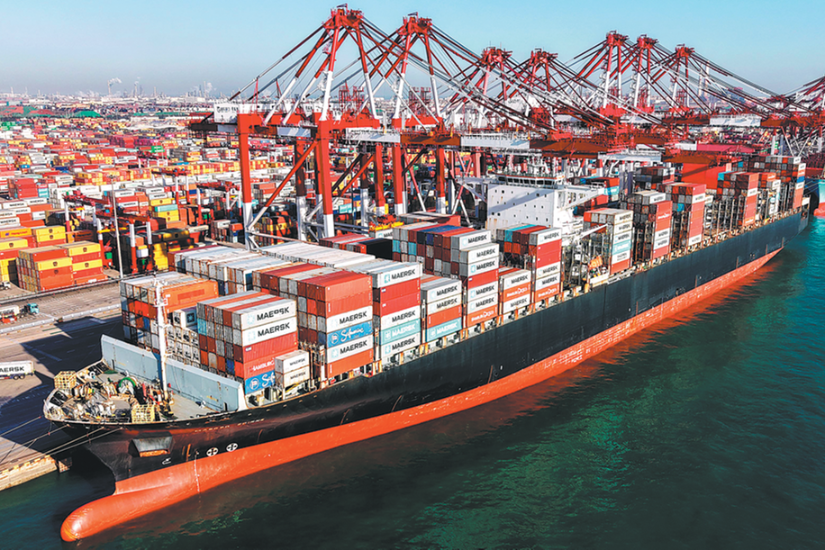
Trade and opening-up featured prominently in the conference's policy messaging. Chinese officials reiterated the importance of stabilizing foreign trade, diversifying export markets and improving the quality of imports and exports. In the first 11 months of 2025, China's total goods trade reached about 41.21 trillion yuan, up 3.6 percent year-on-year, with exports growing more than 6 percent. These figures highlight the continued role of trade as a stabilizing force for the Chinese economy, even as global demand softens.
Equally important is the evolving structure of China's trade growth. Policymakers emphasized upgrading export composition toward higher-value, technology-intensive and green products, while expanding imports to meet domestic consumption and industrial needs. For ASEAN exporters, this shift is particularly relevant. China remains ASEAN's largest trading partner, with two-way trade exceeding $982 billion in 2024. In the first eight months of 2025, China-ASEAN trade grew 9.7 percent year-on-year, reflecting strong complementarities between the two economies.
These dynamics stand in stark contrast to the evolving trade policy stance of the United States. The so-called reciprocal tariff policies, justified on the basis of trade imbalances and perceived unfair practices, have added a new layer of uncertainty to the global trading system. Such measures raise costs, disrupt supply chains and disproportionately affect developing economies that rely on open markets for growth. Estimates suggest that recent tariff actions have significantly increased the effective average tariff rate in the US, with spillover effects felt across global production networks.
Against this backdrop, China's reaffirmation of high-level opening-up carries broader significance. The Central Economic Work Conference underscored efforts to improve the business environment for foreign enterprises, expand institutional opening-up in services and digital trade, and align more closely with international economic and trade rules. This approach provides an important counterweight to protectionist pressures and helps preserve channels for South-South and regional cooperation.
Looking ahead to the next five years, China's economic development path will have far-reaching implications for sustainable development across the Global South. Demographic headwinds, including a gradually declining working-age population, will pose challenges for China's growth potential. However, policymakers intend to address these constraints through productivity-enhancing reforms, human capital investment and technology adoption. If successful, China's experience could offer valuable lessons for other developing economies facing similar demographic transitions.
China's growing emphasis on green development further strengthens its relevance for ASEAN and other emerging regions. Investments in renewable energy, electric vehicles, energy storage and environmental technologies are expected to accelerate as China advances its climate and dual carbon goals. As these technologies mature and costs decline, spillovers through trade, investment and cooperation frameworks can support energy transitions in developing economies, enhance climate resilience and reduce vulnerability to commodity price shocks.
Beyond economics, the conference projected a message of policy predictability and strategic patience. In an era marked by geopolitical rivalry and fragmented governance, stability in the world's second-largest economy is itself a global public good. For ASEAN and other Global South economies, China's steady growth, expanding market and commitment to openness help anchor regional development prospects at a time when external conditions are increasingly uncertain.
In conclusion, China's Central Economic Work Conference set a clear and pragmatic tone for economic policy in the year ahead while offering insights into the country's medium-term trajectory. By combining proactive macroeconomic support with structural reform and continued opening-up, China is positioning itself to sustain relatively robust growth over the next year. For the Global South, particularly ASEAN, this trajectory supports trade, investment, technology diffusion and green development. In a world facing rising protectionism and geopolitical fragmentation, China's approach provides an important reference point for development anchored in stability, cooperation and shared growth.
The author is an assistant professor at the Faculty of Economics and Business at the Indonesian International Islamic University, and a member of the advisory board at the Reform Initiatives, Indonesia. The author contributed this article to China Watch, a think tank powered by China Daily.
The views do not necessarily reflect those of China Daily.
Contact the editor at editor@chinawatch.cn.