A unified philosophy










China is translating its domestic priorities into an action plan for fairer and more inclusive global governance
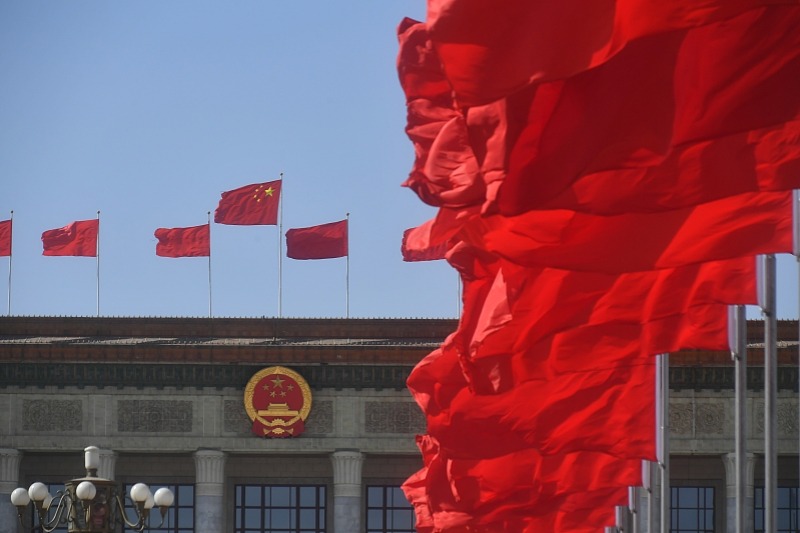
The fourth plenary session of the 20th Communist Party of China Central Committee mapped out a blueprint for China's development and governance in the 15th Five-Year Plan (2026-30) period. The session was both a key moment for China to review its stage of development and plan the next round of reform and opening-up, and a window through which the world could observe how China perceives and participates in global governance.
In recent years, China has successively put forward the Global Development Initiative, the Global Security Initiative and the Global Civilization Initiative, and, on this basis, proposed the Global Governance Initiative, which externalizes the governance philosophy underpinning Chinese modernization into a set of proposals for international cooperation. In this sense, the Global Governance Initiative serves as an important vehicle for extending the reform spirit and governance concepts emphasized in the fourth plenum's communiqué to the international arena and the broader realm of global public affairs. The communiqué and these initiatives are rooted in a unified philosophy of governance: at home, they answer the question of how China should "run its own affairs well"; internationally, they are translated into how China can work with other countries to improve global governance.
Reviewing the experience of the 14th Five-Year Plan (2021-25) period, the fourth plenum stresses high-quality development, the deepening of reform and high-level opening-up. The focus is on improving the rule of law and institutional arrangements, enhancing governance capacity and risk management, and making policy more stable, transparent and predictable, so that the benefits of development can be shared more fully by the people. At the same time, the communiqué underlines the need to uphold the multilateral trading system and expand mutually beneficial cooperation. This shows that China's medium — to long-term development strategy has been conceived in a global context: China seeks not only to provide markets and opportunities through its own development, but also to enhance the stability of the world economy through greater regulatory and institutional alignment. The Global Governance Initiative grows out of this same logic. It takes domestic priorities such as deepening reform, modernizing governance and pursuing a people-centered approach, and translates them into an agenda and action plan for global cooperation, to be implemented in areas such as poverty reduction, green transition, digital infrastructure and public health.
Today's international landscape is moving rapidly toward multipolarity, but multipolarity does not automatically bring stability or justice. Deficits in peace, development, security and governance overlap, while problems of representation, fairness and effectiveness in global governance are becoming more acute. The Global South has long been underrepresented in global rule-making. Domestically, the fourth plenum highlights the importance of building sound institutions to safeguard long-term stability and improve risk resilience; and internationally, the Global Governance Initiative calls for managing differences and expanding common ground through rules-based dialogue and consultation. It rejects drawing ideological lines and forming exclusive "small circles", and instead advocates handling disputes within the framework of the United Nations Charter and existing multilateral mechanisms, upholding the international system with the UN at its core and building an international order underpinned by international law, and advancing reforms that better reflect the concerns of developing countries.
In this sense, the Global Governance Initiative is concerned not only with how many "poles" exist in the international system, but with a more fundamental question: who makes the rules, and for whom they are made? It argues that all countries, regardless of size or strength, should participate in, contribute to and benefit from global governance on an equal basis. Its goal is to help ensure that a multipolar order rests on institutions that are more representative and fair, rather than being shaped primarily by the pre-existing power structures of a few states. In this way, the Global Governance Initiative aims to make a multipolar world more equal and orderly in institutional terms, and to support a gradual evolution of global governance from a model dominated by a small number of actors and elite decision-making toward broader global co-governance.
Chinese modernization emphasizes advancing development without following the old paths of colonial expansion or deepening polarization, which gives it an inherently global public dimension. The fourth plenum's domestic agenda — ranging from industrial upgrading and sci-tech innovation to improving people's livelihoods — is ultimately about using high-quality development and a more balanced social structure to build a more solid foundation for long-term stability. The Global Governance Initiative echoes this at the international level. It stresses that China is not closing the door to develop in isolation, but is seeking to expand opportunities for other countries, especially those in the Global South, by providing various public goods: infrastructure connectivity, poverty reduction cooperation, and experience in green and digital transformation, among others.
Through the Belt and Road Initiative and frameworks such as the Shanghai Cooperation Organization, China has promoted connectivity and industrial cooperation that have injected momentum into poverty reduction, employment and sustainable development in many regions. On issues such as climate change, digital rules and public health, China has shared practical experience through multilateral and bilateral platforms, not in the form of templates to be copied, but as policy options that can be adapted to local realities. In this process, China's role in global governance has evolved from that of a participant to that of a more proactive provider of ideas and public goods.
Viewed against a longer time horizon, a clear thread emerges: "running China's own affairs well" and "contributing Chinese approaches to global governance" are two sides of the same coin. The former provides the material foundation and institutional experience for China to shoulder international responsibilities; the latter, by helping to bridge governance deficits and mend gaps in the international system, contributes to a more stable and predictable environment for the development of both China and the wider world.
Neither the spirit of the fourth plenum nor the Global Governance Initiative takes the form of a closed model deduced from abstract assumptions about "rational" or purely "economic" individuals. Both are institutional syntheses rooted in long-term, concrete practice, and built on the expectation that they will continue to be tested and revised in light of new realities. This practice-based, open and internally coherent philosophy of governance presents a distinct alternative to theoretical models that derive from the logic of an abstract, atomistic rational actor. At the same time, by way of the Global Governance Initiative, it allows the reform spirit and governance concepts emphasized in the fourth plenum communiqué to resonate and connect with international agendas on a broader scale, at a higher level and across more fields. In doing so, it seeks to offer, amid profound global transformations, a more inclusive and reality-sensitive perspective for thinking about how global governance can and should evolve.
The author is an associate professor at the School of Marxism at South China Normal University. The author contributed this article to China Watch, a think tank powered by China Daily.
The views do not necessarily reflect those of China Daily.
Contact the editor at editor@chinawatch.cn.