China unfazed by Japan's possible bans
Domestic chipmakers express calibrated confidence, eye homemade substitutes









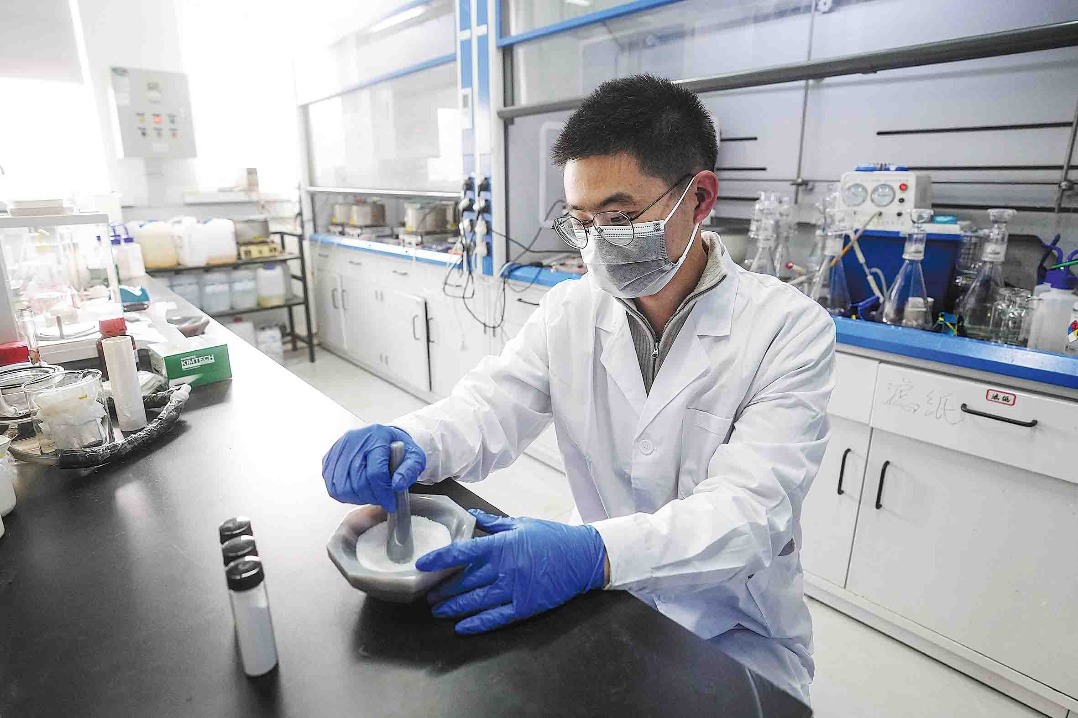
If Japan moves to restrict the export of photoresist — a key material in semiconductor manufacturing — to China, Beijing is prepared to cope with the challenge, and can find both domestic and foreign alternatives to fill the gap, corporate executives and experts said on Thursday.
Recent market speculation suggests Japan may consider restricting exports of photoresist, the light-sensitive "ink" essential for etching microscopic circuits onto silicon wafers, to China. Japan commands over 70 percent of the global photoresist market, according to Japanese media outlet Nikkei. This potential move is viewed as a possible response to China's latest ban on exporting dual-use items to Japan.
However, a chorus of voices from within China's semiconductor ecosystem is expressing not panic, but a calibrated confidence, underpinned by strategies of domestic substitution and supply chain diversification.
Though challenges exist, the immediate reaction from key industry players is one of operational calm. "From the actual situation on the market end, we have not heard of any customer production being affected so far," Yi Rongkun, general manager of Xiamen Hengkun New Material Technology Co Ltd, a Chinese company involved in photoresist-related business, told China Daily.
Yi said he acknowledges the industry's proactive mindset, adding, "Of course, the basic consensus within the industry is still to prepare for rainy days and prevent worst-case scenarios."
This sentiment is echoed by sources from leading Chinese chipmakers like Semiconductor Manufacturing International Corp and Huahong Group. Sources from the two companies told China Daily that no current ban exists yet and point to "significant progress" in domestic photoresist production potential.
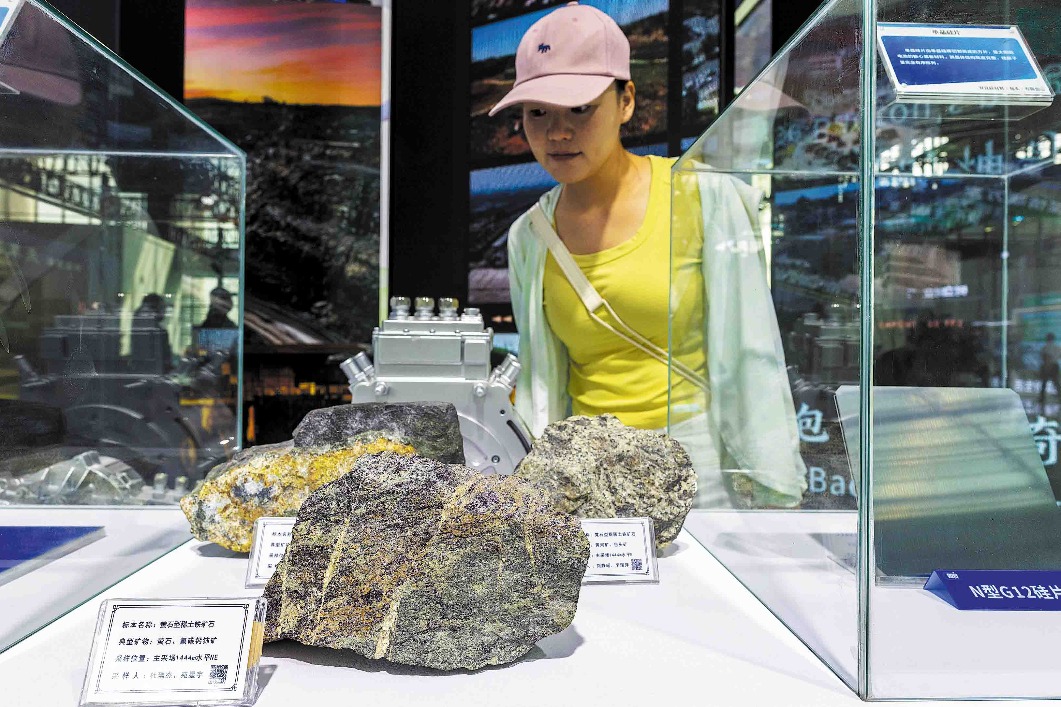
Jiangsu Nata Opto-electronic Material, which has developed one of China's first batches of self-developed photoresist for ArF DUV (argon fluoride deep ultraviolet) lithography — a type of high-end photoresist — said the company's revenue from ArF photoresist exceeded 10 million yuan ($1.43 million) in 2024, and it maintained a stable supply of ArF photoresist in 2025.
Financial markets have delivered a bullish verdict on the Chinese photoresist sector's prospects. Shares of companies in the photoresist and related materials sector opened significantly higher on Thursday. Shanghai Pret Composites Co Ltd, for instance, surged by the daily limit of 10 percent.
Industry players such as Jiangsu Nata Opto-electronic Material and Anhui Guofeng New Materials Co Ltd also saw substantial gains. This investor optimism reflects a growing belief in the viability and commercial future of China's semiconductor materials industry, betting that geopolitical pressures will fuel, not cripple, its growth, experts said.
Such confidence stems from what appears to be a multilayered strategic preparation. Roger Sheng, vice-president of research at the US market research company Gartner, said: "We believe there must be contingency plans for Japanese chip-related products, if Japan retaliates. Photoresist, materials, equipment — there must already be alternative substitution plans."
Sheng highlighted diversified options from South Korean supplies, noting that South Korean President Lee Jae-myung just visited China.
He also pointed to a critical nuance tempering the challenge: "The photoresist we need isn't at the EUV (extreme ultraviolet) level," referring to the advanced grade required for the cutting-edge chips, which remains a harder-to-replace segment.
Experts argue that any disruptions would primarily accelerate two existing trends: the rapid development of China's local photoresist sector and a pivot to alternative foreign suppliers.
He Hui, semiconductor research director at UK-based tech research firm Omdia, provided a clear analysis.
"If Japan cuts off the supply of photoresist to China, it would only accelerate the industrialization of China's local self-sufficiency. We could import from South Korea or other countries," she said.
Domestic alternatives are already available for some applications, though not yet for all. More importantly, she said, is drawing a direct parallel to a historical precedent: Japan's 2019 export restrictions on key materials, including photoresist, to South Korea.
That move, amid a political dispute, initially squeezed chipmakers like Samsung and SK Hynix but ultimately catalyzed South Korea's drive for supply chain independence.
"It actually increased South Korea's local substitution," she said, suggesting that China is poised to follow a similar, if not faster, path.
An executive from a Chinese semiconductor equipment company who declined to be named, voiced a common belief in stronger resilience, stating plainly: "Even if it (the ban) were real, it would be fine. Our capacity to withstand this is stronger than South Korea's."
The current discourse reveals a strategic shift in China's semiconductor approach. The era of passive reliance on a single foreign supply chain is being consciously phased out, experts added.
masi@chinadaily.com.cn