



China widens net in battle against graft
Graft: Nation?has expanded its anti-corruption tool kit









Uncovering well-concealed abuse of power has become a priority of China's anti-graft bodies, as corrupt practices have changed from cash-filled suitcases and overt embezzlement to a more sophisticated type of invisible graft, experts said.
Invisible graft includes shadow companies, complex financial derivatives and a political-business "revolving door", which manifests as officials using the connections, resources or influence they accumulated while in office to seek personal gain, such as taking positions in companies they once regulated, according to cases released by the country's top anti-graft bodies.
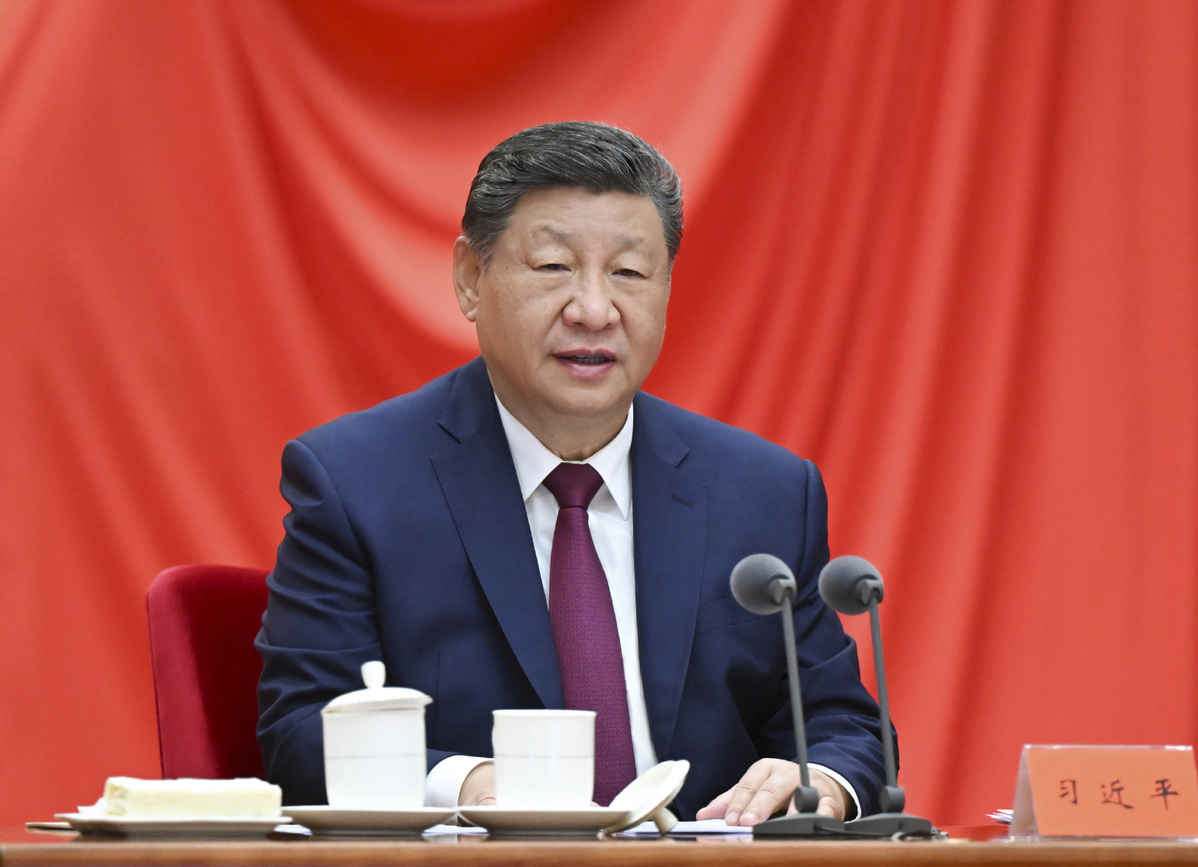
While addressing the fifth plenary session of the 20th Communist Party of China Central Commission for Discipline Inspection, which opened on Monday, Xi Jinping, general secretary of the CPC Central Committee, stressed the need to stay attuned to new trends and features of corruption. Xi urged efforts to innovate methods and approaches, promptly detect and accurately identify corrupt practices, and effectively address all forms of corruption, in order to continuously enhance the penetrating power of anti-corruption efforts.
In a case released on Monday, Xu Xianping, former deputy director of the National Development and Reform Commission, groomed businessman Huang Huan as his interest proxy, helping Huang's enterprise enter the qualified supplier database of a central State-owned enterprise and secure shantytown renovation projects. In return, he accepted millions of yuan in bribes from Huang via his family, disguised as "loans".
Xu also arranged for one of his relatives to subscribe to original shares of businessman Fang Hong's company and lobbied for Fang's enterprise in restructuring, mergers and acquisitions, and listing to support its growth. In 2007, he acquired a 5 percent stake in a company valued at 3 million yuan ($430,000) for only 80,000 yuan, with the shares held in proxy by businessman Chen Zhi-dong. After stepping down, he used his former NDRC influence to promote favorable transportation plans for the company and urged local leaders to assist Chen. In 2020, Chen repurchased the equity at a premium, netting Xu tens of millions of yuan in illegal "profits".
Xu also previously served as vice-governor of Hunan province and counselor with the State Council after stepping down from front-line posts in 2015. He retired in July 2023 and was placed under investigation by the CCDI and the National Supervisory Commission in March 2025.
Yang Weidong, a professor at the Institute of Rule of Law at China University of Political Science and Law, noted that targeting emerging and concealed corruption has become a top priority in anti-corruption efforts in recent years. As the fight against corruption has deepened, intensified crackdowns have driven the abuse of power to evolve into more covert forms.
Shadow companies are a typical example, he said. Some officials operate businesses through proxies such as family members who hold shares on their behalf or via behind-the-scenes manipulation, evading regulatory scrutiny.
"In essence, such concealed corruption is no different from traditional graft — only its methods are more covert," Yang said. "Advancing anti-corruption requires cracking down on explicit corruption while closely monitoring its covert and mutated forms, which demands stronger enforcement and timely updates to institutional frameworks."
Yang said that over the past decade-plus, corruption has spread across broader areas and grown more hidden, compelling the anti-corruption drive to expand its coverage and upgrade measures continuously. Dynamic adjustments to institutional rules adapted to new manifestations of corruption ensure that the fight keeps pace with evolving realities and maintains long-term deterrence.
To address emerging corruption issues, China has steadily expanded its anti-corruption tool kit. On June 1, 2025, the revised Supervision Law and its implementing regulations took effect simultaneously, enhancing supervisory powers, improving anti-corruption measures and resolving institutional bottlenecks.
In December, the CCDI and the NSC issued evidence guidelines for investigating emerging and concealed corruption to tackle increasingly sophisticated graft. The guidelines categorized over 20 specific types of new corruption, outlined key evidence-gathering points, and clarified standards centered on criminal constitutive elements.
Liu Yi, an associate professor at the University of International Business and Economics' School of Marxism, said that the guidelines standardized evidence-gathering procedures. They guide investigators to look beyond complex financial and legal facades to identify the essence of power-for-money deals, significantly raising the rule-of-law standards for addressing mutated concealed corruption.
Key sectors targeted
Zhuang Deshui, deputy director of Peking University's Research Center of Public Policy, emphasized that China narrowed corruption space in 2025 by integrating domestic and international efforts and combining traditional methods with new technologies.
"To adapt to evolving graft forms, we must leverage artificial intelligence to empower institutional anti-corruption with 'technological wings'," he said.
He added that grassroots innovations, though active, remained fragmented — calling for top-level design to elevate successful local practices to the national level, integrating supervisory forces into a unified institutional framework.
In early 2025, the CCDI prioritized investigating cases in sectors characterized by concentrated power, dense capital flows and abundant resources, with a focus on systemic rectification in sectors such as finance, State-owned enterprises, energy, tobacco, healthcare and construction. Notably, fire services, higher education, sports and development zones were added to the list in 2025.
Twelve high-ranking officials in the fire services sector were investigated in 2025, including seven provincial-level chiefs and three deputy chiefs, spanning nine regions including Chongqing, Shanghai, Hunan and Zhejiang. Among them, three top leaders of the Yunnan provincial forest fire brigade — its former chief, political commissar and deputy chief — were probed within six months.
Liu, the UIBE expert, noted that these areas remained high-risk due to the intense concentration of power, capital and resources. To uproot the conditions that foster corruption, he argued that the core solution lies in restructuring power operations and oversight.
Liu advocated institutionalizing transparency through detailed power, responsibility and negative lists to separate decision-making, execution and oversight. Deepening structural reforms in key sectors — such as universal electronic bidding in procurement — can minimize discretionary space through technology, he added.
Furthermore, integrity risk control should be integrated into the entire industry life cycle, with internal control mechanisms and integrity culture tailored to different units, he said.
Under the anti-corruption framework promoted by the CCDI, designed to ensure that officials do not have the audacity, opportunity or desire to be corrupt, cracking down on corruption represented the first step of this framework, said Yang, the China University of Political Science and Law professor. "A more important part, however, is how to achieve long-term and effective governance of these key sectors," he said.
Yang said the development of institutions to ensure that officials do not have the opportunity to be corrupt served as the core approach. It is imperative to deepen reforms by decomposing power and building effective power-restraining mechanisms, and guard against the risks of power abuse and corruption in light of the characteristics of each sector.
"Meanwhile, we should focus on the loopholes and weaknesses exposed in investigated cases, formulate targeted countermeasures, and roll them out through national legislation, institutional reforms in specific sectors, and refined policy adjustments by relevant entities," he said.


- Exploring ancient China: How procuratorial work helps revive porcelain
- Running for beauty and fun
- A new scroll along the river: The prosecution chapter
- National lawmakers: birth-friendly policies must extend beyond childbirth
- Hebei farmers gain from modern cultivation skills
- Feedback helps top court upgrade case database





