Beyond critical mass










Market efficiency and institutional innovation are now positioned as the core engine for high-quality emissions reductions
Editor's note: The world has undergone many changes and shocks in recent years. Enhanced dialogue between scholars from China and overseas is needed to build mutual understanding on many problems the world faces. For this purpose, the China Watch Institute of China Daily and the National Institute for Global Strategy, Chinese Academy of Social Sciences, jointly present this special column: The Global Strategic Dialogue, in which experts from China and abroad will offer insightful views, analysis and fresh perspectives on long-term strategic issues of global importance.
China has reached a critical juncture in its green transition journey. Building upon the world-leading scale of clean energy capacity achieved during the 14th Five-Year Plan (2021-25)period, the new 15th Five-Year Plan (2026-30)period marks a strategic shift in focus — from the rapid deployment of hardware assets to unlocking their full value through market mechanisms.
Against this backdrop, the Chinese government issued a guideline to advance the low-carbon transition and strengthen the national carbon trading market on Aug 25, 2025. It signaled the deepening of its climate governance strategy: Market efficiency and institutional innovation are now positioned as the core engine for ensuring long-term commercial returns on massive green investments and driving high-quality emissions reductions. This transition is significant not only for domestic goals but also for the world, particularly emerging economies, as it demonstrates the deep integration of large-scale green infrastructure with efficient, functioning markets.
Developing a robust trading market to price energy and carbon goes a long way toward implementing government de-carbonization policies.
In most developed countries, this scenario has panned out differently from what's underway in China. In Europe and the United States, power market deregulation occurred decades before their compulsory carbon markets and grid decarbonization started. Power market participants had years to hone their skills in hedging against energy price volatility and then applied the same skills in carbon pricing, decades later. A mature commodity trading ecosystem, including transparent regulatory and compliance framework, hedge accounting adoption, data/information flow, widespread academic and public media engagement, has facilitated efficient energy and carbon pricing.
Unlike the sequential approach of "power market first, carbon market later" seen in the West, the power market reform, grid de-carbonization and power sector Emission Trading System are happening almost at the same time in China, with the energy trading markets still in their infancy and derivatives markets planned but not yet officially launched.
Today, power market participants have to cope with the daunting possibility of an increasingly tighter ETS cap and build institutional capacity quickly to hedge their price exposure to electricity and carbon price volatility, simultaneously.
On the infrastructure side, the country's installed capacity for solar and wind generation has surpassed 1,400 gigawatts, according to the National Energy Administration, reinforcing its status as the world's largest producer of renewable energy. Its national ETS, launched in 2021, initially covered the power sector with over 5 billion tons of allowances annually and is set to expand to approximately 8 billion tons by including cement, steel and aluminum, solidifying its position as the world's largest ETS by coverage.
Yet sheer scale is not enough. To fully unlock the potential of these achievements, China needs its trading markets function well with efficient forward pricing mechanisms. Such mechanisms provide stable long-term price signals for investors in renewables and carbon-reduction projects, align carbon costs with electricity pricing and ensure decarbonization goals are met without undermining industrial competitiveness or the commercial viability of newly installed renewable generation capacity over its 20 to 25 years of life cycle.
In essence, a functioning, regulated energy trading market is critical above and beyond hard cleantech asset deployment as power market reform and de-carbonization proceed. Experiences in the developed economies could be a template.
For project developers and investors/lenders, the trading market provides longer-term price signals beyond 12 months. The locked-in prices help secure financing because these signals reduce risk, prove future revenue and demonstrate project viability to lenders, while cutting reliance on volatile markets and lowering the high-risk premium lenders often charge for unbacked projects, as seen in forward funding deals.
For the ETS compliance companies, these multiyear energy forward price signals align carbon costs and electricity prices, guiding optimal resource allocation and hedging against price volatility, while remaining commercially competitive as a business managing a "portfolio" of operating risks, such as electricity, carbon, fuels, interest rates, etc.
For new technology innovations such as storage batteries in the power market, a functioning trading market creates a desirable iterative loop. Efficient forward price signals guide investment, which then drives innovation that can lower costs and promote widespread adoption. In the California power market, batteries, which didn't exist three years ago, have now become an important source of supply to the power grid when the sun goes down.
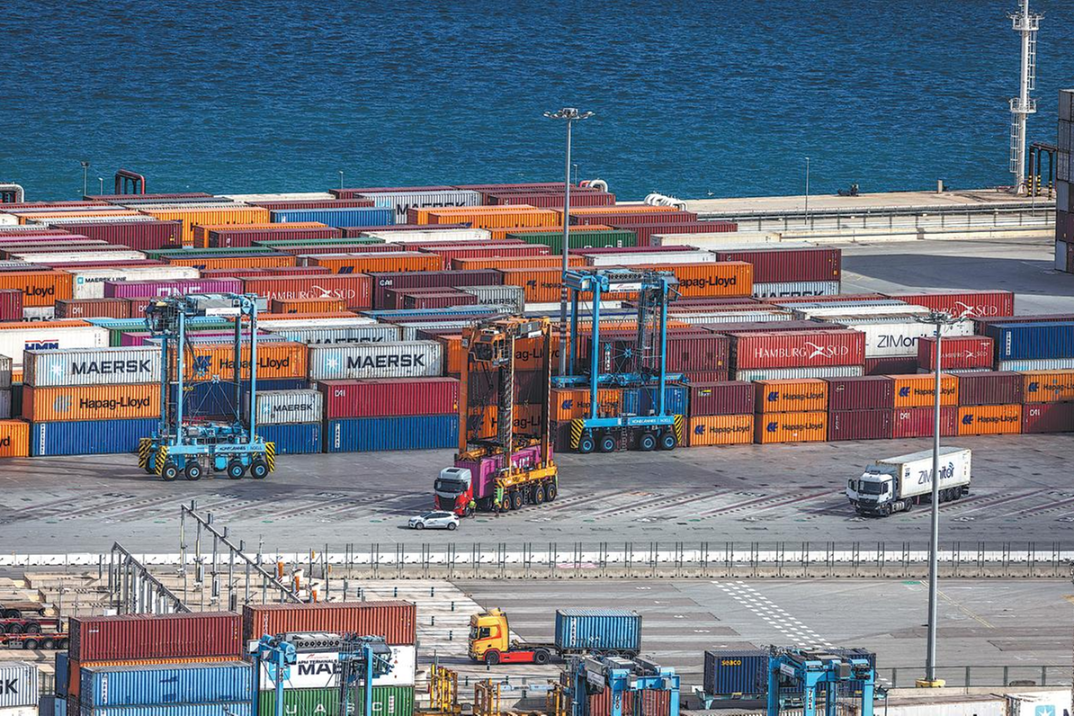
For global connectivity, Chinese shipping and supply-chain companies are increasingly exposed to the European Union's carbon allowance markets over the coming years, as the EU Carbon Border Adjustment Mechanism kicks in. It becomes ever more urgent for these external-facing companies to manage carbon price risks across the border. Adopting best practice in pricing Chinese carbon empowers the real-economy companies to better cope with this emerging challenge with proven solutions.
China's 14th Five-Year Plan (2021-25) heralded unprecedented massive renewable asset deployments. During the 15th Five-Year Plan period, with enhanced institution capacity building, the true success of the country's energy transition will be measured by an incrementally maturing and resilient market infrastructure that assures the long-term commercial viability of the cleantech investments, with the market playing a proper role in allocating resources.

The author is the CEO of AEX Holdings Ltd (HK) and the former vice-president for Asia of the Chicago Climate Exchange. The author contributed this article to China Watch, a think tank powered by China Daily.
The views do not necessarily reflect those of China Daily.
Contact the editor at editor@chinawatch.cn.