



Shift in intelligent EVs enthuses consumers
Advanced driver assistance systems evolve from 'luxury feature' on select models to 'must-have' across entire new energy vehicle lineup









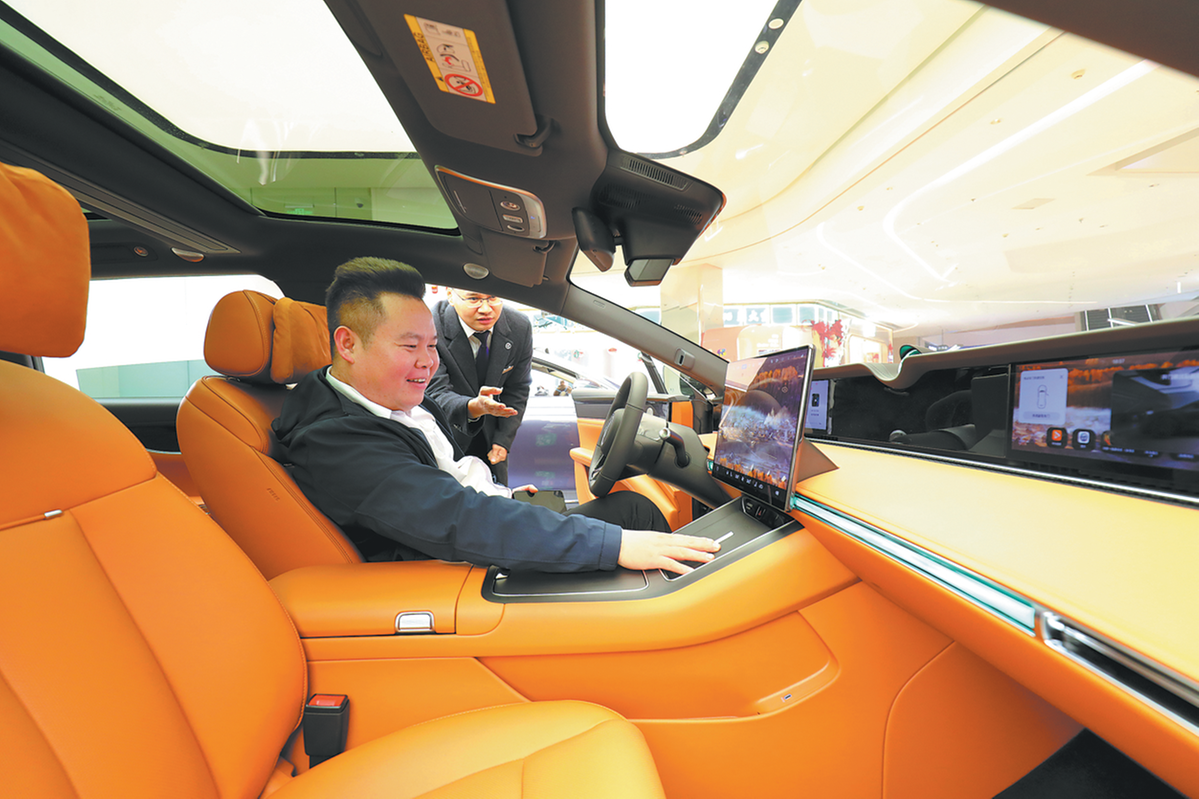
For many car buyers in China today, the question is not about which new energy vehicle to choose, but regarding the level of intelligence it should come equipped with.
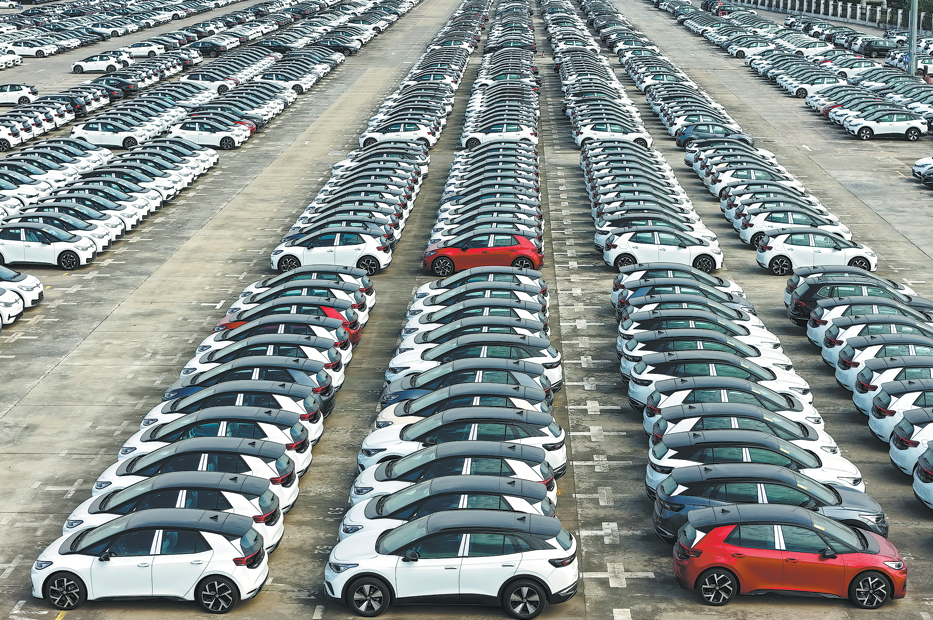
In 2025, the country's wholesale sales of NEVs reached 15.3 million units, up 25.2 percent year-on-year, while retail sales totaled 12.8 million units, an increase of 17.6 percent and achieving a penetration rate of 54 percent, according to the latest data from the China Passenger Car Association.
"With the penetration rate approaching 60 percent, the auto market has entered a new stage in which NEVs play a dominant role," said Cui Dongshu, secretary-general of the association.
However, with the diminishing marginal effects of the nation's trade-in policies, the phasing-out of purchase tax incentives, and intensifying competition in a saturated market, Chinese NEV brands should enter a new stage of high-quality development driven by technology and value to gain fresh growth momentum, said Wu Songquan, senior chief expert at the China Automotive Technology and Research Center.
"Overall, the auto market is moving toward a new stage of high-quality development, with electrification, intelligence and globalization emerging more clearly as the three main pillars supporting sustainable growth," Wu said.
In this process, a milestone shift is taking place as advanced driver assistance systems are evolving from a "luxury feature" available only on a few models to a "must-have" capability across the entire market, he said.
According to a report jointly released by the CPCA and market consultancy Kerui, the installation rate of Level 2 and above assisted driving functions in NEV passenger vehicles reached 87 percent between January and October.
Data previously released by the Ministry of Industry and Information Technology also showed that from January to July, the penetration rate of L2 combined driving assistance systems in new passenger vehicles stood at 62.58 percent. This means that six out of every 10 vehicles sold were equipped with basic ADAS functions.
Behind this trend lies the rapid maturation of the industry chain and a continuous decline in technology costs, allowing advanced driving functions to quickly move from the high-end segment to more affordable levels, said Zhang Hong, a senior NEV industry expert at the China Automobile Dealers Association.
"Chinese brands are offering longer driving range, more advanced intelligent features and higher safety standards at more competitive prices," Zhang said.
"This is prompting consumers to rethink 'cost-effectiveness' — shifting away from simply seeking the lowest price toward a better balance between overall performance and cost."
For example, China's tech heavyweight Huawei announced late last year that its Qiankun ADS Pro enhanced version will officially support urban navigation cruise assist functions in the first quarter of 2026, with plans to bring these advanced capabilities to models priced around 150,000 yuan ($21,500) this year. Previously, such high-level ADAS features were largely limited to premium models priced above 300,000 yuan.
Meanwhile, its entry-level Qiankun ADS SE has already been widely deployed in the 150,000 yuan segment, and with further technology diffusion, the company may explore even lower price ranges in the future, Jin Yuzhi, CEO of Huawei's intelligent automotive solutions business unit, said at a product launch event in November.
Similarly, the country's major NEV maker BYD recently said it had pushed its God's Eye ADAS technologies — part of its "intelligent driving for all" strategy — down to models priced as low as around 70,000 yuan through technological upgrades and cost optimization.
By the end of November 2025, more than 2.3 million vehicles equipped with the God's Eye assisted driving system had gone on the road, generating over 150 million kilometers of driving data every day, BYD data showed.
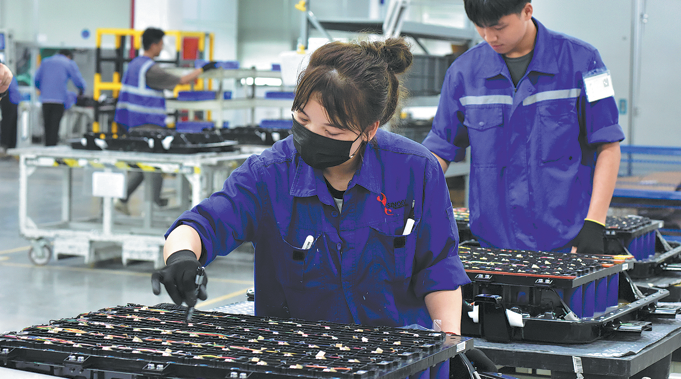
According to Zhang of CADA, effective cost control stems from China's world-leading electric vehicle industry chain, which fully covers batteries, motors, electronic control systems, vehicle manufacturing and components supply.
"Through close cooperation with upstream and downstream partners, domestic companies have achieved coordinated development across the industry chain, effectively improving production efficiency and quality control," Zhang said.
"This industry chain advantage enables NEV makers to respond quickly to market demand, reduce costs and enhance competitiveness in the global market," he added.
While the widespread adoption of L2-level systems represents a quantitative change, the implementation of L3-level autonomous driving marks more of a critical qualitative leap in the wider application of advanced driving technologies.
In December, the MIIT conditionally approved two electric vehicle models equipped with Level-3 autonomous driving capabilities, allowing them to begin pilot operations on public roads in designated areas of Beijing and Chongqing.
"The move marks a key step where China's autonomous driving industry is accelerating its transition from technology validation to large-scale production and application," said Fu Bingfeng, secretary-general of the China Association of Automobile Manufacturers.
By preliminarily defining accident liability under conditions where autonomous driving systems are activated, the move is widely seen as removing one of the most fundamental obstacles to the sector's long-term development.
"This release allows compliant products to undergo market testing and unlocks the dividends of large-scale application with clear legal backing and real road access," Fu said. "It reflects an overall approach of 'policy-first, pilot breakthroughs and phased promotion'."
A slew of NEV automakers — including BYD, Harmony Intelligent Mobility Alliance, Li Auto, XPeng and Xiaomi — soon announced that they had obtained L3-level road testing permits and launched internal testing programs.
This round of MIIT approvals is fundamentally different from regular L3 testing licenses, with the former focusing on pilot applications for mass-produced vehicles, while the latter emphasizes technology validation on specific road sections, according to a report by China Dragon Securities. Both, however, point toward the accelerated rollout of advanced autonomous driving, it noted.
In a broader policy context, China's energy-saving and NEV technology roadmap 3.0, released in October, projects that by 2030,L2-level and above ADAS technologies will be fully adopted in new car sales. By 2040, L4-level functions are expected to achieve full adoption in newly sold intelligent connected vehicles, while L5-level vehicles will begin to enter the market.
"China is no longer a follower in global automotive technology," said Hou Fushen, vice-president and secretary-general of the China Society of Automotive Engineers. "Today, it has become the world's largest auto market and producer, and more importantly, the strongest automotive technology ecosystem nurturing new technologies, new models and new business forms — providing global industry players with both a 'technology barometer' and an 'innovation toolbox'."


Today's Top News
- Xi urges basic research push for original innovations
- Building of rare earth hub highlighted
- Seedance 2.0 signals big shift in AI sector
- United front work urged to pool strength
- Beijing refutes US nuclear test accusations
- Xi sends festive greetings to all service personnel







